Group · Starchy foods
Bulgur wheat
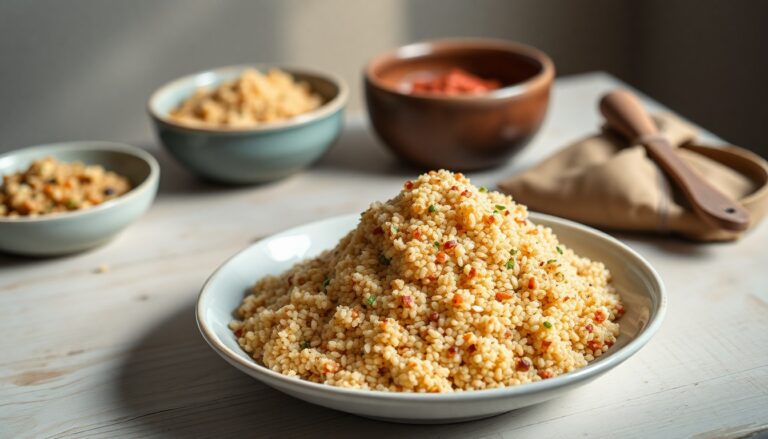
Bulgur wheat is durum wheat that has been pre-cooked, dried and then cracked, and is very popular in Middle Eastern and Mediterranean cooking. It is found in the famous tabbouleh, but also in many stews and salads. Depending on the grade of the cracking, there is fine bulgur (ideal raw, rehydrated) and coarse bulgur (perfect cooked). Nutritionally, it is an interesting starchy food: once cooked, it provides only 131 kcal per 100 g, with 24.1 g of carbohydrate, 4.63 g of protein, barely 1 g of fat and nearly 3.7 g of fibre. Its richness in fibre and moderate glycaemic index make it an ally of a balanced diet, filling and easy to work into everyday meals.
Macronutrient breakdown
Nutrition table per 100 g
| Calories | 131 kcal |
| Kilojoules | 555 kJ |
| Protein | 4,7 g |
| Carbohydrate | 24,1 g |
| Fat | 1 g |
| Fibre | 3,7 g |
Micronutrients per 100 g
All measured nutrients, ranked by share of the daily reference intake.
- Vitamin E2,72 mg23 %
- Manganese0,44 mg22 %
- Copper0,16 mg16 %
- Phosphorus81,7 mg12 %
- Zinc0,82 mg8 %
- Magnesium28,5 mg8 %
- Iron0,67 mg5 %
- Calcium30,9 mg4 %
- Vitamin B9dietary folate equivalents10,8 µg
See the other 7 nutrients
- Omega-6 LA0,36 g4 %
- Potassium67,1 mg3 %
- Vitamin B50,11 mg2 %
- Vitamin B30,29 mg2 %
- Omega-3 ALA0,03 g1 %
- Vitamin K10,5 µg1 %
- Vitamin A1,25 µg0 %
Anses Ciqual 2025. Source: Anses, 2025, Ciqual food composition table
Tips
Bulgur wheat is ready in a few minutes: just cover it with hot water or stock and let it swell, or cook it in a saucepan. Allow a portion of about 50 to 70 g dry weight (a generous serving once swollen) per meal. Its quick cooking makes it ideal for batch cooking: prepare a large amount at the start of the week, keep it in the fridge for 3 to 4 days and turn it into salads, bowls or side dishes.
Pairings and culinary uses: bulgur goes as well with crunchy vegetables (cucumber, tomato, pepper), fresh herbs (parsley, mint, coriander) as with pulses such as chickpeas or lentils. This cereal and pulse pairing provides complementary plant proteins, perfect for a meal without meat. You can also use it in place of couscous or quinoa to vary your plates.
Nutrition facts and benefits: made from durum wheat, bulgur provides slow-release complex carbohydrates, fibre that helps digestion and fullness, as well as minerals such as magnesium, phosphorus and iron, and B vitamins. Its glycaemic index stays moderate, especially when it is eaten with vegetables and a little good-quality fat such as olive oil. Note, however, that because it contains wheat, it is not suitable if you have gluten intolerance.
Tip for active people: with its complex carbohydrates, bulgur is an excellent source of energy before or after exercise. Eat it 2 to 3 hours before a session to fuel up, or include it in your recovery meal to replenish glycogen stores. Paired with a source of protein (chicken, fish, eggs, tofu), it supports muscle gain as well as muscle maintenance. To go further, see our guidelines on fitness nutrition.
Weight control: low in calories once cooked and very filling, bulgur fits easily into a weight-loss goal, as long as you control portions and avoid fatty sauces. Measure your amounts dry and favour light seasoning. To compare its calories with other starchy foods, see the starchy foods family and adjust your intake to your activity and needs.