Group · Fish
Sea bass (loup)
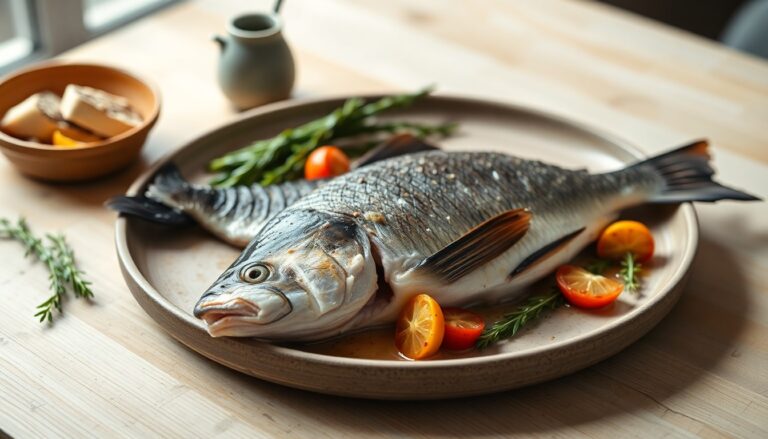
The sea bass (known as loup or bar depending on the region in France) is a marine fish highly valued for its white, firm and delicate flesh. It is found wild or farmed, sold whole, as fillets or as steaks. Very popular in Mediterranean cooking, it fits perfectly into a balanced, varied diet. With around 124 kcal per 100 g, it has an excellent nutritional profile: rich in protein (21.4 g) and low in carbohydrate (0 g), with a moderate amount of fat (4.25 g). Lean and tasty, sea bass suits both people watching their figure and food lovers looking for a fine fish that is easy to cook every day.
Macronutrient breakdown
Nutrition table per 100 g
| Calories | 124 kcal |
| Kilojoules | 521 kJ |
| Protein | 21,4 g |
| Fat | 4,3 g |
Micronutrients per 100 g
All measured nutrients, ranked by share of the daily reference intake.
- DHA0,54 g216 %
- Vitamin B124,33 µg173 %
- EPA0,4 g160 %
- Vitamin D2,31 µg46 %
- Vitamin B36,79 mg42 %
- Total omega-30,98 g39 %
- Phosphorus209 mg30 %
- Vitamin B60,39 mg28 %
See the other 14 nutrients
- Potassium430 mg22 %
- Vitamin B10,18 mg16 %
- Selenium7,57 µg14 %
- Vitamin E1,35 mg11 %
- Vitamin B50,53 mg9 %
- Magnesium32,3 mg9 %
- Vitamin B20,09 mg6 %
- Iodine9,36 µg6 %
- Zinc0,41 mg4 %
- Iron0,39 mg3 %
- Omega-6 LA0,24 g2 %
- Omega-3 ALA0,04 g2 %
- Vitamin A14,7 µg2 %
- Calcium5,6 mg1 %
Anses Ciqual 2025. Source: Anses, 2025, Ciqual food composition table
Tips
The sea bass lends itself to many preparations that show off its fine flesh. A portion of 130 to 150 g per person suits a main meal. Choose gentle cooking methods that preserve its nutritional qualities: steamed, baked in parchment, poached in court-bouillon or cooked in a salt crust for a tender result. Light grilling or oven cooking with a drizzle of olive oil, lemon, fennel and fresh herbs brings out its flavours without weighing the dish down. To go further, discover the principles of gentle cooking to preserve nutrients and flavour.
In terms of nutrition facts, sea bass is a lean fish with a glycaemic index of zero, as it contains no carbohydrate. Its high-quality protein makes it an ally for maintaining muscle mass. It also provides minerals such as phosphorus, selenium and potassium, as well as B vitamins and vitamin D. Its fat includes unsaturated fatty acids, which are valuable in a Mediterranean-style diet. If you enjoy delicate fish, you can vary with sea bass (bar) or explore other species on the Fish family page.
For active people, sea bass is an excellent source of lean protein, ideal both when cutting and when maintaining muscle mass. At dinner after a workout, pair it with green vegetables and a portion of wholegrain starchy foods to replenish glycogen stores and support recovery. Its low calorie content and lack of carbohydrate make it a valuable choice for filling but light plates. To optimise your daily protein intake, see our advice on fitness nutrition.
For weight control, sea bass is an asset: its calorie density stays low as long as the cooking is simple. Beware of buttery sauces, breadcrumbs or frying, which push up the calorie count. For storage, eat it very fresh, within 24 to 48 hours, or freeze it quickly. You can compare its values with other foods using the food calorie table. Eaten two or three times a week, sea bass contributes to a varied, tasty and sensible diet.