Group · Fish
Sea bass (bar)
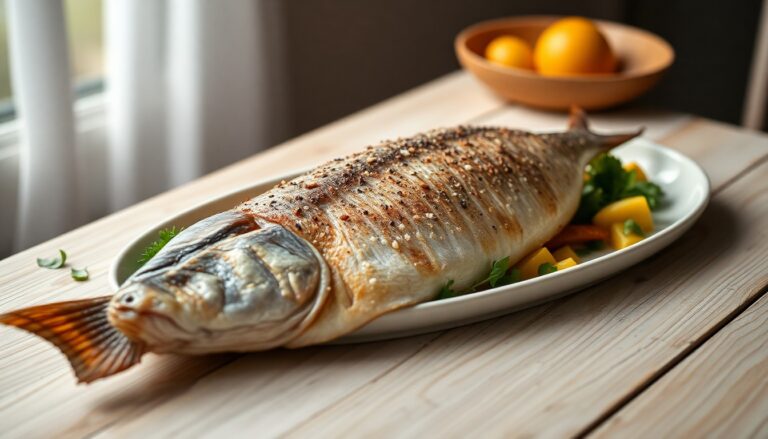
The sea bass (bar in French, also called loup de mer in the Mediterranean) is a marine fish with white, fine and delicate flesh, much appreciated by cooking enthusiasts and nutritionists alike. It is found wild (line-caught or trawled) or farmed, as fillets, steaks or whole. With around 113 kcal per 100 g, nearly 20.3 g of protein and only 3.58 g of fat, it is an ideal lean fish in a balanced diet geared towards weight maintenance. With no carbohydrate and plenty of high-quality protein, it fits easily into weight-loss menus, active people’s plates and everyday family meals.
Macronutrient breakdown
Nutrition table per 100 g
| Calories | 113 kcal |
| Kilojoules | 477 kJ |
| Protein | 20,3 g |
| Fat | 3,6 g |
Micronutrients per 100 g
All measured nutrients, ranked by share of the daily reference intake.
- DHA0,47 g188 %
- Vitamin B122,71 µg108 %
- EPA0,24 g96 %
- Iodine60 µg40 %
- Phosphorus218 mg31 %
- Total omega-30,71 g28 %
- Potassium356 mg18 %
- Vitamin B60,19 mg14 %
See the other 11 nutrients
- Vitamin B50,79 mg13 %
- Vitamin B31,62 mg10 %
- Iron1,41 mg10 %
- Magnesium36 mg10 %
- Calcium66 mg8 %
- Copper0,08 mg8 %
- Vitamin B10,09 mg8 %
- Vitamin B913,7 µg7 %
- Zinc0,63 mg6 %
- Vitamin B20,07 mg5 %
- Vitamin C2,05 mg3 %
Anses Ciqual 2025. Source: Anses, 2025, Ciqual food composition table
Tips
The sea bass lends itself to many preparations that preserve its fine flesh. Choose gentle cooking: steamed, baked in parchment, poached or oven-baked on a bed of vegetables. These methods limit the need for added fat and best preserve its nutrition facts. To find out how to keep vitamins and flavour, take inspiration from the principles of gentle cooking. A portion of 120 to 150 g suits a meal, served with green vegetables and a wholegrain cereal.
Varieties and seasonality. Wild line-caught sea bass has firmer, tastier flesh, while farmed sea bass is available all year round. The peak season for wild sea bass is more from autumn to early winter. To vary your white fish, you can alternate with cod or European sea bass (loup), both lean and rich in protein.
Nutritional strengths. Sea bass is an excellent source of complete protein (nearly 20.3 g per 100 g), with a low-fat profile and no carbohydrate. Its flesh provides minerals such as phosphorus, potassium and selenium, as well as B vitamins. Its glycaemic index of zero and low calorie density make it an ally of fullness. When comparing the calories of different foods, bear in mind that a lean fish such as sea bass keeps you full for a long time without adding much to your energy total.
Tips for active people. Thanks to its high content of protein of high biological value, sea bass supports muscle repair and building after training. Serve it at dinner with a source of carbohydrate (rice, sweet potato) to support recovery and the replenishment of stores. When cutting or losing body fat, its low fat content makes it a top choice. To structure your plate, see our guidance on fitness nutrition.
Storage and buying. Choose a sea bass with a bright eye, red gills and a clean sea smell. Keep it in the fridge and cook it within 24 to 48 hours, or freeze it quickly. For seasoning, go for lemon juice, dill, fennel or a drizzle of olive oil rather than fatty sauces.
Overall, sea bass ticks every box for a food that suits weight loss and performance. To explore other fish with interesting benefits, browse the fish family and put together varied menus throughout the week.