Group · Fish
Fish fingers
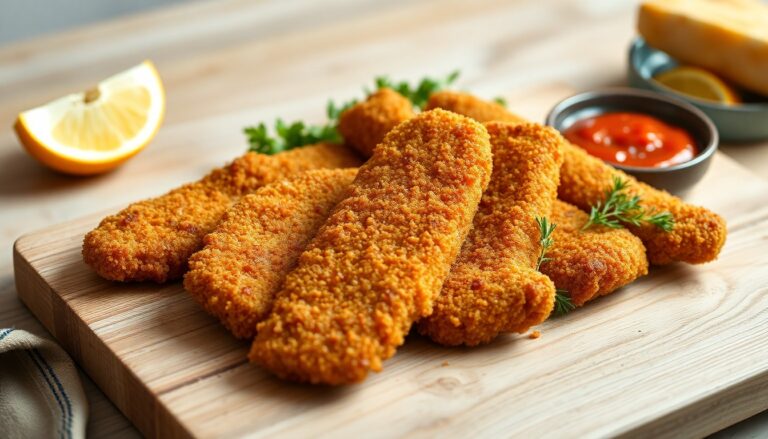
Fish fingers are among the great classics of the freezer aisle, valued for being practical and for a shape that suits children and busy families. Made from white fish (often cod, coley or pollock) coated in golden breadcrumbs, they can be baked, pan-fried or cooked in an air fryer in a few minutes. Nutritionally, they provide around 194 kcal per 100 g, with 11.9 g of protein, 13.5 g of carbohydrate and 10 g of fat, largely from the coating and the frying. They can have a place in a varied diet, as long as you watch the portion and the accompaniments you choose.
Macronutrient breakdown
Nutrition table per 100 g
| Calories | 194 kcal |
| Kilojoules | 810 kJ |
| Protein | 11,9 g |
| Carbohydrate | 13,5 g |
| Fat | 10 g |
| Fibre | 0,8 g |
Micronutrients per 100 g
All measured nutrients, ranked by share of the daily reference intake.
- DHA0,27 g108 %
- Vitamin B121,95 µg78 %
- EPA0,15 g60 %
- Phosphorus164 mg23 %
- Total omega-30,45 g18 %
- Vitamin B929 µg15 %
- Potassium286 mg14 %
- Selenium6,24 µg11 %
See the other 14 nutrients
- Vitamin B31,6 mg10 %
- Magnesium32,4 mg9 %
- Vitamin B60,12 mg9 %
- Manganese0,14 mg7 %
- Vitamin B10,06 mg6 %
- Copper0,06 mg6 %
- Vitamin B20,07 mg5 %
- Vitamin B50,25 mg4 %
- Zinc0,39 mg4 %
- Iodine5 µg3 %
- Iron0,44 mg3 %
- Vitamin A16 µg2 %
- Calcium15,1 mg2 %
- Omega-3 ALA0,03 g2 %
Anses Ciqual 2025. Source: Anses, 2025, Ciqual food composition table
Tips
To enjoy fish fingers without unbalancing your plate, go for accompaniments rich in fibre and water: a good portion of steamed vegetables, a green salad or a wholegrain starchy food. This offsets the calorie density of the coating and improves fullness. A reasonable portion is 3 or 4 fish fingers, or about 100 g.
Choose a well-controlled cooking method. The oven or air fryer limit the amount of added fat compared with pan-frying. The coating absorbs oil, which quickly raises the fat and calories. To go further, you can draw inspiration from the principles of gentle cooking, which preserves the nutrients in fish better.
Nutritional values and points to watch:
- Protein: about 11.9 g per 100 g, useful but lower than a plain fish fillet.
- Carbohydrate: 13.5 g, mainly from the breadcrumbs and the flour in the coating, with a moderate to high glycaemic index.
- Fat: 10 g, to keep an eye on if you are trying to lose weight.
- Fibre: only 1.4 g, hence the importance of vegetables on the side.
For seasoning, avoid drowning your fish fingers in high-calorie sauces. A touch of ketchup is lighter than a generous spoonful of mayonnaise. A squeeze of lemon, fresh herbs or a seasoned plain yoghurt add flavour without excess.
For active people, fish fingers can help out after a session by providing protein and carbohydrate, but they remain a processed product. Whether building muscle or cutting, it is better to treat them as an occasional pleasure and favour purer sources of protein, such as a grilled fish fillet. To structure your daily protein intake, see our guidelines on fitness nutrition.
Storage and buying: keep fish fingers in the freezer until use and cook them straight from frozen, without thawing first. Compare labels: some brands have a higher fish content and a shorter ingredient list. You can also vary things with other breaded products from the same family such as fish preparations, or discover other options in the Fish section. Eaten in moderation and well accompanied, fish fingers have their place in a balanced diet.