Group · Meat
Free-range chicken
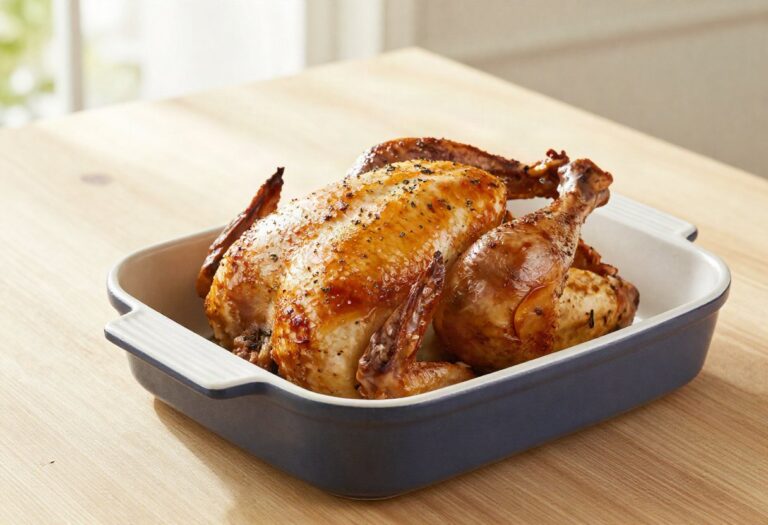
Free-range chicken (poulet fermier) is raised outdoors for at least eighty-one days, against thirty-five to forty for a standard chicken. This length of time and the animal’s activity change its flesh: denser, firmer and much less fatty.
As for nutrition facts, raw meat and skin: 120 kcal per 100 g for 22 g of protein and only 3.5 g of fat. It provides 267 mg of potassium, 142 mg of phosphorus and 8.95 µg of selenium per 100 g, with 0.21 g of salt.
Macronutrient breakdown
Nutrition table per 100 g
| Calories | 120 kcal |
| Kilojoules | 504 kJ |
| Protein | 22 g |
| Fat | 3,5 g |
Micronutrients per 100 g
All measured nutrients, ranked by share of the daily reference intake.
- Phosphorus142 mg20 %
- Selenium8,95 µg16 %
- Potassium267 mg13 %
- Copper0,13 mg13 %
- Zinc1,27 mg13 %
- Magnesium24,9 mg7 %
- Iron0,78 mg6 %
- Iodine4,1 µg3 %
See the other 2 nutrients
- Calcium10,2 mg1 %
- Manganese0,02 mg1 %
Anses Ciqual 2025. Source: Anses, 2025, Ciqual food composition table
Tips
3.5 g of fat against 20.3 g for a hen: a huge gap. And these values include the skin. It is the direct result of outdoor rearing: an animal that moves develops muscle, not fat.
22 g of protein for 120 kcal. One of the best ratios in the whole Meat family, on a level with lean white fish.
The Label Rouge guarantees the length of rearing. It is the only reliable sign: “fermier” on its own, without a label, has no strict legal definition in France.
Its firm flesh needs more cooking. A free-range chicken roasts for longer than a standard chicken of the same weight, and benefits from basting. In return, it does not collapse and keeps its juices.
Cook it right through, like all poultry. 75°C at the centre, with clear juices. And do not rinse raw poultry: it spreads bacteria around the sink.