Group · Starchy foods
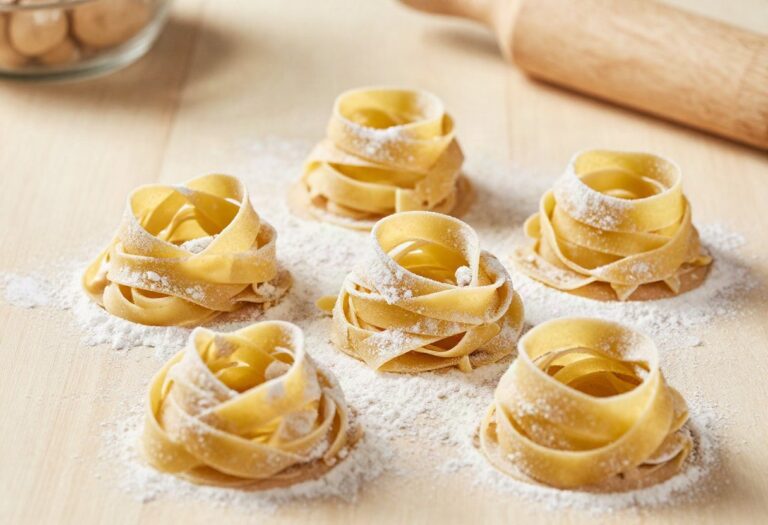
Fresh pasta
Fresh pasta made with eggs differs from dried pasta in two ways: it contains eggs, and it has not been dried. It therefore keeps some of its water, which changes all the figures.
In terms of nutrition facts, raw: 283 kcal per 100 g, with 53.8 g of carbohydrates, 11.1 g of protein and 1.87 g of fat. It provides 3.17 g of fibre, 35 mg of calcium and 1.29 mg of iron per 100 g, and contains 0.35 g of salt.
Macronutrient breakdown
Nutrition table per 100 g
| Calories | 283 kcal |
| Kilojoules | 1200 kJ |
| Protein | 11,1 g |
| Carbohydrate | 53,8 g |
| Fat | 1,9 g |
| Fibre | 3,2 g |
Micronutrients per 100 g
All measured nutrients, ranked by share of the daily reference intake.
- Iron1,29 mg9 %
- Calcium35 mg4 %
Anses Ciqual 2025. Source: Anses, 2025, Ciqual food composition table
Tips
It has fewer calories than dried pasta, weight for weight. 283 kcal against about 350 for raw dried pasta: it still contains water. But it swells much less when cooked, so the portion needs to be more generous.
Count 120 to 150 g per person. Against 80 g of dried pasta. This is the classic mistake: measuring fresh pasta like dried gives a very meagre plate.
It cooks in two to three minutes. It rises to the surface when ready. One minute too long and it turns mushy: that is the only real trap.
11.1 g of protein: the eggs contribute. A little more than ordinary dried pasta, with the bonus of a more complete amino acid profile.
A fresh product: it does not keep long. A few days in the fridge, and it freezes well, spread out flat so it does not stick, then dropped straight into boiling water.