Group · Fish
Greenland halibut
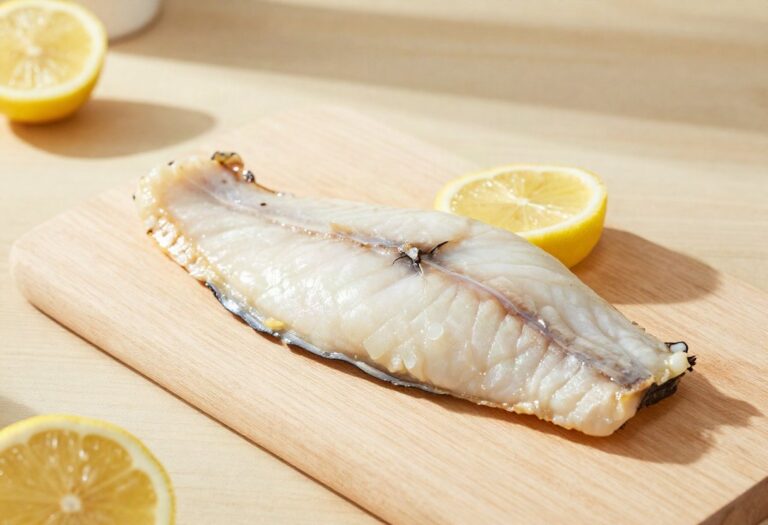
The Greenland halibut, also known as black halibut or Greenland halibut, is a flatfish of the cold waters of the North Atlantic, with white, fine and fairly fatty flesh. Higher in fat than Atlantic halibut, it has a melt-in-the-mouth texture that cooks love. It is available fresh, frozen, as steaks, as fillets or smoked. With around 168 kcal per 100 g, it provides nearly 13.5 g of good-quality protein and omega-3 fatty acids. Naturally free of carbohydrate, it fits easily into a balanced, varied diet. Its mild flavour and quick cooking make it a practical ally for tasty meals without fuss, from everyday dinners to more festive occasions.
Macronutrient breakdown
Nutrition table per 100 g
| Calories | 168 kcal |
| Kilojoules | 700 kJ |
| Protein | 13,5 g |
| Fat | 12,7 g |
Micronutrients per 100 g
All measured nutrients, ranked by share of the daily reference intake.
- Vitamin D21,2 µg424 %
- EPA0,8 g320 %
- DHA0,68 g272 %
- Total omega-31,57 g63 %
- Selenium30,5 µg55 %
- Vitamin B121 µg40 %
- Vitamin B60,43 mg31 %
- Phosphorus161 mg23 %
See the other 19 nutrients
- Potassium287 mg14 %
- Iodine17,3 µg12 %
- Vitamin B31,5 mg9 %
- Vitamin E0,79 mg7 %
- Magnesium24 mg6 %
- Vitamin B20,08 mg6 %
- Vitamin B10,06 mg5 %
- Omega-3 ALA0,09 g4 %
- Vitamin B50,25 mg4 %
- Zinc0,4 mg4 %
- Vitamin A32 µg4 %
- Vitamin B96,5 µg3 %
- Copper0,03 mg3 %
- Iron0,4 mg3 %
- Calcium17,7 mg2 %
- Omega-6 LA0,21 g2 %
- Vitamin C1 mg1 %
- Manganese0,01 mg1 %
- Vitamin K10,1 µg0 %
Anses Ciqual 2025. Source: Anses, 2025, Ciqual food composition table
Tips
In terms of nutrition facts, Greenland halibut stands out for its higher fat content than lean fish such as cod or whiting. This richness explains its melting texture and its supply of unsaturated fatty acids, while keeping an excellent protein profile. A sensible portion of 120 to 150 g is enough to cover a good share of the protein needs of a meal.
How to eat Greenland halibut? Its fatty flesh makes it ideal for gentle cooking: steamed, baked in parchment with lemon, dill and a drizzle of olive oil, or poached in a fragrant court-bouillon. You can also pan-fry it quickly, skin crisp, or finish it briefly in the oven. Avoid frying and overly creamy sauces, which weigh down the plate. To preserve its qualities, choose gentle cooking that protects nutrients and flavour.
For pairings, Greenland halibut goes well with green vegetables (broccoli, spinach, green beans), fresh herbs and a wholegrain starchy food such as rice or quinoa. For storage, eat the fresh fish within 24 to 48 hours, or keep it in the freezer. Smoked Greenland halibut, which is saltier, is enjoyed in thin slices as an alternative to salmon.
- Protein: useful for building and maintaining muscle.
- Fat: contains omega-3, valuable in a Mediterranean-style diet such as the Cretan diet.
- Zero carbohydrate: suitable for low-sugar meals.
For active people, Greenland halibut is a valuable source of complete protein in a recovery meal after training. Combined with a source of carbohydrate (sweet potato, rice), it helps replenish energy stores while providing good-quality fatty acids. When cutting, watch your portion, as this fish is higher in calories than lean species. To round out your intake, you can explore more ideas in our section on fitness nutrition.
Weight control: at around 168 kcal per 100 g, Greenland halibut has a medium calorie density. If you are trying to lose weight, cook it without added fat and keep to measured portions. To compare its calories with those of other fish, check the calorie table or browse the whole fish family to vary your menus and make the most of the benefits of the sea.