Group · Fish
Mackerel
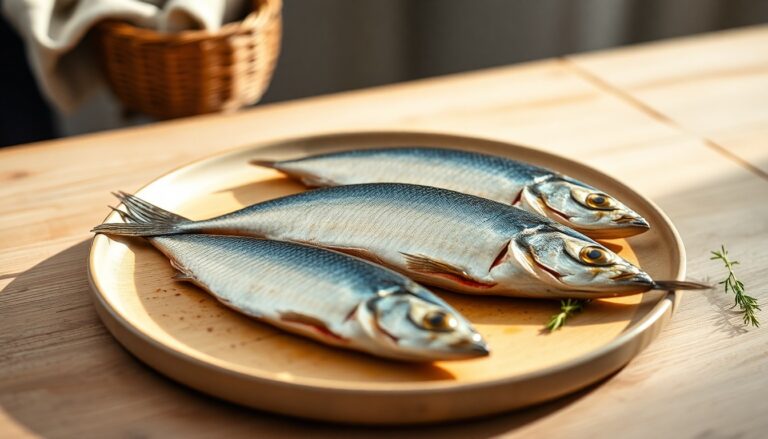
The mackerel is a sea fish of the scombrid family, recognisable by its blue-green back marked with dark stripes and its dense, flavoursome, slightly briny flesh. Considered an oily fish, it is a classic on fishmongers’ counters, fresh in season or sold as fillets, tinned (in oil, in white wine or in mustard) or smoked. Valued for its high-quality protein and healthy fats, it fits perfectly into a balanced diet. With around 228 kcal per 100 g, nearly 21.5 g of protein and no carbohydrate, mackerel offers an excellent nutritional balance for anyone who watches what is on their plate while looking for fullness and flavour.
Macronutrient breakdown
Nutrition table per 100 g
| Calories | 228 kcal |
| Kilojoules | 949 kJ |
| Protein | 21,5 g |
| Fat | 15,8 g |
Micronutrients per 100 g
All measured nutrients, ranked by share of the daily reference intake.
- Vitamin B1219 µg760 %
- DHA1,34 g536 %
- EPA0,8 g320 %
- Vitamin D7,72 µg154 %
- Selenium51,6 µg94 %
- Total omega-32,33 g93 %
- Vitamin B60,62 mg44 %
- Vitamin B36,85 mg43 %
See the other 15 nutrients
- Iodine45,8 µg31 %
- Phosphorus207 mg30 %
- Vitamin B20,41 mg29 %
- Potassium401 mg20 %
- Vitamin B10,16 mg15 %
- Vitamin B922,6 µg11 %
- Iron1,57 mg11 %
- Omega-3 ALA0,19 g10 %
- Zinc0,94 mg9 %
- Vitamin A62 µg8 %
- Magnesium28,5 mg8 %
- Vitamin B50,37 mg6 %
- Calcium12,8 mg2 %
- Omega-6 LA0,14 g1 %
- Vitamin C0,4 mg1 %
Anses Ciqual 2025. Source: Anses, 2025, Ciqual food composition table
Tips
The mackerel can be cooked in a thousand ways. Fresh, it is delicious grilled on the barbecue or in the oven, pan-fried with the skin on or baked in parchment with lemon, herbs and a drizzle of olive oil. Gentle cooking such as steaming or baking in parchment best preserves its fatty acids and aromas. A portion of 100 to 130 g is ideal for a main meal.
Nutrition facts and benefits: with around 21.5 g of protein per 100 g, mackerel covers a good share of daily needs. Its fat content (nearly 15.8 g) explains its 228 calories, but most of it is healthy fat, including omega-3. It also provides vitamin D, vitamin B12 and minerals such as selenium and phosphorus. The absence of carbohydrate makes it a very interesting fish for low-sugar diets.
- Fresh: best in season, with bright eyes and firm flesh.
- Tinned: practical and inexpensive, but watch the versions in oil, which are higher in calories than mackerel in brine or natural.
- Smoked: tasty but higher in salt.
Tips for active people: mackerel is a great ally for muscle recovery thanks to its complete protein. After exercise, pair it with wholegrain starchy foods and green vegetables to replenish your reserves. To optimise your daily protein intake, you can vary with other oily fish such as salmon or grilled herring. If you want to structure your meals, fitness nutrition offers useful guidance depending on your goals.
Weight control: despite its calorie density from fat, mackerel keeps you full for a long time thanks to its protein. If you are trying to lose weight, choose cooking methods with no added fat (grilled, steamed, baked in parchment) and tinned fish in brine or natural rather than oil. Limit how often you eat smoked or salted mackerel because of the sodium. Discover other fish and their nutrition facts in the fish family, and compare intakes easily with the calorie table.
Storage: eat fresh mackerel within 24 hours of buying it, or freeze it quickly. Tinned fish keeps for a long time in the cupboard and is a practical option for quick, protein-rich meals.