Group · Meat
Ham
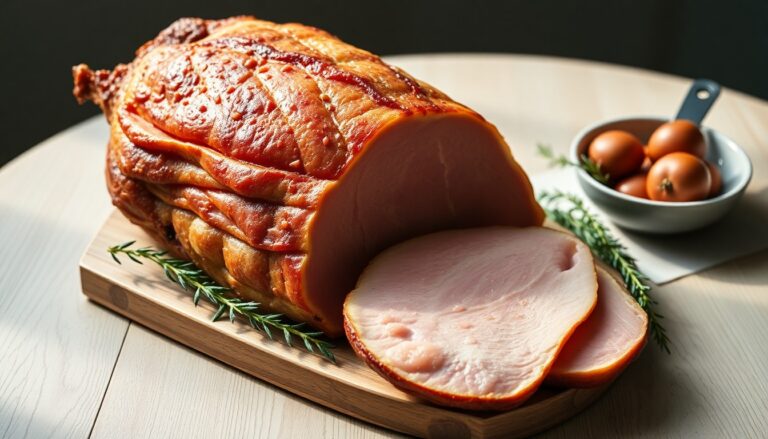
Ham is a charcuterie made from the leg of pork, salted and then cooked or dried depending on the recipe. A distinction is made between cooked ham (boiled ham, ham on the bone), premium ham without polyphosphates and dried versions such as raw cured ham. Appreciated for its convenience, it goes into a sandwich, a salad or a hot dish. Nutritionally, premium cooked pork ham provides around 113 kcal per 100 g, with a good dose of protein (21 g), barely 0.76 g of carbohydrate and 0.19 g of fibre. Its fat content (2.83 g) is low for a charcuterie. Well chosen, it has a place in a balanced diet, as long as you watch your salt intake.
Macronutrient breakdown
Nutrition table per 100 g
| Calories | 113 kcal |
| Kilojoules | 475 kJ |
| Protein | 21 g |
| Carbohydrate | 0,8 g |
| Fat | 2,9 g |
| Fibre | 0,2 g |
Micronutrients per 100 g
All measured nutrients, ranked by share of the daily reference intake.
- Vitamin B10,54 mg49 %
- Vitamin B35,73 mg36 %
- Phosphorus193 mg28 %
- EPA0,06 g26 %
- Vitamin C18,1 mg23 %
- Vitamin B60,3 mg21 %
- Zinc2 mg20 %
- Copper0,2 mg20 %
See the other 18 nutrients
- Selenium10,4 µg19 %
- Potassium362 mg18 %
- Vitamin B20,2 mg14 %
- Vitamin B120,31 µg12 %
- Vitamin B916 µg8 %
- Vitamin K15,89 µg8 %
- Vitamin B50,4 mg7 %
- Vitamin D0,32 µg6 %
- Magnesium22,5 mg6 %
- DHA0,01 g4 %
- Iron0,54 mg4 %
- Total omega-30,09 g3 %
- Omega-6 LA0,24 g2 %
- Vitamin A19,1 µg2 %
- Vitamin E0,25 mg2 %
- Manganese0,04 mg2 %
- Calcium12 mg2 %
- Omega-3 ALA0,01 g1 %
Anses Ciqual 2025. Source: Anses, 2025, Ciqual food composition table
Tips
To get the most from ham without overdoing it, aim for a sensible portion of 50 to 80 g per meal, or one to two slices. Choose a good-quality boiled ham, ideally labelled « premium », trimmed and defatted, and compare the nutrition facts on the label: the main point to watch is sodium, which is naturally high in all charcuterie.
In the kitchen, ham has a thousand uses: sliced cold in a wholemeal sandwich, diced in a quiche, an omelette or a savoury loaf, or pan-fried with vegetables. Pair it with raw vegetables, fibre-rich vegetables and wholegrain starchy foods for a filling and more balanced meal. Keep it in the fridge, well wrapped, and eat it within two to three days of opening.
Nutritional profile: with 21 g of protein per 100 g, cooked ham is a valuable source of amino acids, with very little carbohydrate (0.76 g), which gives it a very low glycaemic index. It also provides B vitamins and minerals such as zinc and phosphorus. Its fat content (2.83 g) makes it lighter than most sausages, like turkey breast or turkey ham, which are equally lean alternatives.
For active people: ham is a practical option for topping up your protein intake over the day. A few slices in a snack or at breakfast help you reach your targets, especially for lean muscle building. After exercise, pair it with a source of carbohydrates (wholemeal bread, rice) to support recovery. To vary your high-quality protein intake, you can explore other lean meats in the meat family, and add some protein snack ideas.
Weight control: the calorie density of ham remains reasonable, but salt can promote water retention and stimulate appetite. Limit very fatty or breaded versions, avoid systematically pairing it with butter or rich sauces, and keep a light hand with quantities. As part of a balanced diet, lean ham is a valuable ally for weight loss thanks to its favourable protein-to-calorie ratio.