Group · Fish
Horse mackerel
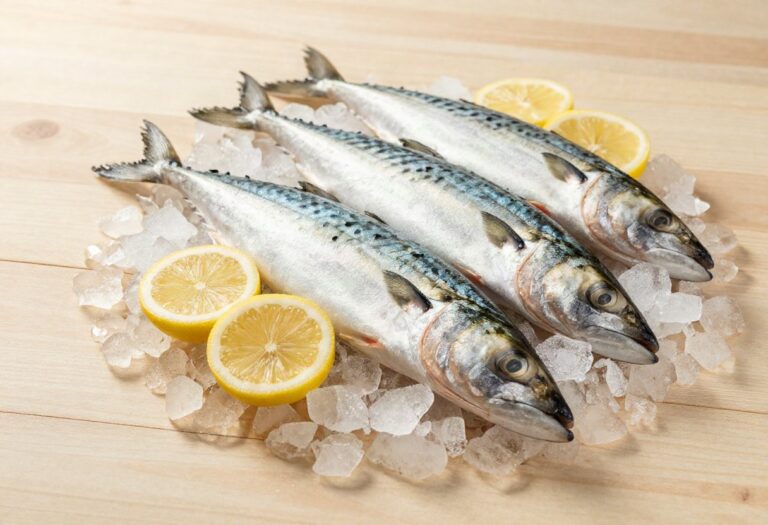
The horse mackerel, or scad (known in French as chinchard), is an Atlantic oily fish close to mackerel, recognisable by the line of spiny scales along its flanks. Long regarded as a second-rate fish, it is very cheap.
In terms of nutrition facts, raw: 116 kcal per 100 g, with 19 g of protein and 4.42 g of fat including 0.45 g of omega-3. It provides 986 mg of potassium per 100 g (the record in this selection), 92 mg of calcium, 26 µg of selenium and 1.59 mg of zinc.
Macronutrient breakdown
Nutrition table per 100 g
| Calories | 116 kcal |
| Kilojoules | 487 kJ |
| Protein | 19 g |
| Fat | 4,5 g |
Micronutrients per 100 g
All measured nutrients, ranked by share of the daily reference intake.
- DHA0,43 g172 %
- Copper0,99 mg99 %
- Potassium986 mg49 %
- Selenium26 µg47 %
- Magnesium69 mg18 %
- Total omega-30,45 g18 %
- Zinc1,59 mg16 %
- Calcium92 mg12 %
See the other 3 nutrients
- Manganese0,2 mg10 %
- Omega-3 ALA0,02 g1 %
- Omega-6 LA0,03 g0 %
Anses Ciqual 2025. Source: Anses, 2025, Ciqual food composition table
Tips
986 mg of potassium: no other fish in the database provides as much. A 150 g portion covers nearly three quarters of the reference intake. Potassium contributes to blood pressure regulation.
Worth mentioning if you have kidney failure. Potassium then has to be limited, and a fish at this level deserves to be counted in the total.
It is a semi-oily and very affordable fish. At 0.45 g of omega-3, it has less than a sardine but far more than a white fish. At a comparable price, it is an excellent compromise.
Remove the line of spiny scales. It runs along the flank and comes away with a knife. It is the only special preparation this fish needs.
Grilled or in escabeche. Like all oily fish, it needs no added fat: its own fat is enough. Lemon and vinegar suit it particularly well.