Group · Meat
Lamb heart
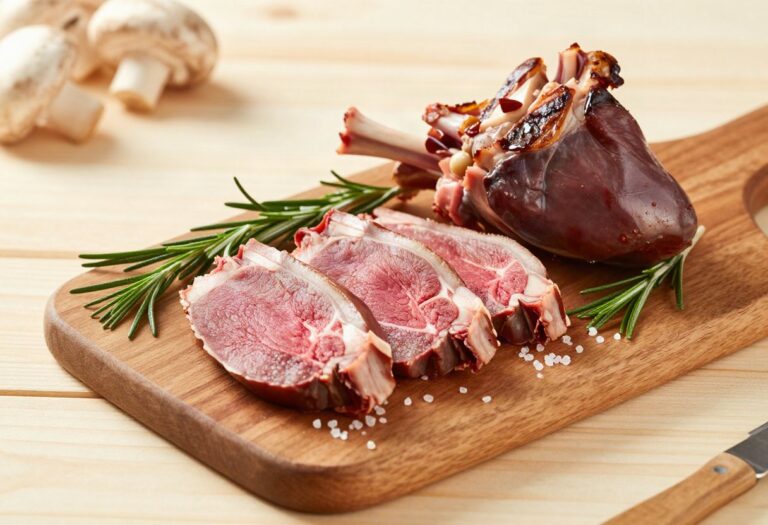
Lamb heart belongs to the large family of offal, those tasty and economical cuts long celebrated in traditional cooking. A dense, compact muscle, it stands out for its firm texture and marked flavour, stronger than that of prime cuts. Rich in high-quality protein, it provides around 179 kcal per 100 g, nearly 25 g of protein and only 1.93 g of carbohydrate. It can be found fresh at the butcher’s, whole or cut into slices, to simmer, grill or pan-fry. Appreciated by lovers of country cooking and by athletes looking for protein, lamb heart deserves a thoughtful place in a varied, balanced diet.
Macronutrient breakdown
Nutrition table per 100 g
| Calories | 179 kcal |
| Kilojoules | 750 kJ |
| Protein | 25 g |
| Carbohydrate | 2 g |
| Fat | 8 g |
Micronutrients per 100 g
All measured nutrients, ranked by share of the daily reference intake.
- Vitamin B1211,2 µg448 %
- Vitamin B21,19 mg85 %
- Copper0,61 mg61 %
- Iron5,52 mg39 %
- Zinc3,68 mg37 %
- Phosphorus254 mg36 %
- Vitamin B34,36 mg27 %
- EPA0,06 g24 %
See the other 11 nutrients
- Vitamin B51,37 mg23 %
- Vitamin B60,3 mg21 %
- DHA0,04 g16 %
- Vitamin B10,17 mg15 %
- Potassium188 mg9 %
- Vitamin C7 mg9 %
- Magnesium24 mg6 %
- Total omega-30,1 g4 %
- Manganese0,06 mg3 %
- Calcium14 mg2 %
- Vitamin B92 µg1 %
Anses Ciqual 2025. Source: Anses, 2025, Ciqual food composition table
Tips
Lamb heart can be cooked in many ways. To preserve its tenderness, favour quick pan-frying (seared and pink) or, conversely, long cooking in a stew or casserole that tenderises its fibres. Before cooking, remove the fat, vessels and any clots, then rinse it thoroughly. A marinade of garlic, thyme, bay leaf and a splash of olive oil pleasantly flavours the meat and softens its characteristic taste. A reasonable portion of 100 to 150 g suits a main meal.
- Nutrition facts: with nearly 25 g of protein per 100 g, lamb heart is an excellent source of complete protein, while remaining moderate in fat (7.91 g) and almost devoid of carbohydrate.
- Micronutrients: like most offal, it provides well-absorbed haem iron, zinc and B vitamins, including B12.
- Glycaemic index: zero or negligible, as it contains virtually no carbohydrate.
For pairings, combine it with green vegetables, wholegrain starchy foods or a homemade mash to balance the meal. Delicate cooking helps retain the nutritional qualities of this meat: you can take inspiration from the principles of gentle cooking that preserves nutrients and flavour.
For active people: rich in protein and iron, lamb heart supports muscle building and recovery, which makes it an asset in a diet geared towards gaining mass or maintaining lean mass. Eat it preferably in the meal after training, with a source of carbohydrate to replenish reserves. To go further on the place of protein in performance, see our feature on fitness nutrition.
Weight control: its calorie density remains moderate and its protein richness promotes fullness, two assets in the context of a balanced diet. Watch the preparation methods, however: fatty sauces, frying or too much butter quickly add to the calorie bill. Prefer lean cooking and light accompaniments.
If you like to vary your offal, explore other cuts such as beef heart or the more classic cuts of lamb. To compare nutrition and plan your meals, find all the cuts in the meat family. Always keep the heart fresh in the fridge and eat it within 24 to 48 hours of purchase, or freeze it quickly.