Group · Herbs & spices
Thyme
Thyme is an emblematic Mediterranean aromatic herb, used here in its dried form, ground into powder or as sprigs. Grown from the small shrub Thymus vulgaris, it has accompanied Provençal, Italian and Eastern cooking for centuries. Its tiny leaves concentrate highly fragrant essential oils that give dishes a woody, slightly camphorous signature.
In terms of nutrition facts, dried thyme provides 285 kcal per 100 g, but as it is eaten in very small amounts, its real calorie contribution remains negligible. It stands out above all for its richness in fibre (37 g/100 g) and its many minerals. A great aromatic for a balanced diet, it enhances flavours without adding salt or fat.

Macronutrient breakdown
Nutrition table per 100 g
| Calories | 285 kcal |
| Kilojoules | 1180 kJ |
| Protein | 9,2 g |
| Carbohydrate | 26,9 g |
| Fat | 7,5 g |
| Fibre | 37 g |
Micronutrients per 100 g
All measured nutrients, ranked by share of the daily reference intake.
- Vitamin K11710 µg2280 %
- Iron124 mg886 %
- Manganese7,87 mg394 %
- Calcium1890 mg236 %
- Copper0,86 mg86 %
- Vitamin C50 mg63 %
- Vitamin E7,48 mg62 %
- Zinc6,18 mg62 %
- Vitamin B9dietary folate equivalents274 µg
See the other 8 nutrients
- Magnesium220 mg59 %
- Vitamin B10,51 mg46 %
- Potassium814 mg41 %
- Vitamin B60,55 mg39 %
- Vitamin B34,94 mg31 %
- Phosphorus201 mg29 %
- Vitamin B20,4 mg29 %
- Vitamin A189 µg24 %
Anses Ciqual 2025. Source: Anses, 2025, Ciqual food composition table
Tips
Thyme is used by the pinch: a teaspoon is enough to flavour a whole dish. That is the whole appeal of this herb for anyone watching their weight, as its calories (285 kcal/100 g) hardly weigh anything on the scale of a recipe. It lets you reduce salt and fatty sauces while keeping dishes tasty.
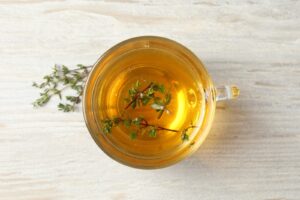
How to eat thyme? Slip a few sprigs into a marinade, a broth, a ratatouille or a pan-fry of vegetables. It goes wonderfully with white meats, fish, potatoes and tomatoes. As an infusion, a spoonful of dried thyme in hot water makes a comforting, calorie-free hot drink. To release its aromas, add it at the start of cooking, unlike the more delicate fresh herbs.
- Storage: away from light, in an airtight jar, dried thyme keeps its fragrance for several months.
- Pairings: it forms a classic trio with rosemary and bay leaf in the Provençal bouquet garni.
- Variations: you may prefer fresh thyme, which is more delicate, for a finishing touch.
Nutrition facts and benefits: thyme provides fibre (37 g/100 g), iron, calcium, manganese and vitamin K, as well as aromatic compounds with antioxidant properties. Its protein (9.11 g) and carbohydrate (26.9 g) are anecdotal given the doses used. To discover other aromatics in the same category, explore the Herbs & Spices family.
For active people: thyme provides no direct energy, but it is a heavyweight ally for seasoning recovery meals without weighing down the calorie balance. A turkey breast grilled with thyme, a plate of steamed vegetables or an evening infusion all fit easily into a training routine. To optimise your protein intake around exercise, discover our protein snack ideas.
Weight control: no downsides to fear, thyme is one of the « pleasure » seasonings with zero calorie density on the plate. Rely on it to vary flavours when switching to a balanced diet and to keep healthy dishes tasty. A simple, tasty and economical habit for better everyday cooking.
As a herbal tea: dose, contraindications and precautions during pregnancy in our guide thyme tea: risks and contraindications.