Group · Herbs & spices
Bay leaf
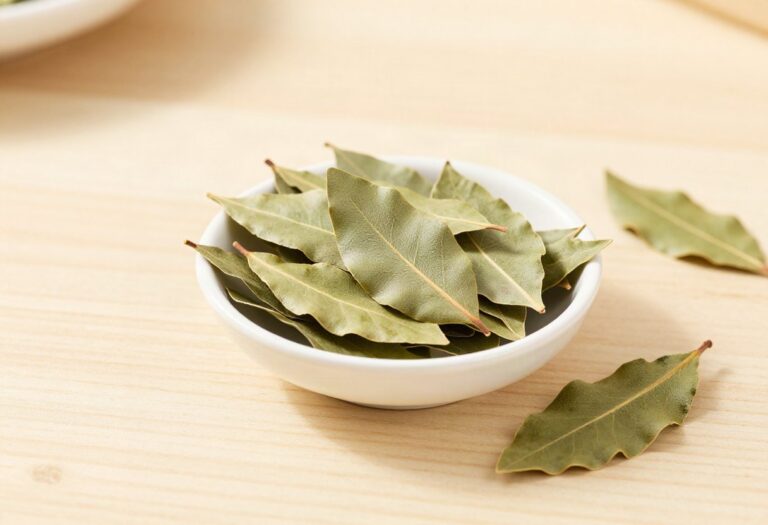
The bay leaf, from the bay laurel, is one of the most emblematic aromatic herbs of Mediterranean cooking. Its dark green, tough and glossy leaves give off a woody, slightly camphorous scent once dried. They are used whole or crumbled, fresh or dried, as the base of the famous bouquet garni. On paper, its nutrition facts show 353 kcal per 100 g, but you only use one or two leaves at a time, so its real calorie contribution is negligible. Bay is valued above all for its aroma and for its fibre and plant compounds. A clever herb for flavouring your dishes without weighing them down, as part of a balanced and tasty diet.
Macronutrient breakdown
Nutrition table per 100 g
| Calories | 353 kcal |
| Kilojoules | 1480 kJ |
| Protein | 7,7 g |
| Carbohydrate | 48,6 g |
| Fat | 8,4 g |
| Fibre | 26,3 g |
Micronutrients per 100 g
All measured nutrients, ranked by share of the daily reference intake.
- Manganese8,17 mg409 %
- Iron43 mg307 %
- Vitamin B61,74 mg124 %
- Calcium834 mg104 %
- Vitamin C46,5 mg58 %
- Copper0,42 mg42 %
- Vitamin A309 µg39 %
- Zinc3,7 mg37 %
- Vitamin B9dietary folate equivalents180 µg
See the other 6 nutrients
- Magnesium120 mg32 %
- Vitamin B20,42 mg30 %
- Potassium529 mg26 %
- Phosphorus113 mg16 %
- Vitamin B32,01 mg13 %
- Vitamin B10,01 mg1 %
Anses Ciqual 2025. Source: Anses, 2025, Ciqual food composition table
Tips
The bay leaf goes in just about everything: stocks, stews, soups, marinades, court-bouillon for fish, tomato sauces and pulse dishes. Add 1 to 2 leaves at the start of cooking to release the aromas slowly, then remove them before serving as they stay tough. It is a herb to infuse in hot liquid rather than to bite into.
- How to use it: essential in a bouquet garni with fresh thyme and parsley. Bay also goes perfectly with rosemary in casseroles.
- Storage: keep dried leaves in an airtight jar, away from light and moisture. They keep their scent for several months.
- Seasonality: bay laurel is an evergreen shrub, so it is available all year round, fresh or dried.
As for nutrition facts, the 353 kcal per 100 g and 48.6 g of carbohydrate may come as a surprise, but remember that one leaf weighs barely a few tenths of a gram. Its contribution to the calories in a dish is therefore minimal. Bay is, however, very rich in fibre (26.3 g per 100 g) and concentrates aromatic and antioxidant compounds. It also contains a little protein (7.61 g) and fat in the form of fragrant essential oils.
For weight control, bay is a great ally: it lifts dishes without added salt or fat. Flavouring a vegetable stock or a dish of lentils with bay helps you eat more tastily while staying light. That is exactly the spirit of a successful balanced diet, where herbs replace rich seasonings.
For active people, bay provides no significant energy or protein, but it makes recovery meals more appetising. A leaf in the cooking water of your wholegrain starches or your post-workout pulses flavours your meal without changing its nutritional balance. It fits well into controlled home cooking, for example healthy batch cooking, to prepare tasty, balanced dishes in advance.
You can vary your aromatic pleasures by exploring other spices such as black pepper or by discovering the whole herbs and spices family. Some people enjoy water lightly flavoured with bay as an infusion, but have it in moderation and always in small amounts. A simple, inexpensive and valuable herb for cooking with flavour every day.