Group · Fruit
Loquat
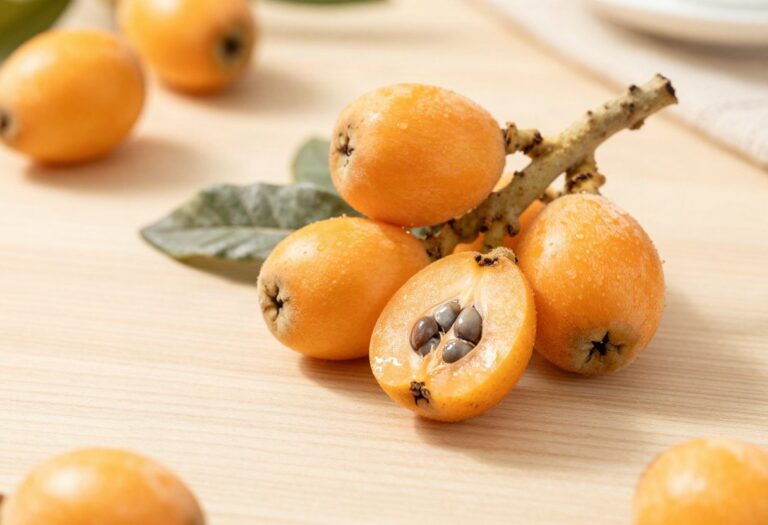
The loquat, also known as the Japanese medlar, is a small orange fruit with a tangy, slightly sweet taste that grows on the loquat tree. Not to be confused with the common European medlar, it is eaten in spring, when it is fully ripe and its skin is taut. Its juicy flesh holds a few large, glossy stones. With only 48.1 kcal per 100 g, the loquat is a light fruit, rich in water and low in calories. It provides moderate carbohydrates (9.9 g), a little fibre (1.7 g) and very little fat. Refreshing and easy to eat, it naturally has its place in a balanced, varied diet.
Macronutrient breakdown
Nutrition table per 100 g
| Calories | 48 kcal |
| Kilojoules | 204 kJ |
| Protein | 0,5 g |
| Carbohydrate | 9,9 g |
| Fat | 0,2 g |
| Fibre | 1,7 g |
Micronutrients per 100 g
All measured nutrients, ranked by share of the daily reference intake.
- Potassium266 mg13 %
- Manganese0,15 mg8 %
- Vitamin B60,1 mg7 %
- Copper0,04 mg4 %
- Phosphorus27 mg4 %
- Magnesium13 mg3 %
- Calcium16 mg2 %
- Iron0,28 mg2 %
- Vitamin B9dietary folate equivalents14 µg
See the other 9 nutrients
- Vitamin B10,02 mg2 %
- Vitamin B20,02 mg2 %
- Vitamin A13,5 µg2 %
- Vitamin C1 mg1 %
- Vitamin B30,18 mg1 %
- Omega-6 LA0,08 g1 %
- Omega-3 ALA0,01 g1 %
- Iodine0,8 µg1 %
- Zinc0,05 mg1 %
Anses Ciqual 2025. Source: Anses, 2025, Ciqual food composition table
Tips
The loquat is ideally enjoyed raw and fully ripe, simply washed and stoned. Its tangy flavour recalls a mix of apricot, plum and pear. You can bite into it as it is for a snack, add it to a fruit salad, or turn it into compote, jam or jelly. Its natural pectin also helps sweet preparations to set. Allow 2 to 3 fruits for a reasonable portion.
Tips for eating and storing:
- Choose soft fruits with smooth, well-coloured skin and no brown spots.
- Eat them quickly: the loquat is fragile and keeps for only a few days in the fridge.
- Avoid prolonged cooking to preserve its vitamins, as recommended by gentle cooking.
- Pair it with other spring fruits to vary your treats.
Nutrition facts and benefits: with its 48.1 kcal per 100 g, the loquat has a low energy density, which makes it an interesting fruit for weight control. Its carbohydrates (9.9 g) come with fibre (1.7 g), which contributes to fullness and digestive comfort. It also provides vitamin A (as the carotenoids responsible for its lovely orange colour), a little vitamin C, potassium and manganese. Its richness in water makes it a hydrating, thirst-quenching fruit. To compare with other sweet, tangy fruits, you can explore the peach or the apricot, which have similar nutritional profiles.
For active people: light and rich in water, the loquat makes a refreshing snack before or after a moderate session. Its natural carbohydrates give a quick burst of energy without weighing on digestion. Paired with a source of protein such as a yoghurt or a few almonds, it ideally completes a recovery high-protein snack. Remember to drink enough around exercise.
Point to watch: although low in calories, the loquat is still a sweet fruit, to be eaten within the recommended daily fruit portions. Avoid versions in syrup or jams that are too sweet if you are watching your weight. To discover other seasonal options, browse the fruits family and consult the food calorie table to balance your intake.