Group · Fruit
Plum
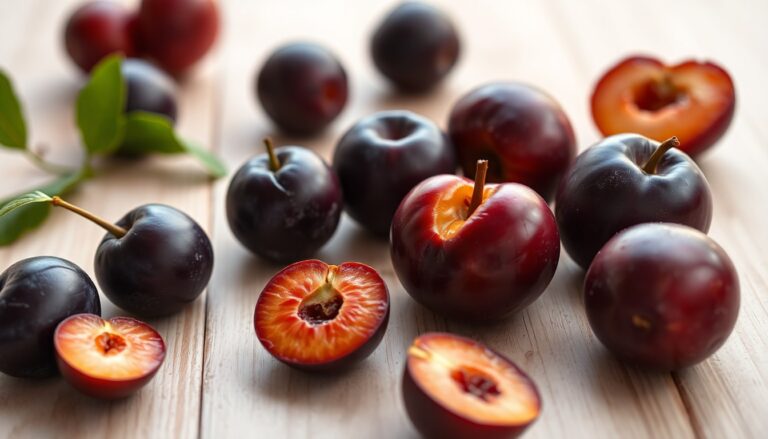
The plum is a fleshy stone fruit from the plum tree, available in a multitude of varieties: greengage (Reine-Claude), quetsche, mirabelle, Ente plum (which gives the prune) and Japanese plums. Its smooth skin, from golden yellow to dark purple, covers juicy, sweet flesh that is more or less tart depending on the type. With only 51.6 kcal per 100 g, the plum is a light fruit, rich in water and fibre, which naturally has a place in a balanced diet. It provides readily available carbohydrates, antioxidants and welcome freshness in summer and autumn alike. Raw, cooked or dried, it suits breakfast, dessert or a snack.
Macronutrient breakdown
Nutrition table per 100 g
| Calories | 52 kcal |
| Kilojoules | 219 kJ |
| Protein | 0,7 g |
| Carbohydrate | 10 g |
| Fat | 0,3 g |
| Fibre | 1,4 g |
Micronutrients per 100 g
All measured nutrients, ranked by share of the daily reference intake.
- Vitamin C9,5 mg12 %
- Vitamin K16,4 µg9 %
- Potassium157 mg8 %
- Copper0,06 mg6 %
- Vitamin B30,42 mg3 %
- Manganese0,05 mg3 %
- Vitamin B10,03 mg3 %
- Vitamin B50,14 mg2 %
- Vitamin B9dietary folate equivalents5 µg
See the other 13 nutrients
- Phosphorus16 mg2 %
- Vitamin E0,26 mg2 %
- Vitamin B60,03 mg2 %
- Vitamin A15,8 µg2 %
- Magnesium7 mg2 %
- Vitamin B20,03 mg2 %
- Iron0,17 mg1 %
- Zinc0,1 mg1 %
- Calcium6 mg1 %
- Omega-3 ALA0,02 g1 %
- Omega-6 LA0,03 g0 %
- Iodine0,27 µg0 %
- Selenium0,06 µg0 %
Anses Ciqual 2025. Source: Anses, 2025, Ciqual food composition table
Tips
The plum is best enjoyed fully ripe, when the flesh gives slightly under gentle pressure. Allow 2 to 3 plums per portion, around 120 to 150 g, as part of your recommended daily fruit. To get the most from its nutrition facts, eat it raw with the skin, where a good share of the fibre and antioxidant compounds are found.
- Varieties and seasonality: greengage (sweet and tender), quetsche (ideal in a tart), mirabelle (small and golden). The peak season runs from July to September.
- Culinary uses: tarts, clafoutis, compotes, jams, chutneys, or simply on their own. Plums go well with cinnamon, vanilla and even some meats.
- Storage: at room temperature to finish ripening, then in the fridge for a few days. You can also freeze them stoned.
Nutritionally, the plum offers a good amount of fibre (1.4 g/100 g), which supports digestion and fullness, as well as vitamins (notably C and K) and potassium. Its glycaemic index stays moderate for a fresh fruit, making it an interesting option for slimming and weight control. Be careful with processed forms, though: dried versions such as the prune concentrate sugars and calories, so eat them in moderation. To compare, take a look at the greengage or the mirabelle, two cousins in the large family of fruits.
For active people: thanks to its easily absorbed natural carbohydrates, the plum is a refreshing snack before moderate exercise or a handy bite in the afternoon. After training, pair it with a source of protein (yoghurt, fromage blanc, a handful of nuts) to support recovery. Its potassium and high water content also contribute to good hydration on hot days. If you build your menus around activity, see our advice on fitness nutrition to fit fruit into your meals sensibly.
In short, the plum ticks many boxes: low in calories, rich in fibre, versatile in the kitchen and pleasant to eat. Vary your treats by alternating with other seasonal fruits, and favour fresh fruit over sweet preparations to keep all its benefits.