Group · Fruit
Fruit salad (tinned)
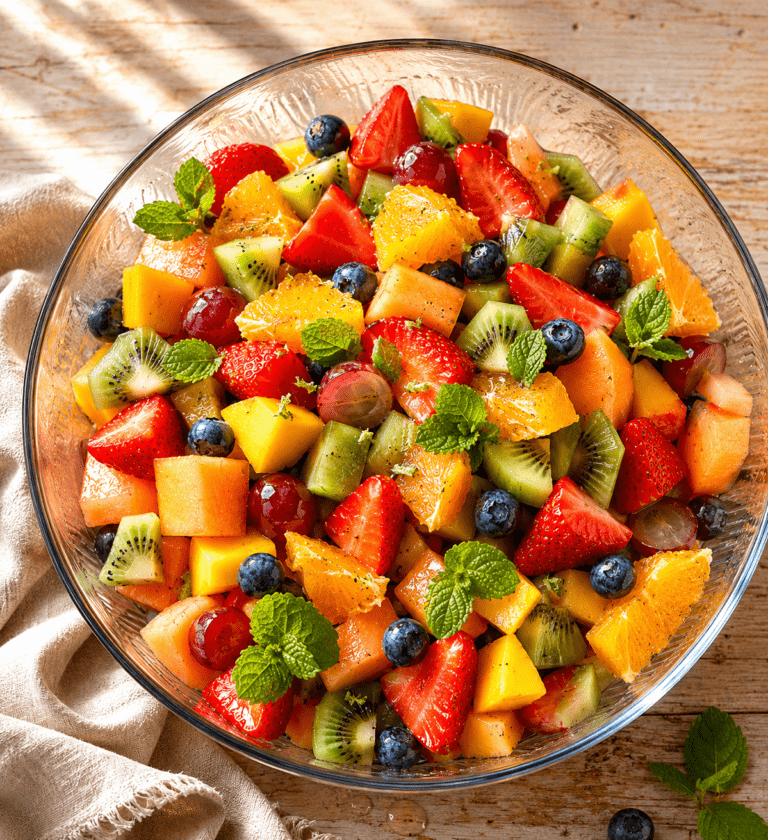
Tinned fruit salad is a mix of chopped fruit (peach, pear, pineapple, grape, cherry…) packed in a light syrup or juice. Practical and available all year round, it offers a quick way to enjoy several fruits with no preparation. The version in its own juice or in fruit juice is preferable to the one in heavy syrup, which is higher in added sugars. With around 64.9 kcal per 100 g (depending on draining), it provides carbohydrate, a little fibre and a few vitamins. Well chosen, it earns its place in a balanced diet as a light dessert, a snack or a fruity touch to an indulgent breakfast.
Macronutrient breakdown
Nutrition table per 100 g
| Calories | 65 kcal |
| Kilojoules | 275 kJ |
| Protein | 0,3 g |
| Carbohydrate | 15,2 g |
| Fat | 0,1 g |
| Fibre | 2 g |
Micronutrients per 100 g
All measured nutrients, ranked by share of the daily reference intake.
- Copper0,07 mg7 %
- Vitamin C3,53 mg4 %
- Manganese0,09 mg4 %
- Potassium68,7 mg3 %
- Vitamin B10,03 mg3 %
- Calcium11,2 mg1 %
- Vitamin A11,1 µg1 %
- Phosphorus8,93 mg1 %
- Vitamin B9dietary folate equivalents10,7 µg
See the other 5 nutrients
- Magnesium4,31 mg1 %
- Vitamin B60,01 mg1 %
- Vitamin K10,72 µg1 %
- Iron0,12 mg1 %
- Vitamin B50,04 mg1 %
Anses Ciqual 2025. Source: Anses, 2025, Ciqual food composition table
Tips
To get the most from tinned fruit salad, the first reflex is to read the label: choose versions in fruit juice or natural rather than in thick syrup. Draining the pieces clearly reduces the residual sugars. A portion of 100 to 150 g is enough for a dessert or snack. You can also rinse the fruit under water to limit the carbohydrate from the covering liquid even further.
- Calories and nutrition facts: around 64.9 kcal and 15.2 g of carbohydrate per 100 g, with very little fat (0.07 g) and 2 g of fibre.
- Glycaemic index: moderate to high depending on the syrup, all the more reason to choose a lightly sweetened version.
- Storage: once opened, transfer to an airtight container and eat within 2 to 3 days, kept in the fridge.
For pairings, combine your fruit salad with plain yoghurt, fromage blanc or oat flakes to balance the sugars with protein and fibre. It also enhances porridge, a lightened ice-cream sundae or a smoothie. For variety with fresh fruit, think of seasonal peaches or pineapple, often found in these mixes. You will find more ideas in the fruit family.
Tip for active people: thanks to its easily absorbed carbohydrate, a small portion of drained fruit salad can serve as a quick snack before exercise or help replenish glycogen after training. Pair it with a source of protein (yoghurt, fromage blanc, or even a protein snack) to support recovery. Over the day, keep in mind that fresh fruit is more filling and less sweet.
Weight control: versions in syrup concentrate added sugars that increase the energy density. If you are watching your figure, choose the juice format, limit the portion and count the syrup in your day’s sugar balance. To compare intakes easily, the food calorie table is a good guide. Finally, alternate with other tinned fruit such as tinned apricots and, whenever possible, go for whole fresh fruit for its intact fibre. Used well, tinned fruit salad remains a practical asset day to day.