Group · Starchy foods
Maize flour
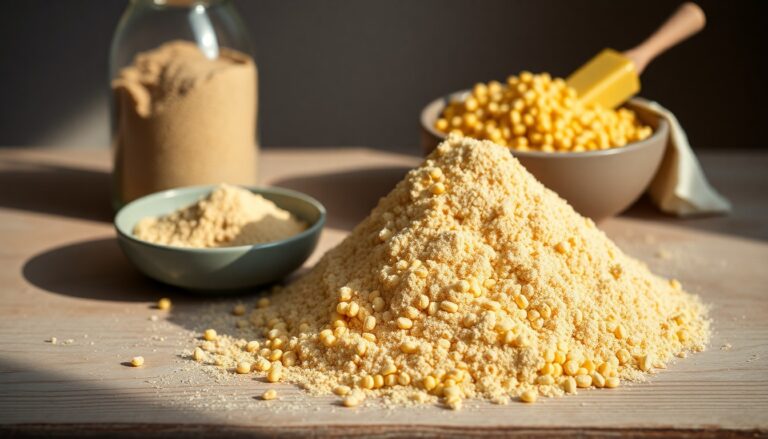
Maize flour is a meal made from dried maize kernels and is naturally gluten-free. Golden yellow to white in colour depending on the variety, it comes in finer and coarser grades: fine flour for pancake batters and flatbreads, and a coarser grind close to semolina for porridges and polenta. Rich in carbohydrates, it provides energy and also supplies some fibre and a little plant protein. Per 100 g, it contains around 361 kcal, 80.9 g of carbohydrate, 5.59 g of protein, 1.39 g of fat and 1.9 g of fibre. Versatile, it has a place in a balanced diet, particularly for people with gluten intolerance who are looking for an alternative to ordinary wheat flours.
Macronutrient breakdown
Nutrition table per 100 g
| Calories | 362 kcal |
| Kilojoules | 1540 kJ |
| Protein | 5,6 g |
| Carbohydrate | 80,9 g |
| Fat | 1,4 g |
| Fibre | 1,9 g |
Micronutrients per 100 g
All measured nutrients, ranked by share of the daily reference intake.
- Vitamin B32,66 mg17 %
- Copper0,14 mg14 %
- Selenium6,2 µg11 %
- Phosphorus60 mg9 %
- Vitamin B60,1 mg7 %
- Vitamin B10,07 mg7 %
- Omega-6 LA0,67 g7 %
- Iron0,91 mg7 %
See the other 12 nutrients
- Magnesium18 mg5 %
- Potassium90 mg5 %
- Vitamin B20,06 mg4 %
- Zinc0,37 mg4 %
- Manganese0,06 mg3 %
- Vitamin E0,15 mg1 %
- Omega-3 ALA0,02 g1 %
- Vitamin A8,08 µg1 %
- Vitamin B50,05 mg1 %
- Iodine0,6 µg0 %
- Vitamin K10,3 µg0 %
- Calcium2 mg0 %
Anses Ciqual 2025. Source: Anses, 2025, Ciqual food composition table
Tips
Maize flour is used in many preparations: flatbreads, tortillas, gluten-free breads, cakes, and also as a thickener for sauces and soups. Its sandy texture gives a moist crumb and a lovely golden colour. For a sensible portion, allow about 30 to 50 g of dry flour per person in a recipe, which keeps calories under control while you enjoy its qualities.
Serving tips and pairings:
- Mix it with wheat flour or wholemeal flour for a lighter crumb, unless you want a 100% gluten-free recipe.
- Combine it with eggs, plant milk and a little fat for balanced flatbreads at breakfast or teatime.
- Store it in an airtight container, away from light and damp, to keep it fresh and stop the fats going rancid.
Nutrition facts and benefits: with 1.9 g of fibre per 100 g, maize flour contributes to digestive comfort and fullness. It provides complex carbohydrates, a source of steady energy, and its natural lack of gluten makes it an interesting option for people affected by gluten intolerance. If you are watching your weight, keep its calorie density in mind: it is above all an energy-giving starchy food, to be portioned like the other members of the starchy foods family.
For active people: maize flour is a good carbohydrate base for replenishing glycogen stores. A flatbread or a portion of polenta after training helps recovery, especially if you add a source of protein. For strength or muscle-gain needs, complete your meals with the advice on fitness nutrition, and remember to stay well hydrated around exercise.
Varieties and ideas: you can vary things by alternating with other cereals such as quinoa or cornmeal, which is coarser and ideal for creamy polenta. Choose gentle cooking methods and home-made preparations to limit added sugars and fats. Well integrated, maize flour is a simple, tasty and nourishing everyday ingredient.