Group · Drinks
Mint liqueur
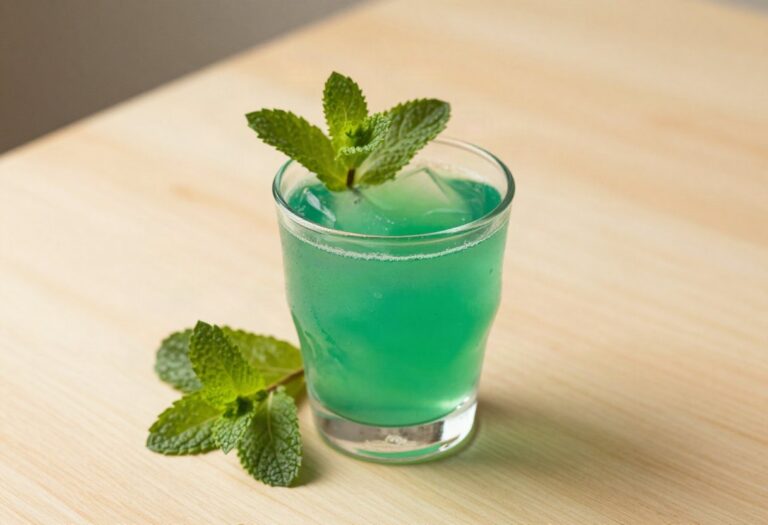
Mint liqueur is a sweet alcoholic drink, recognisable by its vivid green colour and distinctive fresh aroma. Made by macerating or distilling mint leaves and then sweetening them, it comes in more or less syrupy versions depending on the brand. It is usually served as an after-dinner drink, in cocktails or to flavour desserts. Nutritionally, it is a very high-calorie drink: 225 kcal per 100 g, with about 25.4 g of carbohydrate (mostly sugar) and virtually no protein, fat or fibre. Its calories come from both the sugar and the alcohol. Mint liqueur is therefore an occasional treat rather than something to drink every day as part of a balanced diet.
Macronutrient breakdown
Nutrition table per 100 ml
| Calories | 225 kcal |
| Kilojoules | 944 kJ |
| Protein | 0,1 g |
| Carbohydrate | 25,4 g |
| Fat | 0,3 g |
Micronutrients per 100 ml
All measured nutrients, ranked by share of the daily reference intake.
- Copper0,04 mg4 %
- Omega-3 ALA0,05 g2 %
- Potassium30 mg2 %
- Vitamin B30,14 mg1 %
- Phosphorus6 mg1 %
- Vitamin B20,01 mg1 %
- Magnesium3 mg1 %
- Manganese0,02 mg1 %
See the other 6 nutrients
- Iodine1 µg1 %
- Omega-6 LA0,06 g1 %
- Iron0,06 mg0 %
- Vitamin B10 mg0 %
- Zinc0,03 mg0 %
- Calcium1 mg0 %
Anses Ciqual 2025. Source: Anses, 2025, Ciqual food composition table
Tips
Mint liqueur is best enjoyed in small amounts. A standard after-dinner measure is around 2 to 4 cl, which is plenty given its energy density and high sugar content. There is no need to overdo it: its strong flavour is best appreciated in touches, not in large glasses.
- How to enjoy it: neat and well chilled at the end of a meal, topped up with sparkling water such as Perrier for a refreshing long drink, or in cocktails (the alcoholic version of the famous mint cordial and water, the after eight, the grasshopper).
- In cooking: a few spoonfuls are enough to flavour a chocolate mousse, a fruit salad, a sorbet or a dessert topping.
- Storage: once opened, the bottle keeps for a long time in a dry place away from light, as the alcohol and sugar act as preservatives.
In terms of nutrition facts, mint liqueur provides no protein, fibre or significant vitamins and minerals. Its calories are so-called empty calories, meaning they have no real nutritional value. If you are watching your weight, keep in mind that sugar and alcohol add up quickly: a single small glass can contain as many calories as a portion of dessert. To understand this idea better, the article on empty calories and their alternatives is enlightening.
Tips for active people: alcohol has no place around exercise. It hinders muscle recovery, disrupts hydration and can affect the quality of your sleep, which is essential for progress. If you want a fresh minty note without alcohol or sugar, go for a mint herbal tea or an iced mint tea, which fit much better with a performance or weight-loss goal.
Mint liqueur belongs to the large family of drinks, alongside other liqueurs and spirits. Like any sweet alcoholic drink, it should be enjoyed in moderation, as an occasional treat. By including it sensibly, in small amounts and at well-chosen moments, you can enjoy its aromatic freshness without upsetting your diet. The key word is moderation.