Group · Drinks
Herbal tea
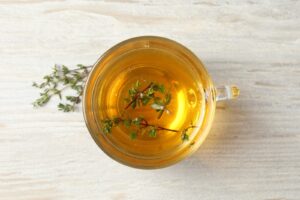
Herbal tea, also called an infusion, is a drink made by pouring hot water over plants, flowers, leaves or roots. Camomile, verbena, mint, lime blossom, fennel, rooibos: there are plenty of varieties, and each has a different flavour profile. Its great nutritional strength lies in its simplicity: with only 0.8 kcal per 100 g, and no fat or added sugar, herbal tea is one of the lightest drinks there is. Caffeine-free (with a few rare exceptions), it suits the morning as well as the evening and contributes to good hydration. It is a discreet but valuable ally in a balanced diet, ideal for varying your pleasures without weighing down your day.
Macronutrient breakdown
Nutrition table per 100 ml
| Calories | 1 kcal |
| Kilojoules | 3 kJ |
| Carbohydrate | 0,2 g |
Micronutrients per 100 ml
All measured nutrients, ranked by share of the daily reference intake.
- Manganese0,04 mg2 %
- Copper0,02 mg2 %
- Vitamin B10,01 mg1 %
- Iodine1 µg1 %
- Iron0,08 mg1 %
- Vitamin B91 µg1 %
- Potassium9 mg0 %
- Zinc0,04 mg0 %
See the other 4 nutrients
- Vitamin B20 mg0 %
- Magnesium1 mg0 %
- Calcium2 mg0 %
- Vitamin B50,01 mg0 %
Anses Ciqual 2025. Source: Anses, 2025, Ciqual food composition table
Tips
To make a good herbal tea, heat the water without letting it boil too hard (around 90 °C for delicate leaves), then leave to infuse for 5 to 10 minutes depending on the plant. Flowers and light leaves need less time than the harder roots or barks, which benefit from simmering for a few minutes. Cover the cup while it infuses to keep the volatile aromatic compounds in.
A few guidelines for drinking it:
- In the morning: a mint or ginger infusion for a lively note, without the caffeine of coffee.
- In the afternoon: verbena, rooibos or citrus for a gentle, thirst-quenching break.
- In the evening: camomile or lime blossom, classics appreciated for their soothing quality before bed.
In terms of nutrition facts, herbal tea is almost empty of calories, carbohydrate, protein and fat. That is exactly what makes it a great drink for weight control: it hydrates and adds flavour without calorie density. Watch out for the habit of adding sugar or honey, though, which quickly turns a light infusion into a sweetened drink. If you want a naturally sweeter taste, rooibos or fruity blends do the job without sugar.
Herbal tea is enjoyed hot, but also iced in summer: let it cool, add slices of lemon or a few fresh mint leaves, and you get a refreshing drink that is far better than an orange soda. You can also alternate it with a light tea to vary the pleasures through the day.
For active people: herbal tea is an excellent addition to your hydration, especially after exercise. A hot or lukewarm infusion encourages muscle relaxation and contributes to rehydration, without adding unnecessary calories. In the evening, a soothing herbal tea can be part of a routine that promotes restful sleep, a key element of recovery. It obviously does not replace water or the carbohydrate and protein of a post-workout snack, but it fits in perfectly alongside them.
For storage, keep your dried herbs in airtight tins, away from light and damp, to preserve their aromas. To discover other drinks and compare what they provide, explore the drinks family or check the food calorie table. Finally, working sugar-free infusions into your day fits perfectly into a lasting, tasty balanced diet.
As an herbal tea: dosage, contraindications and precautions during pregnancy in our guide thyme tea: dangers and contraindications.