Group · Pulses
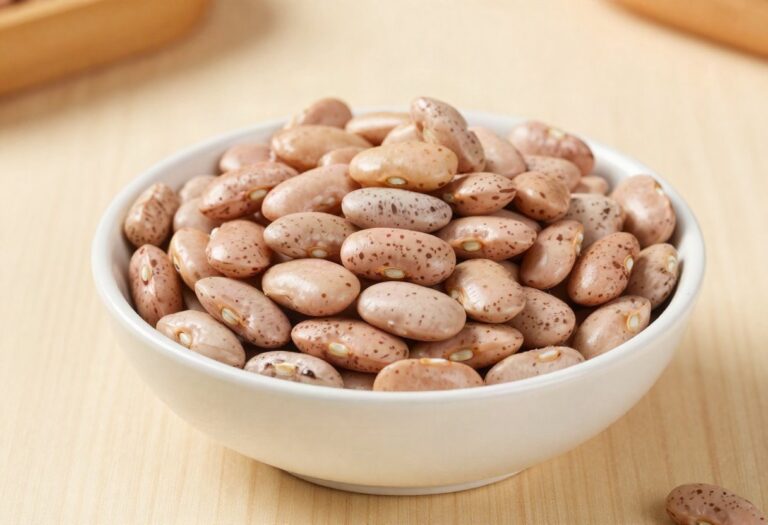
Pinto beans
Pulses with a creamy, tasty and nutty flavour, and red-brown speckles (hence their name)
Macronutrient breakdown
Nutrition table per 100 g
| Calories | 143 kcal |
| Kilojoules | 599 kJ |
| Protein | 9 g |
| Carbohydrate | 26,2 g |
| Fat | 0,7 g |
| Fibre | 9 g |
Tips
A pulse from the same family as the kidney bean. The pinto behaves in the kitchen just like it: it holds its shape when cooked, mashes easily and absorbs spices. It is the base of Mexican frijoles refritos.
Fibre and fullness. Like all pulses, it combines fibre and plant protein, which slows digestion and gives a low glycaemic index. This duo explains its filling power, more than its energy density does.
Protein that complements cereals. Low in methionine and rich in lysine: paired with rice or a corn tortilla, it forms a complete protein intake. The rice and beans of Latin American cooking is no culinary accident.
Digestion. Rinse tinned beans, or throw away the soaking water from dried ones and cook in fresh water. Introducing pulses gradually limits discomfort.
Where these values come from. Ciqual does not list the pinto bean: the values shown come from the American USDA FoodData Central database, entry « Beans, pinto, mature seeds, cooked, boiled ». It is a measurement, not an estimate. See also kidney beans and white beans, which are listed by Ciqual.