Group · Pulses
White beans
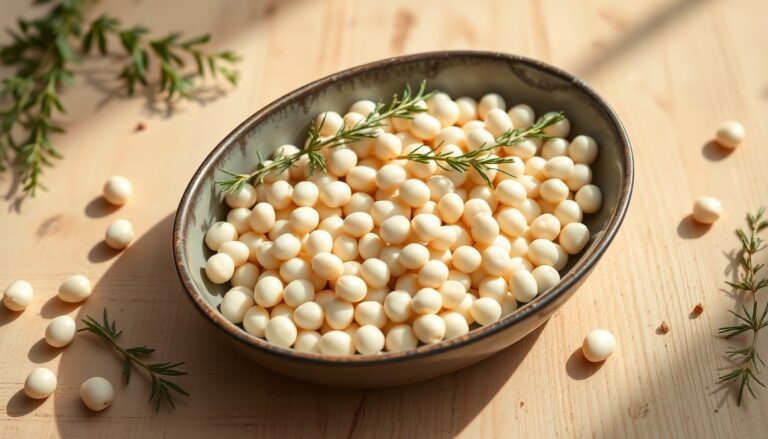
White beans are a staple pulse of Mediterranean and family cooking. They come in several forms: dried, to be rehydrated, tinned, or fresh in season. Whether it is coco beans, lingot beans, Tarbais beans or cannellini, each variety has its melting texture and mild taste. With around 112 kcal per 100 g (once cooked), they offer an excellent balance of plant protein (6.75 g), complex carbohydrate (12 g) and fibre (13.8 g), while staying very low in fat. They are valuable in a balanced diet: filling, inexpensive and versatile, white beans work in many dishes, from cassoulet to summer salads and velvety soups.
Macronutrient breakdown
Nutrition table per 100 g
| Calories | 112 kcal |
| Kilojoules | 466 kJ |
| Protein | 6,8 g |
| Carbohydrate | 12 g |
| Fat | 1,1 g |
| Fibre | 13,8 g |
Micronutrients per 100 g
All measured nutrients, ranked by share of the daily reference intake.
- Manganese0,8 mg40 %
- Copper0,19 mg19 %
- Omega-3 ALA0,37 g19 %
- Phosphorus110 mg16 %
- Calcium120 mg15 %
- Potassium260 mg13 %
- Iron1,7 mg12 %
- Magnesium33 mg9 %
- Vitamin B9dietary folate equivalents31,1 µg
See the other 9 nutrients
- Zinc0,67 mg7 %
- Vitamin K14,37 µg6 %
- Vitamin B60,04 mg3 %
- Vitamin B10,03 mg3 %
- Omega-6 LA0,24 g2 %
- Vitamin B30,32 mg2 %
- Vitamin B20,02 mg1 %
- Vitamin B50,06 mg1 %
- Vitamin A0,46 µg0 %
Anses Ciqual 2025. Source: Anses, 2025, Ciqual food composition table
Tips
White beans can be cooked in a thousand ways. Dried, they need soaking for 8 to 12 hours before slow cooking in gently simmering water (1 to 2 hours). Tinned, they are ready to use: rinse them well to reduce the added salt. A sensible portion is around 100 to 150 g cooked, a generous ladleful as a side or the base of a complete dish.
- Smart pairings: combine them with a cereal (rice, wholemeal bread) to get proteins with complementary amino acids, ideal in a vegetarian meal.
- Ways to cook: blended into a velvety soup, in a warm salad with olive oil and herbs, or simmered cassoulet-style. Gentle cooking preserves their texture and nutrients.
- Storage: once cooked, they keep for 3 to 4 days in the fridge and freeze very well, perfect for batch cooking.
In terms of nutrition facts, white beans shine for their fibre content, which supports fullness and good transit, and for their minerals: iron, potassium, magnesium and phosphorus. Their moderate glycaemic index allows energy to be released gradually, a plus for avoiding energy slumps. If you are looking for similar pulses, take a look at lentils, kidney beans or explore the whole pulse family.
For active people: white beans are a useful source of plant protein and complex carbohydrate to support exercise and recovery. Eaten a few hours before a session, they provide lasting energy; after training, they help replenish glycogen stores and supply amino acids. To optimise your intake, find out how to structure your nutrition for fitness. Remember to introduce pulses gradually so your digestive system gets used to the fibre.
Weight control: low in calories and very filling, white beans are a great ally for slimming. Beware of preparations rich in fats (bacon pieces, fatty sauces, confit) that push up the calorie total. Favour a light dressing of olive oil, garlic and herbs. Go easy on overly salty tinned versions too. Included wisely, the benefits of white beans fit perfectly into a lasting, tasty balanced diet.