Group · Dairy
Poached egg
The poached egg is a refined dish: an egg cooked without its shell in simmering water, with the white wrapped around a yolk that stays runny. This gentle technique, with no added fat, makes it one of the most popular cooking methods among fans of balanced eating. Brunch, warm salads, toasts or weight-loss dishes: the poached egg fits in everywhere with elegance.
In terms of nutrition facts, it provides around 139 kcal per 100 g, with nearly 12.5 g of very high-quality protein, 9.47 g of fat and less than 0.89 g of carbohydrate. Rich in complete protein and low in sugars, it is a useful ally for feeling full without adding too many calories to a meal.
Macronutrient breakdown
Nutrition table per 100 g
| Calories | 139 kcal |
| Kilojoules | 578 kJ |
| Protein | 12,5 g |
| Carbohydrate | 0,9 g |
| Fat | 9,5 g |
Micronutrients per 100 g
All measured nutrients, ranked by share of the daily reference intake.
- Vitamin D2 µg40 %
- Iodine52 µg35 %
- Vitamin B120,71 µg28 %
- Phosphorus197 mg28 %
- Vitamin B20,39 mg28 %
- Vitamin B51,53 mg26 %
- DHA0,06 g23 %
- Vitamin A159 µg20 %
See the other 15 nutrients
- Vitamin B935 µg18 %
- Selenium7,68 µg14 %
- Iron1,75 mg13 %
- Zinc1,1 mg11 %
- Vitamin B60,14 mg10 %
- Vitamin E1,04 mg9 %
- Calcium68,2 mg9 %
- Potassium138 mg7 %
- Copper0,07 mg7 %
- Vitamin B10,03 mg3 %
- Magnesium10,8 mg3 %
- Total omega-30,06 g2 %
- Manganese0,03 mg2 %
- Vitamin K10,3 µg0 %
- Vitamin B30,06 mg0 %
Anses Ciqual 2025. Source: Anses, 2025, Ciqual food composition table
Tips
The main advantage of the poached egg is its fat-free cooking: unlike the fried egg or scrambled eggs, no oil or butter is added, which limits its calorie density. To get it right, lower the raw egg into simmering (never boiling) water with a splash of vinegar, which helps the white to set around the yolk. Three minutes is enough for a runny yolk.
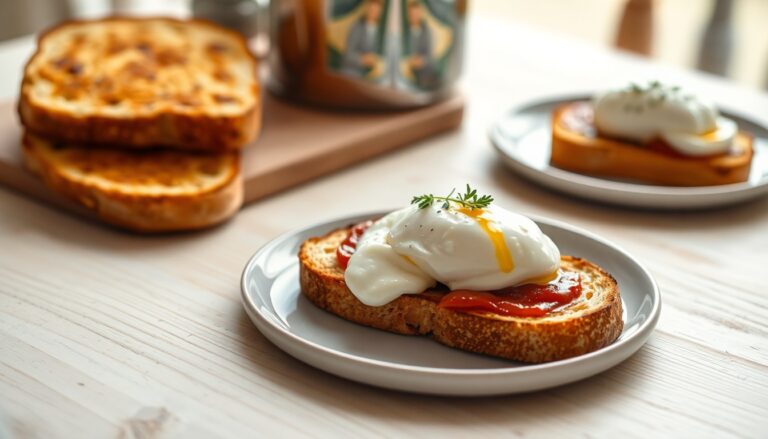
How to eat it? Place it on a slice of wholemeal bread, on a bed of spinach, or as a topping for a mixed salad. A typical portion is one or two eggs (about 50 to 100 g). Combined with vegetables and a source of wholegrain cereals, it makes a filling, balanced meal.
- Complete protein: eggs provide all the essential amino acids, perfect for maintaining muscle mass.
- Micronutrients: you will find vitamin B12, vitamin D, selenium and choline, mostly concentrated in the egg yolk.
- Very low glycaemic index: with less than 0.89 g of carbohydrate, the poached egg has almost no impact on blood sugar.
For active people, the poached egg is a great option at breakfast or as a recovery snack: its reference protein supports muscle repair after exercise. When bulking up, pair it with a source of carbohydrate such as bread or oat flakes. If you are looking for more high-protein ideas, take a look at our protein snack recipes or our guidance on nutrition for fitness.
Weight control: the poached egg is one of the lightest ways to cook an egg, which makes it valuable if you are trying to lose weight. The trap lies mostly in the accompaniments (hollandaise sauce, bacon, butter), which push up the calorie count. Prefer vegetable toppings and a light dressing. To compare intakes, you can explore the whole dairy products and eggs family as well as our food calorie table.
For storage, the poached egg is best eaten straight away. You can prepare it ahead and dip it back into hot water for a few seconds when serving. Eaten in moderation (dietary cholesterol still needs watching in some people), it has its place in a varied and tasty diet.