Group · Bread
Wholemeal bread
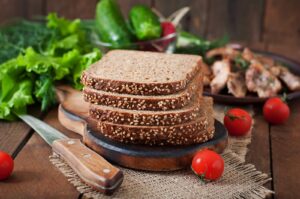
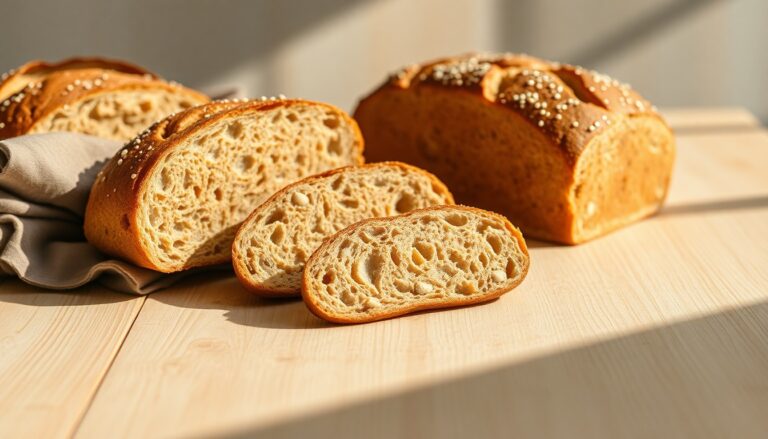
Wholemeal bread is made from wholemeal wheat flour, which keeps the bran and germ of the grain. That is precisely what sets it apart from ordinary white bread: it retains a good share of the fibre, minerals and vitamins naturally found in the cereal. It comes in various forms: a large loaf, a round loaf, sliced for the toaster or in a seeded version. With around 213 kcal per 100 g, 6.25 g of protein, 39.5 g of carbohydrate and 8.2 g of fibre, it provides longer-lasting energy than highly refined breads. Its richness in fibre and moderate glycaemic index make it a valuable ally in a balanced, varied diet.
Macronutrient breakdown
Nutrition table per 100 g
| Calories | 213 kcal |
| Kilojoules | 899 kJ |
| Protein | 6,3 g |
| Carbohydrate | 39,5 g |
| Fat | 0,9 g |
| Fibre | 8,2 g |
Micronutrients per 100 g
All measured nutrients, ranked by share of the daily reference intake.
- Manganese1 mg50 %
- Phosphorus124 mg18 %
- Copper0,15 mg15 %
- Vitamin E1,45 mg12 %
- Zinc1,2 mg12 %
- Vitamin B10,13 mg12 %
- Potassium202 mg10 %
- Magnesium35,1 mg9 %
See the other 8 nutrients
- Iron0,96 mg7 %
- Vitamin B60,07 mg5 %
- Omega-6 LA0,41 g4 %
- Vitamin B50,21 mg4 %
- Vitamin B30,55 mg3 %
- Calcium19,9 mg2 %
- Omega-3 ALA0,04 g2 %
- Vitamin B94 µg2 %
Anses Ciqual 2025. Source: Anses, 2025, Ciqual food composition table
Tips
Wholemeal bread fits easily into every meal. At breakfast, one or two slices (40 to 60 g) with a source of protein and a piece of fruit make a filling base. At lunchtime, it is a better choice than baguette in a sandwich, and in the evening it goes well with a soup or a salad. A reasonable portion is around 50 g at a time, depending on your appetite and activity.
Why choose it? Thanks to the bran and germ it retains, it offers more fibre, magnesium, iron and B vitamins than white bread. Its fibre slows the absorption of carbohydrates, which means a more moderate glycaemic index and a noticeable filling effect. These qualities put it alongside other worthwhile breads such as bran bread or rye bread, which you can discover across the whole bread family.
- Smart pairings: with fresh cheese, eggs, avocado, hummus or a thin layer of good-quality fat.
- Storage: in a cloth bag or a bread bin; you can slice and freeze it to toast as needed.
- Serving: lightly toasted, it develops its aromas while staying easy to digest.
For active people, wholemeal bread is a good choice of complex carbohydrates. Before exercise, it provides gradual energy without a sharp blood sugar spike. For recovery, pair it with a source of protein (egg, lean ham, fromage blanc) to replenish your reserves and support your muscles. For balanced snack ideas, take a look at our protein snack recipes, perfect between two sessions.
When it comes to weight control, keep in mind that bread is still a calorie-rich starchy food: its value comes from its nutritional density, not from a lack of calories. The secret lies in the portion and in what you put on top. To see how its nutritional values compare with other foods, the calorie table is a handy reference. And if you want to build lasting habits, our guide to the balanced diet will help you manage bread and other starchy foods day to day. Ideally, choose a wholemeal bread with a short ingredient list that names a genuinely wholemeal flour, rather than simply bran added to a refined base.
If you have diabetes: the glycaemic index of breads ranges from 53 to 95 depending on the flour and grains. See the comparison in our guide which bread for people with diabetes.