Group · Fish
Salema porgy
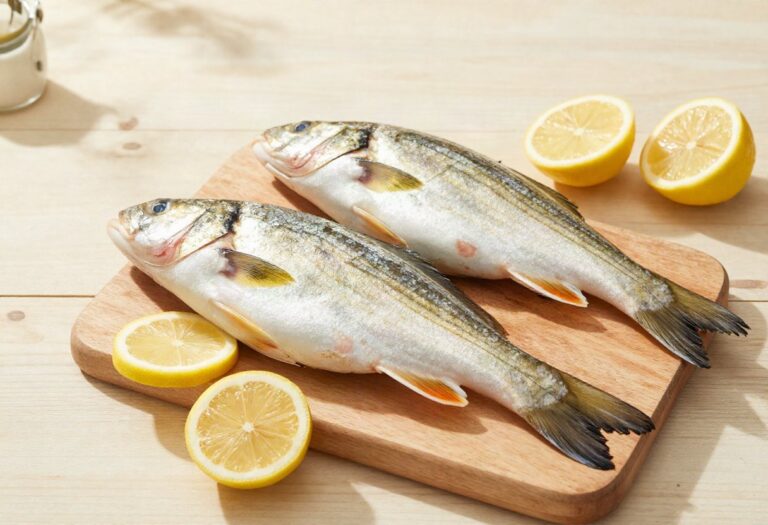
The salema porgy is a Mediterranean fish with yellow stripes, one of the few herbivorous fish on our coasts: it grazes on Posidonia seagrass meadows. This plant-based diet explains both its distinctive taste and its composition.
In terms of nutrition facts, raw: 96.5 kcal per 100 g, with 18 g of protein and 2.5 g of fat. It provides 540 mg of potassium, 4.3 mg of iron and 3.3 mg of zinc per 100 g, which are very high values for a fish.
Macronutrient breakdown
Nutrition table per 100 g
| Calories | 97 kcal |
| Kilojoules | 407 kJ |
| Protein | 18 g |
| Carbohydrate | 0,5 g |
| Fat | 2,5 g |
Micronutrients per 100 g
All measured nutrients, ranked by share of the daily reference intake.
- Copper0,6 mg60 %
- Zinc3,3 mg33 %
- Iron4,3 mg31 %
- Potassium540 mg27 %
- Magnesium27 mg7 %
- Manganese0,1 mg5 %
- Calcium28 mg4 %
Anses Ciqual 2025. Source: Anses, 2025, Ciqual food composition table
Tips
4.3 mg of iron and 3.3 mg of zinc: figures you would expect from red meat. A 150 g portion covers 46% of the reference intake for iron and 50% for zinc. Few fish reach this level.
540 mg of potassium per 100 g. A very good score, on a par with the best fish in the database.
It must be gutted immediately. This is the decisive point: its digestive tract, full of algae, ferments very quickly and gives the flesh an unpleasant iodine taste. A salema gutted on the boat is excellent; gutted two hours later, it is not.
It is very cheap and unloved. Its reputation comes almost entirely from the problem above. Properly handled, it is an honest fish at a bargain price.
Grilled whole, with fennel. Its rather soft flesh does not cope well as fillets: whole on the grill, it holds together and can be eaten with your hands.