Group · Meat
Sliced ham
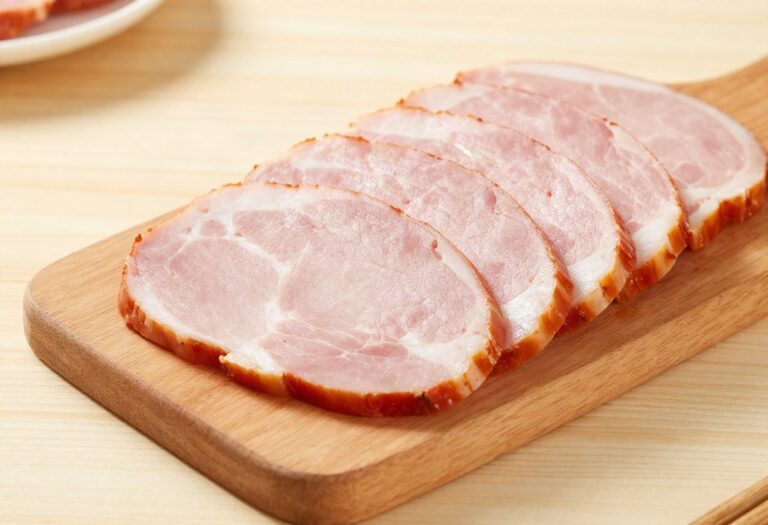
Sliced ham is an everyday charcuterie staple found in most fridges. Made from cooked, salted and thinly sliced pork leg, it comes in many versions: premium cooked ham, ham with rind, trimmed and defatted ham, and reduced-salt versions. Convenient and ready to eat, it fits just as well into a sandwich as into a balanced meal. At around 115 kcal per 100 g, it provides 20.3 g of protein, 3.66 g of fat and only 0.14 g of carbohydrate. This decent protein density makes it a filling ally, as long as you watch the salt content and choose the leanest varieties.
Macronutrient breakdown
Nutrition table per 100 g
| Calories | 115 kcal |
| Kilojoules | 484 kJ |
| Protein | 20,3 g |
| Carbohydrate | 0,2 g |
| Fat | 3,7 g |
| Fibre | 0,4 g |
Micronutrients per 100 g
All measured nutrients, ranked by share of the daily reference intake.
- Vitamin B10,64 mg58 %
- Vitamin B35,6 mg35 %
- Phosphorus210 mg30 %
- Vitamin C17,9 mg22 %
- Zinc2,2 mg22 %
- Vitamin B60,3 mg21 %
- Selenium11 µg20 %
- Copper0,2 mg20 %
See the other 16 nutrients
- Vitamin B20,22 mg16 %
- Potassium313 mg16 %
- Vitamin D0,7 µg14 %
- Vitamin B120,32 µg13 %
- Vitamin B50,7 mg12 %
- Magnesium22,6 mg6 %
- Iron0,8 mg6 %
- Vitamin E0,51 mg4 %
- Iodine6 µg4 %
- DHA0,01 g3 %
- Omega-6 LA0,22 g2 %
- EPA0 g2 %
- Vitamin B92,7 µg1 %
- Calcium6,3 mg1 %
- Omega-3 ALA0,01 g1 %
- Manganese0,01 mg1 %
Anses Ciqual 2025. Source: Anses, 2025, Ciqual food composition table
Tips
Sliced ham is one of the least fatty charcuterie products, which explains its popularity in a watched diet. To benefit from its nutrition facts, preferably choose trimmed, defatted ham, or even a reduced-salt version. A portion of one to two slices (40 to 60 g) is plenty for a meal, alongside vegetables or starchy foods.
- How to eat sliced ham: as it comes in a sandwich, rolled around vegetable sticks, as a filling for an omelette or gratin, or in a mixed salad. It goes well with cheese, raw vegetables or a slice of melon as a summer starter.
- Storage: keep it in the fridge at between 0 and 4 °C, with its packaging resealed, and eat it quickly after opening, as it is a delicate product.
- Time of day: ideal at lunch, as a protein snack or at dinner for a light, filling meal.
As for protein, ham offers good-quality amino acids, useful for maintaining muscle mass. It also provides B vitamins and well-absorbed haem iron. Its glycaemic index is very low, as it contains almost no carbohydrate. If you are looking for other lean protein sources, you can vary with turkey breast or chicken breast, which are also low in calories. To explore other options, browse the meat family.
For active people: sliced ham is a practical, protein-rich snack, for example in wholemeal bread with a little soft cheese after a session. It combines well with a carbohydrate intake to support muscle recovery. To optimise your daily protein intake, these protein snack ideas may inspire you.
Weight control and points to watch: at 115 calories per 100 g, ham remains reasonable, but its main limitation is its salt content, which is sometimes high. Read labels carefully and look for « 25% less salt » claims. Like any charcuterie, it should be eaten in moderation as part of a balanced diet. Pair it with fibre-rich vegetables for a complete, filling meal, and alternate with other protein sources through the week.