Group · Meat
Squab
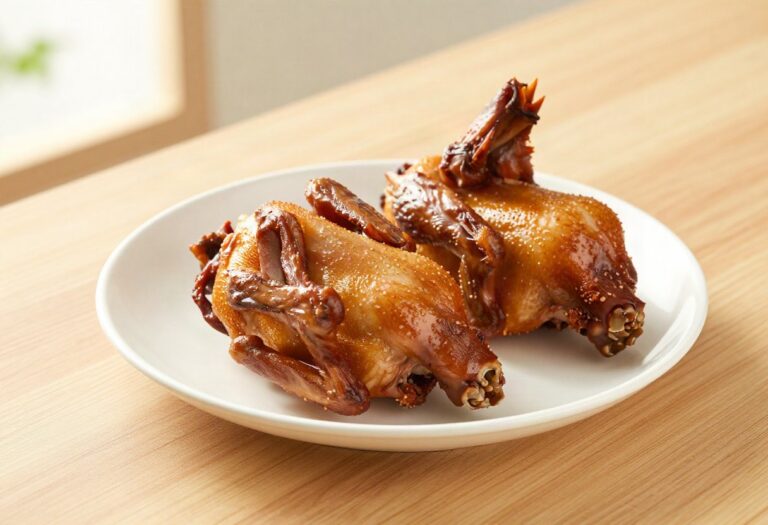
Squab, the young pigeon raised for its tender meat, is a refined poultry meat often found on festive tables and in fine dining. Its pink, delicate and flavoursome meat appeals to lovers of game birds and to cooks looking for exceptional ingredients. At around 213 kcal per 100 g, squab provides 18 g of protein and 15.7 g of fat, with no carbohydrate or fibre. It is therefore a valuable source of animal protein, but relatively rich in fat depending on how it is prepared. Enjoyed roasted, in a salmis (a rich game stew) or pan-fried, it has a place in a varied diet, provided you watch the cooking method and the portion.
Macronutrient breakdown
Nutrition table per 100 g
| Calories | 213 kcal |
| Kilojoules | 885 kJ |
| Protein | 18 g |
| Fat | 15,7 g |
Micronutrients per 100 g
All measured nutrients, ranked by share of the daily reference intake.
- Copper0,52 mg52 %
- Vitamin B36,45 mg40 %
- Phosphorus278 mg40 %
- Vitamin B60,47 mg34 %
- Iron4,03 mg29 %
- Zinc2,45 mg25 %
- Vitamin B10,25 mg23 %
- Omega-6 LA1,85 g19 %
See the other 14 nutrients
- Vitamin B20,25 mg18 %
- Vitamin B120,44 µg18 %
- Vitamin B50,77 mg13 %
- Potassium218 mg11 %
- DHA0,03 g10 %
- Vitamin D0,4 µg8 %
- Vitamin C6,2 mg8 %
- Vitamin A50,5 µg6 %
- Magnesium23,5 mg6 %
- EPA0,01 g4 %
- Vitamin B96,5 µg3 %
- Calcium12,5 mg2 %
- Total omega-30,04 g1 %
- Manganese0,02 mg1 %
Anses Ciqual 2025. Source: Anses, 2025, Ciqual food composition table
Tips
Squab is traditionally cooked whole, roasted in the oven, or as fillets seared in a pan to preserve the tenderness of its pink flesh. Enthusiasts serve it pink in the middle to keep it tender and flavoursome. In a salmis, in a casserole or stuffed, it goes well with robust gravies, fruit (figs, grapes) and aromatics. Allow half to one squab per person as a main course, with seasonal vegetables and a grain for a complete meal.
In terms of nutrition facts, squab provides nearly 18 g of protein per 100 g, which is useful for maintaining muscle mass, but also 15.7 g of fat. Some of this fat is in the skin: removing it after cooking noticeably lowers the calorie intake. The meat provides haem iron, zinc and B vitamins, which support energy metabolism. Its glycaemic index is zero because it contains no carbohydrate.
- Weight-loss tips: choose roasting with no added fat, remove the skin and limit rich sauces made with butter or cream.
- Storage: eat fresh squab within 2 days, or freeze it quickly. Thaw it in the fridge.
- Pairings: green vegetables, mushrooms and root vegetable purées to balance the meal.
For active people, squab can fit into a protein-rich dinner during a muscle-building phase, when a high calorie intake becomes an advantage. When cutting, it is better to keep it for more festive occasions and meet your protein needs with leaner meats such as chicken breast or turkey breast. If you are looking for other tasty poultry to vary your menus, quail and guinea fowl share this delicate, gourmet character.
You can discover all the meat options and their nutritional content in the meat family, and compare the figures using the food calorie table. In short, squab is a meat with character, rich in protein and flavour: enjoy it with pleasure, but remember to moderate the portion and take care over the cooking to keep your plate balanced.