Group · Seafood
Surimi
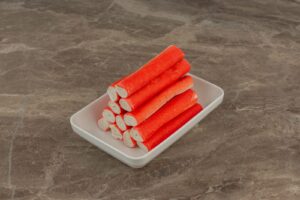
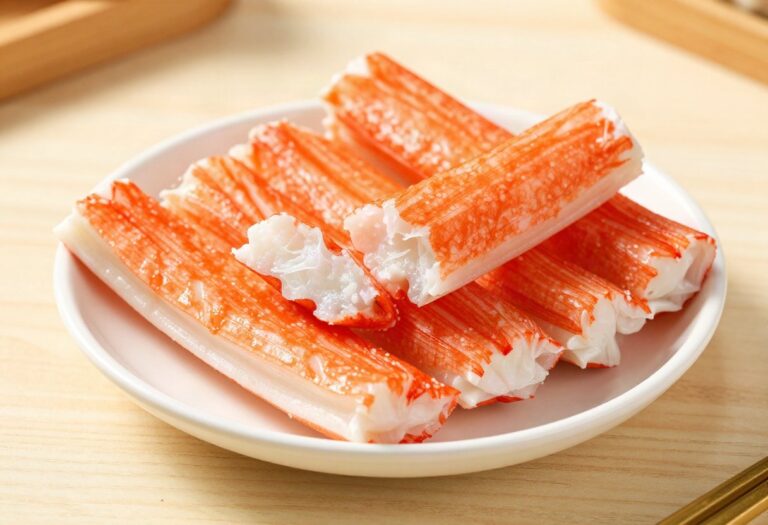
Surimi is a well-known processed product from the chilled aisle, made from minced white fish flesh (often pollock or hake), flavoured and shaped into sticks, flakes or thin slices. It is often classed among seafood because its flavour is reminiscent of crab, but it does not actually contain any: it reproduces the taste with flavourings. With around 117 kcal per 100 g, it has an interesting profile: rich in protein (7.54 g) and very low in fat (less than 4.33 g). Practical, ready to eat and popular with children and athletes alike, surimi fits easily into a varied diet, as long as you read the labels carefully.
Macronutrient breakdown
Nutrition table per 100 g
| Calories | 117 kcal |
| Kilojoules | 492 kJ |
| Protein | 7,6 g |
| Carbohydrate | 11,8 g |
| Fat | 4,4 g |
| Fibre | 0,8 g |
Micronutrients per 100 g
All measured nutrients, ranked by share of the daily reference intake.
- DHA0,21 g84 %
- EPA0,1 g39 %
- Vitamin B120,71 µg28 %
- Total omega-30,61 g24 %
- Selenium9,23 µg17 %
- Omega-3 ALA0,3 g15 %
- Omega-6 LA0,74 g7 %
- Iodine10 µg7 %
See the other 16 nutrients
- Phosphorus44 mg6 %
- Copper0,04 mg4 %
- Vitamin A28 µg4 %
- Magnesium11,5 mg3 %
- Iron0,4 mg3 %
- Potassium51,8 mg3 %
- Calcium19 mg2 %
- Vitamin B60,03 mg2 %
- Zinc0,19 mg2 %
- Vitamin B10,02 mg2 %
- Vitamin B20,02 mg2 %
- Vitamin B30,22 mg1 %
- Vitamin B50,07 mg1 %
- Vitamin B92 µg1 %
- Manganese0,01 mg0 %
- Vitamin K10,1 µg0 %
Anses Ciqual 2025. Source: Anses, 2025, Ciqual food composition table
Tips
Surimi is an ally for quick meals and snacks that need no preparation. You can eat it plain, as sticks to nibble on, sliced into a mixed salad, tucked into a wrap, mixed with fromage frais and herbs for a light spread, or added to a homemade maki. Its firm texture and mild taste go well with avocado, cucumber, lime and a touch of soy sauce.
Nutrition facts and strengths. In terms of calories, surimi stays moderate (117 kcal/100 g), with good protein and little fat. Note, however, that it contains added carbohydrates (starch, sometimes sugar) and above all salt, which is worth watching if you keep an eye on your blood pressure. It is not a true raw seafood product: for a more authentic source of omega-3 and minerals, alternate it with real seafood.
- Choose versions with a high fish content (check the percentage of fish flesh on the packaging).
- Keep it chilled and eat it quickly once opened.
- Limit fatty sauces to stay in a slimming mindset.
For active people. Surimi is a practical, easy-to-digest source of protein, ideal as a snack or to round off a meal after training. However, its protein content is lower than that of other sea options such as prawns or squid, which are richer and less processed. To optimise your recovery, pair it with a source of complex carbohydrates and remember to vary your intake. If you want to increase your protein ration, you can take inspiration from our protein snack ideas.
Varieties and uses. Surimi is sold as classic sticks, flakes (handy for salads and rillettes), grated or in crab, salmon or shellfish flavours. It works in cold recipes (small glasses, seafood tabbouleh) as well as warm ones (light gratins, omelettes). To discover other options from the seafood family, try for example cooked mussels, which are naturally rich in minerals.
Weight control. Surimi is low in calories and filling thanks to its protein, which makes it a good choice in a balanced diet. Still, stay alert to additives, salt and added carbohydrates: eaten occasionally and in moderation, it fits without trouble into a balanced, colourful plate.
Pregnant? Cold surimi is not recommended during pregnancy; cooked and served hot, it becomes possible again. See our guide to surimi and pregnancy.