Group · Seafood
Prawn
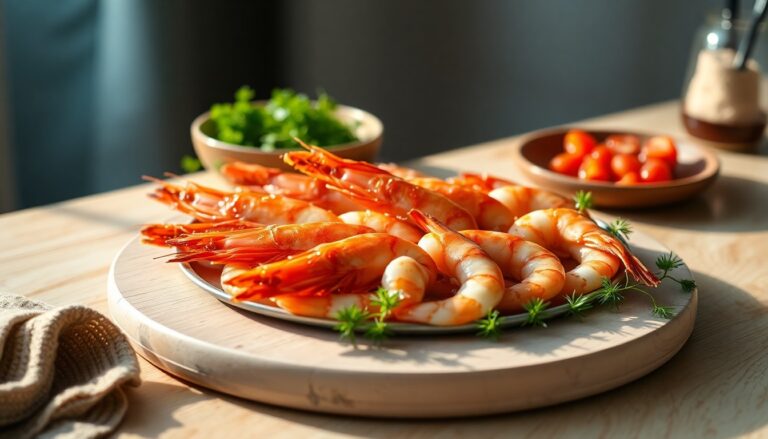
The prawn is one of the best-loved types of seafood: flavoursome, light and easy to cook. Brown shrimp, pink prawns, gambas or northern prawns: there are many varieties, sold raw, cooked, fresh, frozen or shelled. Its fine, delicately briny flesh suits a thousand preparations, from nibbles to main courses. Nutritionally, the prawn stands out for its richness in protein (nearly 22.5 g per 100 g), its low fat content (around 0.85 g) and its lack of carbohydrate, all for only 99 kcal. A food of choice in a balanced diet, combining lightness, enjoyment and an excellent protein intake.
Macronutrient breakdown
Nutrition table per 100 g
| Calories | 100 kcal |
| Kilojoules | 424 kJ |
| Protein | 22,5 g |
| Carbohydrate | 0,7 g |
| Fat | 0,9 g |
Micronutrients per 100 g
All measured nutrients, ranked by share of the daily reference intake.
- Copper1,12 mg112 %
- Vitamin B122,71 µg108 %
- Selenium41,6 µg76 %
- DHA0,08 g33 %
- Phosphorus182 mg26 %
- Vitamin B33,66 mg23 %
- EPA0,06 g23 %
- Zinc1,89 mg19 %
See the other 15 nutrients
- Vitamin E1,96 mg16 %
- Potassium291 mg15 %
- Vitamin B60,18 mg13 %
- Magnesium48 mg13 %
- Iodine18,9 µg13 %
- Calcium56 mg7 %
- Vitamin B50,41 mg7 %
- Vitamin D0,34 µg7 %
- Total omega-30,14 g6 %
- Iron0,58 mg4 %
- Vitamin B20,03 mg2 %
- Vitamin B10,02 mg2 %
- Omega-6 LA0,09 g1 %
- Omega-3 ALA0 g0 %
- Vitamin A1 µg0 %
Anses Ciqual 2025. Source: Anses, 2025, Ciqual food composition table
Tips
The prawn is a valuable ally when you are watching your figure: with around 100 kcal per 100 g and a good protein density, it fills you up without weighing down your calorie balance. A portion of 100 to 150 g is enough for a meal, served with steamed vegetables, a green salad or a little brown rice. For cooking, choose quick pan-frying, court-bouillon, the plancha or steaming: these gentle cooking methods preserve the texture and limit added fats. Be wary of breaded or fried preparations or those coated in creamy sauces, which push up the nutrition values and the calories.
Prawns provide useful minerals such as selenium, zinc, phosphorus and iodine, as well as B vitamins. Their glycaemic index is zero since they contain no carbohydrate. For variety, pair them with garlic, lemon, ginger, fresh herbs or a drizzle of olive oil. In a salad, a stir-fry, on skewers or in a light curry, they fit easily into a balanced diet.
Tips for active people: thanks to their good-quality protein and low fat intake, prawns are ideal when cutting or bulking in a controlled way. Eat them at the meal after training to support muscle recovery, pairing them with a source of carbohydrate (rice, sweet potato, quinoa). To go further on protein intake, discover our ideas for protein snacks and our guidance on fitness nutrition.
- Storage: eat fresh prawns within 24 hours, or opt for frozen ones to thaw in the fridge.
- Seasonality: brown shrimp are mainly caught in spring and autumn, while tropical varieties are available all year round.
- Moderation: watch the salt content of shop-bought cooked prawns and of accompanying sauces.
If you like marine flavours, explore other treasures such as the American lobster or scallops, just as light and rich in protein. You will find all our entries in the section devoted to seafood. Versatile, low in calories and tasty, the prawn deserves a regular place on a balanced plate, as long as you take care over its preparation and accompaniments.
Pregnant? Prawns cooked right through and served hot are allowed; shelled prawns sold ready-cooked and eaten cold are not recommended. See our guide to prawns in pregnancy.