Group · Condiments & sauces
Tomato purée (concentrated)
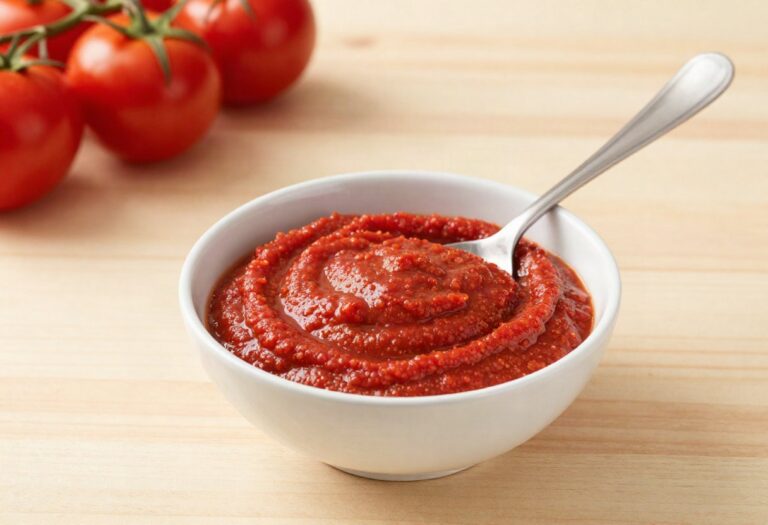
Concentrated tomato purée is tomato cooked and reduced until most of its water has evaporated. This reduction concentrates everything: the flavour, the natural sugars and, above all, the lycopene.
On the nutrition side, it provides 99.2 kcal per 100 g, with 17.1 g of carbohydrate, 4.4 g of protein, 0.53 g of fat and 4.2 g of fibre. It also provides 1,010 mg of potassium per 100 g.
Macronutrient breakdown
Nutrition table per 100 g
| Calories | 99 kcal |
| Kilojoules | 419 kJ |
| Protein | 4,4 g |
| Carbohydrate | 17,1 g |
| Fat | 0,6 g |
| Fibre | 4,2 g |
Micronutrients per 100 g
All measured nutrients, ranked by share of the daily reference intake.
- Potassium1010 mg51 %
- Vitamin B958 µg29 %
- Magnesium63,3 mg17 %
- Vitamin K111,4 µg15 %
- Phosphorus103 mg15 %
- Vitamin B32,2 mg14 %
- Iron1,2 mg9 %
- Vitamin A65,3 µg8 %
See the other 10 nutrients
- Vitamin B10,08 mg7 %
- Vitamin B20,1 mg7 %
- Vitamin B60,09 mg6 %
- Calcium45,6 mg6 %
- Vitamin B50,2 mg3 %
- Vitamin C2,6 mg3 %
- Iodine4,4 µg3 %
- Omega-6 LA0,15 g2 %
- Selenium0,4 µg1 %
- Omega-3 ALA0,01 g1 %
Anses Ciqual 2025. Source: Anses, 2025, Ciqual food composition table
Tips
A misleading density, a tiny serving. 99.2 kcal per 100 g seems high for tomato, but you use a tablespoon, which is 16 g and 16 kcal. Tomato purée never weighs heavily on a dish.
Lycopene is concentrated in it. Cooking and reduction make this carotenoid more available than in raw tomato. A spoonful of purée provides more than a whole tomato.
Check the label. Pure purée contains only tomato. Some preparations add salt and sugar: that is the only thing to look for.