Group · Meat
Rillettes de Tours
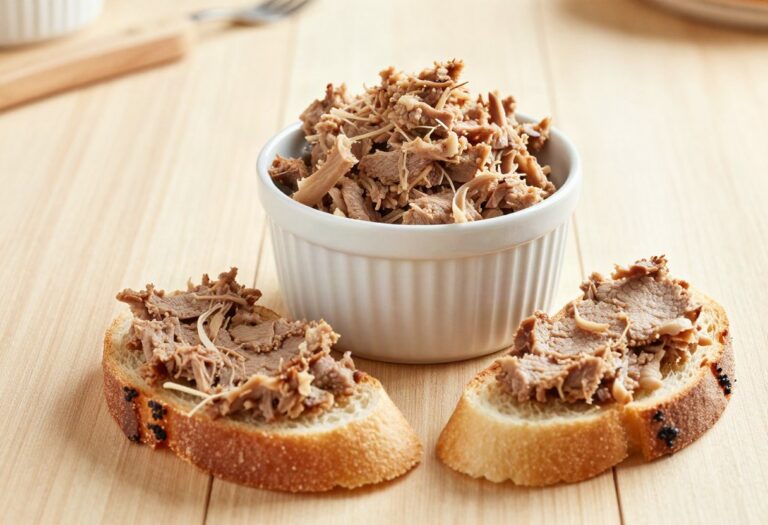
Rillettes de Tours stand out for a longer cooking time and a coarser shredding than those of Le Mans: they are drier, more golden, and traditionally cooked with white wine. They are not covered with a layer of fat.
As for nutrition facts: 522 kcal per 100 g, the record for this family, with 50 g of fat and 18 g of protein. The Ciqual table does not publish a salt content for this entry, so that field is left empty on the page.
Macronutrient breakdown
Nutrition table per 100 g
| Calories | 522 kcal |
| Kilojoules | 2160 kJ |
| Protein | 18 g |
| Carbohydrate | 0,1 g |
| Fat | 50 g |
Tips
50 g of fat per 100 g: half the product is fat. It is the most energy-dense food in the whole Meat family. A 25 g slice on bread provides 131 kcal.
They are richer than rillettes du Mans. 522 kcal against 420 for rillettes du Mans: the longer cooking evaporates the water and concentrates the fat. “Drier” does not mean “leaner”.
A thin layer, on toasted bread. This is the only sensible way to eat them. They have enough flavour for a thin layer to be enough.
They count towards the processed meat guideline. 150 g a week, all products combined.
They keep less well. Without a protective layer of fat, they oxidise faster once the pot is open: one week in the fridge, with cling film pressed onto the surface.