Group · Vegetables
Wakame
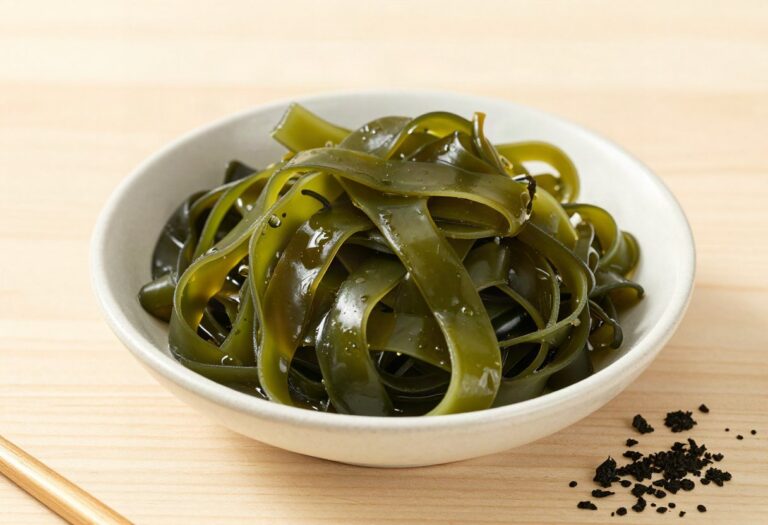
Wakame is a brown seaweed that has been eaten for centuries in Japan and Korea, where it goes into soups and salads. Sold dried, it rehydrates in a few minutes and regains a supple, slightly crunchy texture.
Like all sea vegetables, it is very rich in iodine and naturally provides salt. Its values come from the USDA FoodData Central database, as Ciqual does not list this seaweed.
Macronutrient breakdown
Nutrition table per 100 g
| Calories | 45 kcal |
| Kilojoules | 188 kJ |
| Protein | 3 g |
| Carbohydrate | 9,1 g |
| Fat | 0,6 g |
| Fibre | 0,5 g |
Tips
A sea vegetable, not a green vegetable. Wakame is most often sold dried: a few grams of the dry product swell to up to ten times their volume in five minutes in lukewarm water. That is why the quantities in Japanese recipes look tiny.
What makes it interesting: iodine. Sea vegetables are the richest foods in iodine, and wakame is no exception. That is a plus (iodine is one of the minerals whose intake is often borderline in France) but also a reason not to overdo it: too much iodine disturbs the thyroid. A few grams per portion are enough.
Thyroid: the precaution that matters. If you have an overactive thyroid, are on thyroid treatment or are pregnant, regular consumption of seaweed calls for medical advice. From this point of view, it is not an everyday food.
In the kitchen. Rehydrated, it is served in a salad with sesame and rice vinegar, or in a miso soup added off the heat. It provides salt naturally: taste before seasoning.
Where these values come from. Ciqual does not list wakame: the values shown come from the American USDA FoodData Central database, entry « Seaweed, wakame, raw ». It is a measurement, not an estimate.