Group · Seafood
Whelk (bulot)
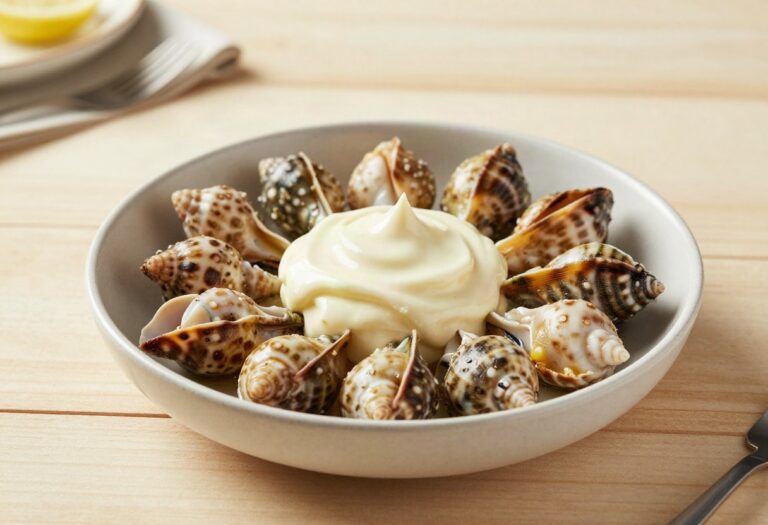
The whelk (bulot or buccin in French) is a large marine gastropod from the Channel coast, fished mainly in the Bay of Granville. Cooked in court-bouillon and served cold with mayonnaise, it is a classic of seafood platters.
In terms of nutrition facts, cooked, it provides 97.7 kcal per 100 g with 20.7 g of protein and only 0.47 g of fat. Its standout figures: 144 mg of magnesium (38% of the reference intake), 114 µg of iodine, 31.4 µg of selenium and 4.61 µg of vitamin B12 per 100 g.
Macronutrient breakdown
Nutrition table per 100 g
| Calories | 98 kcal |
| Kilojoules | 415 kJ |
| Protein | 20,7 g |
| Carbohydrate | 2,7 g |
| Fat | 0,5 g |
Micronutrients per 100 g
All measured nutrients, ranked by share of the daily reference intake.
- Vitamin B124,61 µg184 %
- Iodine114 µg76 %
- Selenium31,4 µg57 %
- Magnesium144 mg38 %
- Copper0,27 mg27 %
- EPA0,06 g22 %
- Zinc1,58 mg16 %
- Phosphorus108 mg15 %
See the other 15 nutrients
- DHA0,02 g9 %
- Vitamin B31,44 mg9 %
- Potassium173 mg9 %
- Calcium64,5 mg8 %
- Vitamin E0,84 mg7 %
- Vitamin B20,1 mg7 %
- Vitamin B50,41 mg7 %
- Vitamin B60,08 mg6 %
- Iron0,64 mg5 %
- Vitamin C3,4 mg4 %
- Vitamin B97,67 µg4 %
- Total omega-30,08 g3 %
- Vitamin A1 µg0 %
- Omega-3 ALA0 g0 %
- Omega-6 LA0,01 g0 %
Anses Ciqual 2025. Source: Anses, 2025, Ciqual food composition table
Tips
The mayonnaise weighs more than the whelk. 97.7 kcal per 100 g of flesh, against about 700 for the same amount of mayonnaise. One tablespoon almost doubles the calories of the portion. A lemony fromage blanc sauce does the job very well.
144 mg of magnesium is exceptional. Few foods provide as much outside chocolate and nuts. Magnesium intakes are insufficient in a large share of the French population.
114 µg of iodine in a portion. Seafood is the leading dietary source of iodine, which the thyroid needs. A single plate of whelks covers three quarters of the reference intake.
Cooking: start in cold water, and not too long. Fifteen to twenty minutes at a simmer once it returns to the boil. Beyond that, the flesh turns rubbery, the same pitfall as with squid.
Remove the operculum and the twist. The small horny disc at the opening of the shell is discarded; the dark spiral part at the end is the digestive system, bitter and often gritty. The rest is eaten.
Sources
Average nutritional values per 100 g, provided for guidance only (may vary by brand, cut and preparation).