Glutathione: benefits, liposomal glutathione, NAC, skin lightening and side effects
The short answer
Glutathione is the main antioxidant your cells make, built from three amino acids: glutamate, cysteine and glycine. For years, oral glutathione was thought to be useless because digestion breaks it down. A 6-month randomized trial (Richie et al., 2015) changed that: 250 or 1,000 mg a day raised body glutathione by 17% to 35%, depending on dose and where it was measured. What we still don’t know is whether that rise brings any real health benefit. Liposomal glutathione has only one small, manufacturer-funded pilot study. For skin lightening, oral effects are small and uncertain, and glutathione injections and IV drips carry real safety warnings.
This article is for information and does not replace medical advice.
What is glutathione and what does it do?
Glutathione (GSH) is a small peptide and the most abundant antioxidant your body produces. It:
- neutralizes oxidizing molecules constantly produced by metabolism;
- helps the liver process drugs and pollutants. That is why acetylcysteine, which lets the liver rebuild its glutathione, is the antidote to acetaminophen (paracetamol) overdose;
- supports immune cells.
It exists in a reduced form (GSH, the active one) and an oxidized form (GSSG). Labels saying “L-glutathione” or “reduced glutathione” refer to the active form.
Glutathione in food
A US analysis of foods (Jones et al., 1992) found moderate to high amounts in fruits and vegetables, fairly high amounts in fresh meats, and little in dairy, cereals and bread; cooking and processing (except freezing) destroy much of it. Commonly cited vegetables include asparagus, avocado and spinach. In 69 adults, dietary intake ranged from 13 to 110 mg a day (mean 34.8 mg) but was not linked to blood glutathione levels (Flagg et al., 1994): your body makes far more than you eat. See also our guide to antioxidant foods.
Is oral glutathione absorbed?
| Study | Design | Result |
|---|---|---|
| Witschi et al., 1992 | 7 volunteers, single dose of about 3 g | No rise in blood glutathione: it is broken down in the gut and liver |
| Allen and Bradley, 2011 | 40 adults, 1,000 mg/day (500 mg twice), 4 weeks, vs placebo | No change in red blood cell glutathione or oxidative stress markers |
| Richie et al., 2015 | 54 non-smoking adults, 250 or 1,000 mg/day, 6 months, vs placebo | 1,000 mg: +30% to 35% in red cells, plasma and lymphocytes. 250 mg: +17% in whole blood, +29% in red cells. Back to baseline 1 month after stopping |
| Sinha et al., 2018 | 12 adults, liposomal 500 or 1,000 mg/day, 1 month | Up to +40% in whole blood at 2 weeks; pilot study funded by a liposomal glutathione company |
In the Richie trial, the rise grew with dose and time, which may explain why single doses and 4-week studies found nothing. “Glutathione can’t be absorbed” is too simple, but the best trial had only 54 people and measured blood levels, not health outcomes.
Liposomal glutathione
A liposome is a tiny bubble of phospholipids (usually lecithin) that wraps glutathione to protect it during digestion. The only published human study we found (Sinha et al., 2018) had 12 participants, no comparison with standard glutathione, and industry funding; the authors call the results preliminary. No trial has compared liposomal and standard glutathione head to head.
Glutathione benefits: what the research shows
Immune markers
In the Richie trial, natural killer (NK) cell activity more than doubled at 3 months on 1,000 mg a day. That is a lab marker: the study did not look at infections.
Glutathione and the liver
In a Japanese study (Honda et al., 2017), 34 patients with fatty liver took 300 mg a day for 4 months after 3 months of lifestyle changes; liver enzyme ALT fell in the 29 who finished. There was no placebo group and no randomization. For liver health, diet, weight and alcohol matter most: see liver health and detox myths.
A negative trial
In 58 children with cystic fibrosis, 24 weeks of oral glutathione did not improve growth or inflammation markers versus placebo, although it was well tolerated (Bozic et al., 2020).
Glutathione for skin lightening: pills, injections and IV
- Oral: in a Thai trial (Arjinpathana and Asawanonda, 2012), 60 students took 500 mg a day for 4 weeks; the melanin index fell more than with placebo at only 2 of 6 sites. A systematic review (Dilokthornsakul et al., 2019) calls the evidence inconclusive;
- Injections and IV drips: an Indian review (Sonthalia et al., 2016) found no evidence they work and notes that adverse effects led the Philippine FDA to issue a public warning against this use. A 2026 review (Aloraini et al.) lists liver toxicity, allergic reactions and possible kidney and hormonal effects. In the UK, a woman developed shock, a fever above 41 °C (106 °F) and liver injury within an hour of an unlicensed glutathione infusion for skin lightening (Sharma et al., 2025).
Bottom line: skip glutathione IV drips and injections offered outside medical care, including at spas and “drip bars”.
Glutathione side effects and who should avoid it
Oral glutathione at 250 to 1,000 mg a day was well tolerated in published trials, including in children. The real risks are with injections. Other cautions:
- pregnancy and breastfeeding: no safety data found; avoid;
- children: only with medical advice;
- cancer treatment: some therapies work through oxidative stress; ask your oncologist before any antioxidant;
- no long-term data beyond 6 months.
NAC, glycine and GlyNAC: glutathione precursors
Instead of swallowing glutathione, you can supply its building blocks. Cysteine is the limiting one, provided by NAC (N-acetylcysteine); glycine is the third. The combination, “GlyNAC”, has been tested in older adults:
- Kumar et al., 2023: 24 randomized older adults, 16 weeks; GlyNAC corrected glutathione deficiency and improved several markers (oxidative stress, inflammation, strength, gait) versus placebo. A small trial;
- Lizzo et al., 2022: 114 healthy older adults, 2.4 to 7.2 g a day for 2 weeks; no rise in glutathione overall, only in those starting with low levels and high oxidative stress. Run by Nestlé, which sells the combination.
How to take glutathione
- Studied doses: 250 to 1,000 mg a day of standard reduced glutathione; 500 to 1,000 mg a day liposomal; 300 mg a day in the liver study.
- Duration: in the Richie trial, levels rose from 1 month and kept rising to 6 months, then faded 1 month after stopping.
- Timing: no study compares timing; most makers suggest an empty stomach or before meals.
- Form: choose reduced glutathione (GSH, L-glutathione) from a named raw material with published batch tests.
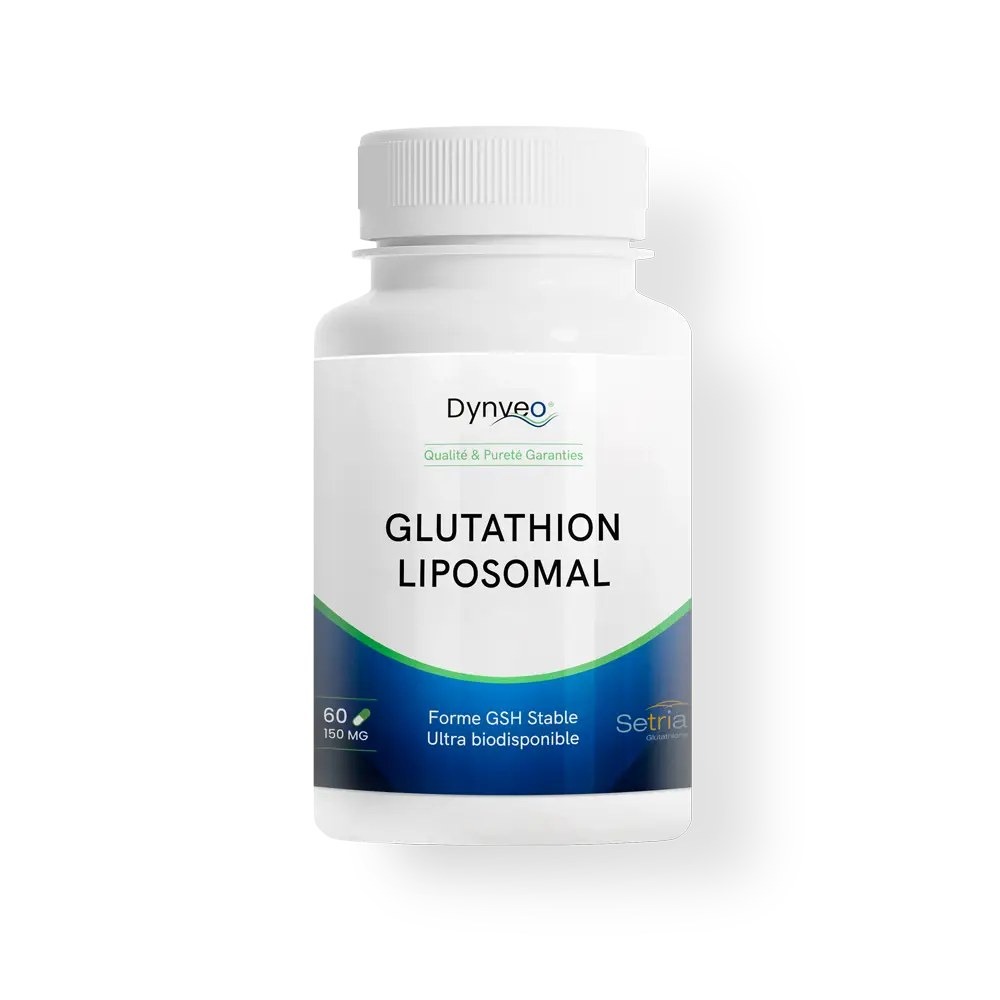
Dynveo: liposomal glutathione made with Setria®, the form used in the 6-month trial
If you want to try glutathione, Dynveo’s Glutathion liposomal naturel stands out because it uses Setria®, Kyowa Hakko Bio’s reduced glutathione, the raw material behind the Richie trial, here wrapped in liposomes. The product page lists:
- 150 mg of reduced glutathione per capsule, made by fermentation (non-animal);
- liposomes of non-GMO sunflower phosphatidylcholine, in pullulan plant capsules, no additives;
- 2 capsules a day (300 mg), morning and evening, 15 minutes before meals; 60 capsules, a 1-month supply;
- batch test certificates online; encapsulation by a US partner, then capsules filled in France at the brand’s lab;
- €45.90 per bottle (price checked on 22/11/2026), about €1.53 a day.
How does the dose compare? 300 mg a day is slightly above the 250 mg group in the Richie trial (+17% blood glutathione at 6 months), but in liposomal form, which that trial did not test, and below the 500 to 1,000 mg of the liposomal pilot. The studies above did not test this exact product.
The brand rightly advises against use in pregnancy and breastfeeding. If you take medication, check with your pharmacist: “no known interactions” mostly reflects a lack of studies.
See Dynveo Liposomal Glutathione →
Partner link: we earn a commission if you order through this link, at no extra cost to you.
Frequently asked questions
What does glutathione do for your body?
It neutralizes oxidizing molecules, helps the liver process drugs and toxins, and supports immune cells. Your body makes it from glutamate, cysteine and glycine.
What are the benefits of glutathione supplements?
In a 6-month trial, they raised glutathione stores by 17% to 35% and boosted an immune marker. Real-world benefits such as fewer infections have not been shown.
Is liposomal glutathione better?
It may be, but no trial has compared it directly with standard glutathione. The only liposomal study had 12 people and industry funding.
Does glutathione lighten skin?
Oral glutathione has small, inconsistent effects. Injections and IV drips have no proven benefit and carry safety warnings.
What are the side effects of glutathione?
Oral doses were well tolerated in trials. Injections have been linked to allergic reactions, liver injury and severe reactions to unlicensed products.
Sources
- Richie J.P. Jr et al. Randomized controlled trial of oral glutathione supplementation on body stores of glutathione. Eur J Nutr, 2015; 54(2): 251-63. PubMed 24791752
- Sinha R. et al. Oral supplementation with liposomal glutathione elevates body stores of glutathione and markers of immune function. Eur J Clin Nutr, 2018; 72(1): 105-111. PubMed 28853742
- Witschi A. et al. The systemic availability of oral glutathione. Eur J Clin Pharmacol, 1992; 43(6): 667-9. PubMed 1362956
- Allen J., Bradley R.D. Effects of oral glutathione supplementation on systemic oxidative stress biomarkers in human volunteers. J Altern Complement Med, 2011; 17(9): 827-33. PubMed 21875351
- Honda Y. et al. Efficacy of glutathione for the treatment of nonalcoholic fatty liver disease: an open-label pilot study. BMC Gastroenterol, 2017; 17(1): 96. PubMed 28789631
- Bozic M. et al. Oral Glutathione and Growth in Cystic Fibrosis: a randomized, placebo-controlled trial. J Pediatr Gastroenterol Nutr, 2020; 71(6): 771-777. PubMed 32960827
- Kumar P. et al. Supplementing Glycine and N-Acetylcysteine (GlyNAC) in Older Adults: A Randomized Clinical Trial. J Gerontol A Biol Sci Med Sci, 2023; 78(1): 75-89. PubMed 35975308
- Lizzo G. et al. Glycine and N-Acetylcysteine Supplementation in Healthy Older Adults: a randomized controlled trial. Front Aging, 2022; 3: 852569. PubMed 35821844
- Flagg E.W. et al. Dietary glutathione intake in humans and plasma total glutathione level. Nutr Cancer, 1994; 21(1): 33-46. PubMed 8183721
- Arjinpathana N., Asawanonda P. Glutathione as an oral whitening agent: a randomized, double-blind, placebo-controlled study. J Dermatolog Treat, 2012; 23(2): 97-102. PubMed 20524875
- Dilokthornsakul W. et al. The clinical effect of glutathione on skin color: A systematic review. J Cosmet Dermatol, 2019; 18(3): 728-737. PubMed 30895708
- Sonthalia S. et al. Glutathione as a skin whitening agent: Facts, myths, evidence and controversies. Indian J Dermatol Venereol Leprol, 2016; 82(3): 262-72. PubMed 27088927
- Aloraini K. et al. Glutathione for skin lightening via intravenous, oral, and topical routes: a critical narrative review. J Med Life, 2026; 19(7): 511-523. PubMed 42751591
- Sharma D. et al. Systemic Inflammatory Response Syndrome Following High-Dose Intravenous Glutathione: A Case Report. Cureus, 2025; 17(5): e84736. PubMed 40556995