Group · Vegetables
Asparagus
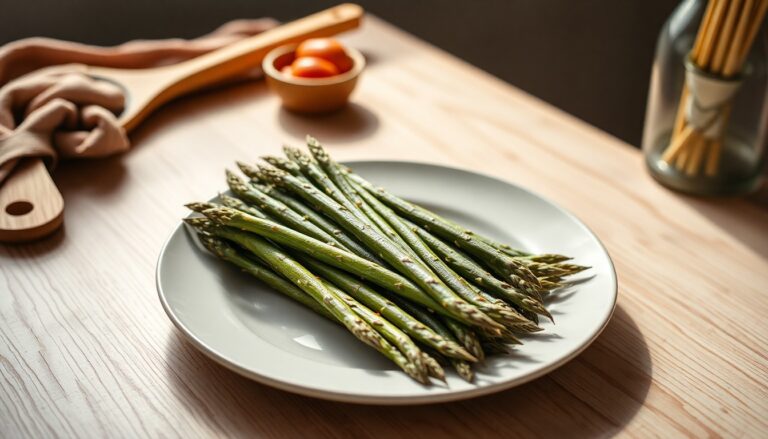
Asparagus is a tender, refined spring vegetable, recognisable by its long stalks topped with a delicate tip. There are three main varieties: white asparagus, grown away from the light, purple asparagus, which is fruitier, and green asparagus, with a more pronounced taste. With only 20.7 kcal per 100 g, it is one of the lightest vegetables, while still providing fibre, a little plant protein and plenty of water. Its nutrition facts make it a great ally in a balanced diet and for slimming goals. Full of flavour and easy to cook, asparagus is as good hot as cold, as a starter or a side.
Macronutrient breakdown
Nutrition table per 100 g
| Calories | 21 kcal |
| Kilojoules | 87 kJ |
| Protein | 2 g |
| Carbohydrate | 1,7 g |
| Fat | 0,3 g |
| Fibre | 1,7 g |
Micronutrients per 100 g
All measured nutrients, ranked by share of the daily reference intake.
- Copper0,1 mg10 %
- Potassium163 mg8 %
- Vitamin K15,6 µg7 %
- Vitamin E0,87 mg7 %
- Vitamin C4,98 mg6 %
- Phosphorus37,6 mg5 %
- Manganese0,1 mg5 %
- Vitamin B10,05 mg5 %
- Vitamin B9dietary folate equivalents68,1 µg
See the other 12 nutrients
- Zinc0,38 mg4 %
- Iron0,42 mg3 %
- Vitamin B50,16 mg3 %
- Vitamin B60,04 mg3 %
- Vitamin B20,03 mg2 %
- Vitamin B30,38 mg2 %
- Magnesium8,35 mg2 %
- Calcium17,6 mg2 %
- Vitamin A16,6 µg2 %
- Total omega-30,05 g2 %
- Omega-3 ALA0,03 g1 %
- Omega-6 LA0,1 g1 %
Anses Ciqual 2025. Source: Anses, 2025, Ciqual food composition table
Tips
Asparagus is at its best during its season, from April to June. Choose firm stalks with tightly closed tips and a moist base. To get the most from its benefits, favour gentle cooking: steaming, simmering water or a quick pan-fry. Cooking for too long softens the stalks and loses some of the water-soluble vitamins. Allow 8 to 12 minutes of steaming depending on thickness, and peel the base of white asparagus, which is more fibrous.
Nutritionally, asparagus is interesting for its low energy density and its fibre content, useful for digestive comfort and fullness. It also provides folate (vitamin B9), vitamin C, vitamin K and potassium. Its glycaemic index is low, which makes it a vegetable perfectly suited to a balanced diet.
In the kitchen, asparagus goes wonderfully with a soft-boiled egg, Parmesan, a light vinaigrette or a few fresh herbs. You can roast it in the oven with a drizzle of olive oil, or add it to a risotto, an omelette or a warm salad. To vary the pleasure, combine it with other seasonal vegetables such as leek or artichoke, also low in calories.
- Recommended portion: about 150 to 200 g per person as a side.
- Storage: 2 to 3 days in the fridge, standing in a little water or wrapped in a damp cloth.
- Slimming tip: replace rich sauces with a touch of lemon, plain yoghurt or mustard.
For active people, asparagus is not an energy source in itself, but it is an ideal addition to a recovery meal rich in protein and complex carbohydrate. Its potassium contributes to fluid balance, which is welcome after an intense session. Pair it with a source of protein (fish, poultry, eggs) to build a balanced and complete plate. Remember to drink well around exercise too.
Light and tasty, asparagus deserves its place in your seasonal basket. To compare its calories with those of other foods, see the calorie table, and explore the vegetable family to put together varied menus throughout the year.