Lemon balm: benefits, tea, side effects and thyroid caution
The short answer
Lemon balm (Melissa officinalis) is a lemon-scented herb from the mint family. The European Medicines Agency (EMA) recognizes its traditional use to relieve mild symptoms of stress, aid sleep and ease mild digestive complaints such as bloating and gas. Human trials point the same way, mainly for anxiety, but they are small and very different from one another. Lemon balm is well tolerated: the EMA lists no known side effects. The cautions are pregnancy and breastfeeding (not recommended for lack of data), children under 12, driving (it can make you drowsy) and the thyroid: in the lab, its extracts block TSH, the hormone that drives the thyroid. If you have a thyroid condition, check with your doctor before taking it regularly.
This article is for information and does not replace medical advice. Lasting anxiety, persistent insomnia or unusual digestive pain should be checked by a doctor.
What is lemon balm?
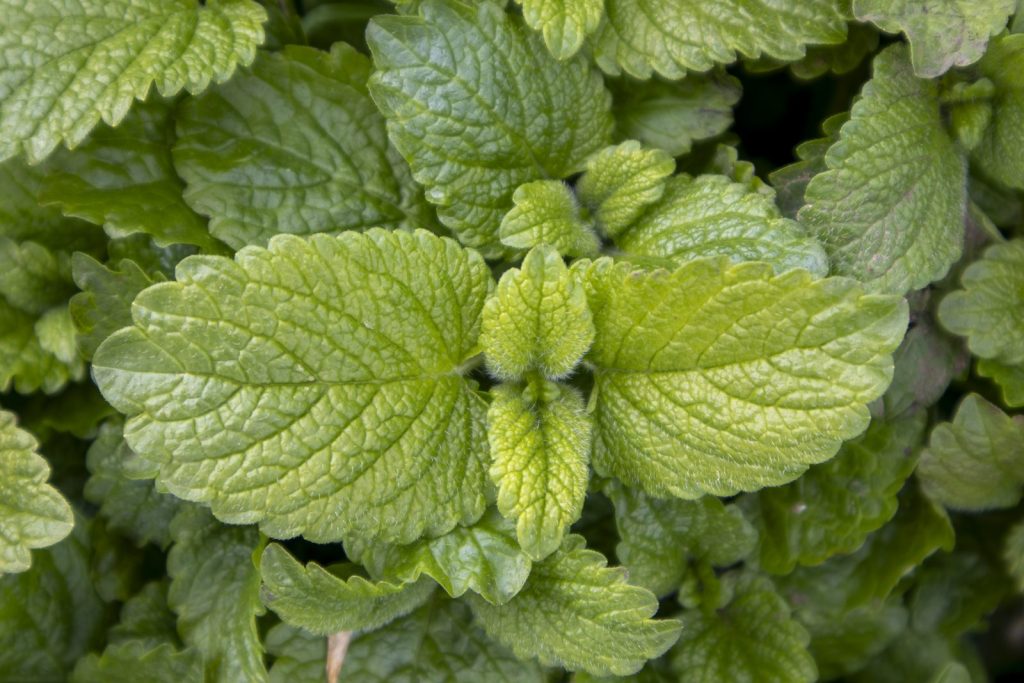
Lemon balm is a perennial herb native to the Mediterranean. Its leaves, fresh or dried, are used in tea, cooking and extracts. It tastes of lemon with a hint of mint. It is not the same plant as lemongrass (Cymbopogon), nor as bee balm.
The leaves are rich in phenolic compounds, especially rosmarinic acid, plus a little essential oil (citral, citronellal). Researchers think rosmarinic acid slows the breakdown of GABA, the brain’s calming messenger; this idea comes mostly from lab studies.
Lemon balm benefits: what the research shows
Stress and anxiety: the strongest evidence
A meta-analysis of randomized trials (Ghazizadeh et al., 2021) found that lemon balm improved anxiety and depression scores versus placebo, more clearly for anxiety and in the short term, with no serious side effects. The authors stress the limits: few trials, very different doses and extracts, and inconsistent results.
| Study | What was given | Result |
|---|---|---|
| Ghazizadeh et al., 2021 (meta-analysis of RCTs) | Lemon balm in various forms | Anxiety: standardized difference -0.98; depression: -0.47 vs placebo; high heterogeneity |
| Kennedy et al., 2004 (18 volunteers, placebo-controlled) | Single dose of 300 or 600 mg extract | At 600 mg, more calmness during a stress test |
| Kennedy et al., 2006 (24 volunteers) | Lemon balm + valerian, 600 to 1,800 mg | Less anxiety at 600 mg; slightly more anxiety at 1,800 mg |
The 2006 trial is a useful reminder that more is not better: the highest dose of the blend worked less well, and all doses slightly slowed volunteers on an attention task.
Lemon balm tea for sleep
- An Italian pilot study without placebo in 20 stressed adults reported a 42% drop in insomnia scores over 15 days with a standardized extract (Cases et al., 2011). Without a control group, the placebo effect is unknown;
- a placebo-controlled crossover trial of a “phytosome” lemon balm extract (Di Pierro et al., 2024) found an insomnia score of 6.8 vs 9.7 on placebo, 2.9 points lower. Some authors work for the extract maker.
Lemon balm is often paired with valerian, passionflower or chamomile in bedtime teas and supplements. To compare with melatonin and other options, see our best sleep supplement comparison.
Digestion
The EMA accepts lemon balm for bloating and gas based on traditional use, not trials. We found no solid adult trial of lemon balm alone for digestion; published trials test herbal blends.
Lemon balm and blood pressure
An Iranian crossover trial in 49 people with hypertension (Shekarriz et al., 2021) reported systolic pressure falling from about 152 to 130 mmHg on lemon balm capsules. That is a very large effect for a herb, in a small group, and it has not been replicated. It is not a substitute for blood pressure medication.
Lemon balm for weight loss?
Despite the popular searches, we found no trial showing that lemon balm helps people lose weight.
Lemon balm side effects and who should avoid it
The EMA monograph lists no known side effects and no reported overdose. Trials report no serious adverse events. The cautions are precautions based on missing data:
| Situation | EMA or study position |
|---|---|
| Pregnancy, breastfeeding | Safety not established: not recommended |
| Children under 12 | Not recommended, insufficient data |
| Driving, machinery | May reduce alertness: do not drive if drowsy |
| Drug interactions | No data available |
| Allergy to the plant | Only formal contraindication |
| Thyroid | Anti-TSH effect in lab and animal studies; clinical relevance unknown |
Lemon balm and the thyroid
In the 1980s, Auf’mkolk’s team showed that water extracts of lemon balm bind TSH and stop it acting on human thyroid membranes in a test tube, and also block the antibodies that overstimulate the thyroid in Graves’ disease. The EMA assessment report concludes that these effects were seen in vitro and in animals and that their relevance in humans is unknown. An occasional cup is not a known problem; if you have hypothyroidism, take levothyroxine or are followed for a thyroid condition, ask your doctor before taking a concentrated extract regularly.
- With sleeping pills, anxiety medication or alcohol, drowsiness could add up: there are no data, so be careful;
- tell your surgical team about any sedative herb before anesthesia;
- if symptoms last more than 2 weeks or get worse, the EMA advises seeing a doctor.
How to make and take lemon balm tea
- Tea (EMA dose, age 12 and up): 1.5 to 4.5 g of dried leaves in 150 ml (about 5 oz) of boiling water, 1 to 3 times a day. Steep a few minutes, covered;
- extracts: the monograph also covers powder (0.19 to 0.55 g, 2 to 3 times a day), liquid extract, tincture and matching dry extracts. Trials mostly used 300 to 600 mg of dry extract;
- timing: during the day for stress, in the evening for sleep, around meals for digestion;
- duration: a few weeks; see a doctor if nothing improves after 2 weeks.
Fresh leaves also work in fruit salads, grain salads or infused water. For the food side of stress, see our guide on diet and stress management.
Dynveo: organic lemon balm standardized for rosmarinic acid
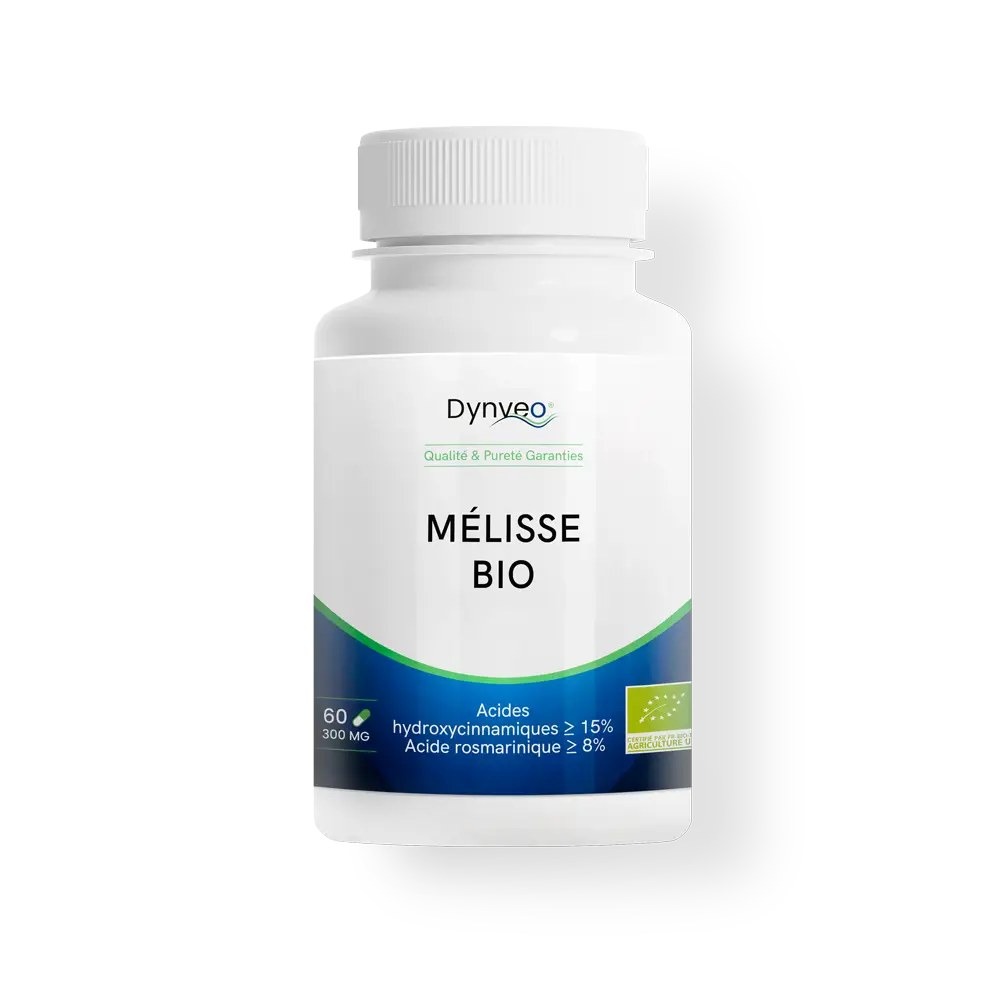
If you prefer capsules to tea, Dynveo’s organic lemon balm is a single-herb extract with a stated standardization. The product page lists:
- 300 mg of organic leaf extract per capsule, standardized to 15% hydroxycinnamic acids including 8% rosmarinic acid (48 mg per 2 capsules);
- a solvent-free extract: fresh leaves are pressed and the juice dried at low temperature (6:1 ratio);
- 1 to 2 capsules a day for relaxation or digestion, 2 in the evening (600 mg) for sleep; 60 capsules, 1 to 2 months;
- lemon balm grown organically in Spain, plant-based capsule with no additives, and the brand states it is made in France;
- published batch certificates (microbiology, heavy metals, pesticides);
- €19.90 per bottle (price checked on 22/11/2026), about €0.33 a day at 1 capsule and €0.66 at 2.
How does the dose compare? 600 mg is the single dose that calmed Kennedy’s volunteers in 2004, and 300 to 600 mg is the range of most trials. But those trials used other extracts, and this one is made from fresh leaves, so its doses do not translate directly into grams of dried leaf. No study has tested this product. Like the EMA, the brand advises against it in pregnancy, breastfeeding and under 12. Our own caution: with a thyroid condition or sedative medication, check with your doctor first. Dynveo ships from France; check delivery to your country.
See Dynveo Organic Lemon Balm →
Partner link: we earn a commission if you order through this link, at no extra cost to you.
Frequently asked questions
What is lemon balm good for?
Traditionally, mild stress, sleep and bloating, as recognized by the EMA. Trials mainly support an effect on anxiety, with small studies.
What are the side effects of lemon balm?
None are known at usual doses. It can cause drowsiness, is not recommended in pregnancy or under 12, and needs caution with thyroid disease.
Is it safe to drink lemon balm tea every day?
Yes, for a few weeks at 1 to 3 cups a day. If problems last more than 2 weeks, see a doctor rather than increasing the dose.
Does lemon balm affect the thyroid?
It blocks TSH in lab studies; the human relevance is unknown. Ask your doctor before regular use if you have a thyroid condition.
Does lemon balm help with weight loss?
There is no human evidence for it. The trend on social media is not backed by trials.
Sources
- EMA, HMPC. Community herbal monograph on Melissa officinalis L., folium, EMA/HMPC/196745/2012, 2013. ema.europa.eu
- EMA, HMPC. Assessment report on Melissa officinalis L., folium, EMA/HMPC/196746/2012, 2013. ema.europa.eu
- Ghazizadeh J. et al. The effects of lemon balm on depression and anxiety in clinical trials: a systematic review and meta-analysis. Phytother Res, 2021; 35(12): 6690-6705. PubMed 34449930
- Kennedy D.O., Little W., Scholey A.B. Attenuation of laboratory-induced stress in humans after acute administration of Melissa officinalis. Psychosom Med, 2004; 66(4): 607-13. PubMed 15272110
- Kennedy D.O. et al. Anxiolytic effects of a combination of Melissa officinalis and Valeriana officinalis during laboratory induced stress. Phytother Res, 2006; 20(2): 96-102. PubMed 16444660
- Di Pierro F. et al. Effects of Melissa officinalis Phytosome on Sleep Quality. Nutrients, 2024; 16(23): 4199. PubMed 39683592
- Cases J. et al. Pilot trial of Melissa officinalis L. leaf extract in volunteers with mild-to-moderate anxiety disorders and sleep disturbances. Med J Nutrition Metab, 2011; 4(3): 211-218. PubMed 22207903
- Shekarriz Z. et al. Effect of Melissa officinalis on systolic and diastolic blood pressures in essential hypertension. Phytother Res, 2021; 35(12): 6883-6892. PubMed 34766389
- Auf’mkolk M. et al. Inhibition by certain plant extracts of the binding and adenylate cyclase stimulatory effect of bovine thyrotropin in human thyroid membranes. Endocrinology, 1984; 115(2): 527-34. PubMed 6745167