Matcha benefits, caffeine content and side effects: is matcha good for you?
The short answer
Matcha is Japanese green tea ground into powder: instead of steeping the leaves, you drink the whole leaf. That explains both its appeal and its limits. It provides more catechins (including EGCG), caffeine and L-theanine than brewed green tea. A bowl made with 1.5 g contains about 30 to 65 mg of caffeine, less than an espresso. Caffeine plus theanine slightly improves alertness and attention for a couple of hours, but long-term effects on memory or weight are not proven. Drunk as a beverage, matcha is considered safe. It is high-dose EGCG supplements that pose a liver risk, according to the European Food Safety Authority (EFSA). And because you swallow the leaf, origin and batch testing matter more than with steeped tea.
This article is for information and does not replace medical advice.
What is matcha?
Matcha comes from the same plant as all teas (Camellia sinensis). The difference is in growing and processing: a few weeks before harvest, the tea bushes are shaded. With less sun, the leaves build up more chlorophyll (hence the bright green), L-theanine and caffeine. They are then dried, stripped of stems and veins, and stone-ground into a very fine powder. The Uji region near Kyoto is one of the most renowned.
Matcha is usually sold as ceremonial grade (first-harvest leaves, smooth taste, to drink straight) or culinary grade (more bitter, for lattes and baking). These terms are not regulated: they describe quality, not health effects.
How much caffeine is in matcha?
Because you swallow the whole leaf, you get everything it contains, not just what dissolves in water. A 2020 review (Kochman et al.) describes matcha as the most concentrated source of catechins among teas. Content varies a lot with quality:
| Drink | Serving | Caffeine |
|---|---|---|
| Matcha (1.5 g powder) | 1 bowl, 100 ml | about 28 to 67 mg |
| Black tea | 220 ml | 50 mg |
| Espresso | 60 ml | 80 mg |
| Filter coffee | 200 ml | 90 mg |
Matcha also contains L-theanine, an amino acid specific to tea (one analysis cited by Kochman measured 44.65 mg per gram). To see where matcha fits into your day, our guide on how much coffee per day covers EFSA’s caffeine limits, and our tea and coffee pages detail what they provide.
Matcha benefits: what the studies say
Alertness and focus: real, short-term
A meta-analysis of 11 placebo-controlled trials (Camfield et al., Nutrition Reviews, 2014) looked at single doses of tea compounds. Caffeine combined with L-theanine moderately improved alertness and task-switching in the first two hours. Caffeine seemed to matter more than theanine. That fits the “calm energy” matcha fans describe, but it is not magic unique to matcha.
Memory and brain health: not proven yet
Long-term data are thin. The first meta-analysis dedicated to matcha (Huang et al., 2026) found only 4 randomised trials. Most showed no change in overall cognitive scores; a few areas (attention, language) improved in some studies. The authors call the evidence limited and inconclusive.
Matcha for weight loss
There are no solid trials on matcha itself. For green tea in general, the Cochrane review (Jurgens et al., 2012) found a small, non-significant weight loss with no clinical relevance: 0.04 kg on average in the six trials run outside Japan. Matcha can replace a sugary drink, which helps; it will not make you lose weight on its own.
Antioxidants: keep it in perspective
Matcha is rich in polyphenols, that is measured. But strong antioxidant activity in a lab does not automatically mean a health benefit. Our guide to antioxidant foods explains why a varied plate beats any single “superfood”.
Matcha side effects: is matcha good for you?
EGCG and the liver: what EFSA says
In 2018, EFSA assessed green tea catechins, especially EGCG. Its conclusions:
| Source of EGCG | Intake | EFSA opinion |
|---|---|---|
| Brewed green tea, average EU intake | 90 to 300 mg a day | Generally considered safe |
| High green tea drinkers | up to 866 mg a day | Rare cases of liver injury, most likely individual reactions |
| Food supplements | 5 to 1,000 mg a day | 800 mg a day or more: significant rise in liver enzymes (transaminases) in trials |
Two other analyses agree. A review of 159 human studies (Hu et al., 2018) only saw liver effects with concentrated preparations taken as a single bolus, in capsules, not with tea consumed as a drink. The US Pharmacopeia (Oketch-Rabah et al., 2020) notes that liver injury cases linked to green tea extracts involve 140 to about 1,000 mg of EGCG a day, with large differences between individuals, and that taking it on an empty stomach sharply increases exposure. Hence its advice: take such extracts with food, and stop if you get abdominal pain, dark urine or jaundice.
What this means for matcha: one or two bowls a day as a drink stays within what is considered safe. Caution applies to concentrated green tea capsules or extracts, and to stacking sources (matcha plus green tea “slimming” supplements or fat burners). If you have liver disease, ask your doctor. See our guide to foods for liver health.
Caffeine: sleep, pregnancy, sensitivity
According to EFSA, adults can have up to 400 mg of caffeine a day, no more than 200 mg at once, and 200 mg a day during pregnancy and breastfeeding. At 30 to 65 mg per bowl, two bowls of matcha stay below these limits, but add up the coffee, tea, cola and chocolate in your day. EFSA also notes that 100 mg of caffeine close to bedtime can disturb sleep: skip matcha late in the day if you sleep poorly (see foods that help you sleep). If you are pregnant, count it in your total, as our pregnancy diet guide explains.
Iron: drink it between meals
Tea polyphenols reduce the absorption of iron from plant foods. If you are low in iron or vegetarian, drink matcha between meals rather than with them: see our guide on iron deficiency and absorption.
Metals and origin: why quality matters more
A 2024 study of teas sold in Europe (Grządka et al.) found that 65 to 80% of minerals and radioactive elements stay in the leaves after brewing. With steeped tea, you throw most of what the leaf contains away. With matcha, you swallow it. That is no reason to worry about one bowl a day, but it is a reason to choose matcha with a precise origin (country and region) from a controlled supply chain, and to avoid cheap powders with no traceability.
How much matcha per day and how to make it
- Usual amount: 1 to 2 g of powder per bowl (about half a teaspoon). One or two bowls a day is a reasonable intake.
- Preparation: sift the powder into a bowl, add about 100 ml of water at 70 to 80 °C (158 to 176 °F; boiling water makes it bitter), and whisk in a zigzag for about 20 seconds until frothy.
- Timing: morning or early afternoon, ideally between meals.
- As a latte: milk is fine, but watch out for syrups and added sugar, which quickly turn it into a dessert.
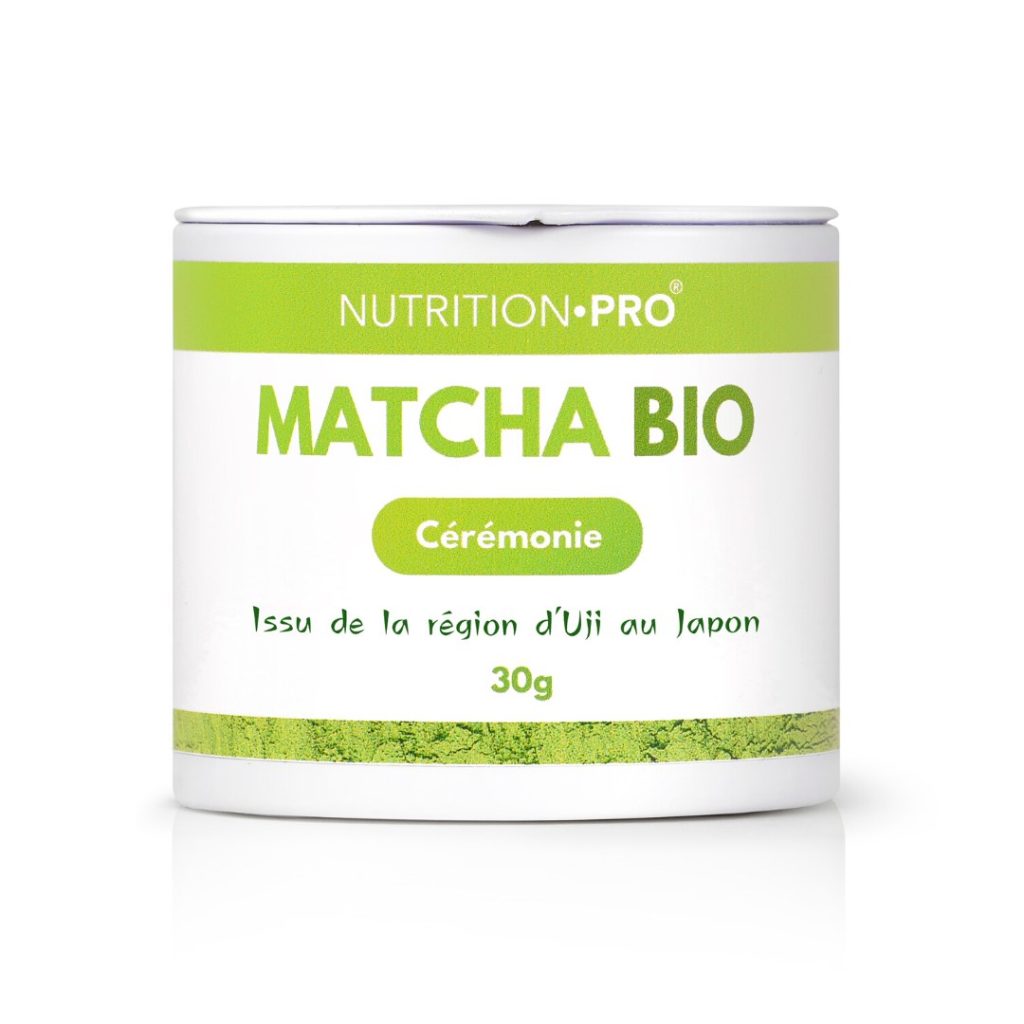
Nutrition•pro: organic ceremonial matcha from Uji, Japan
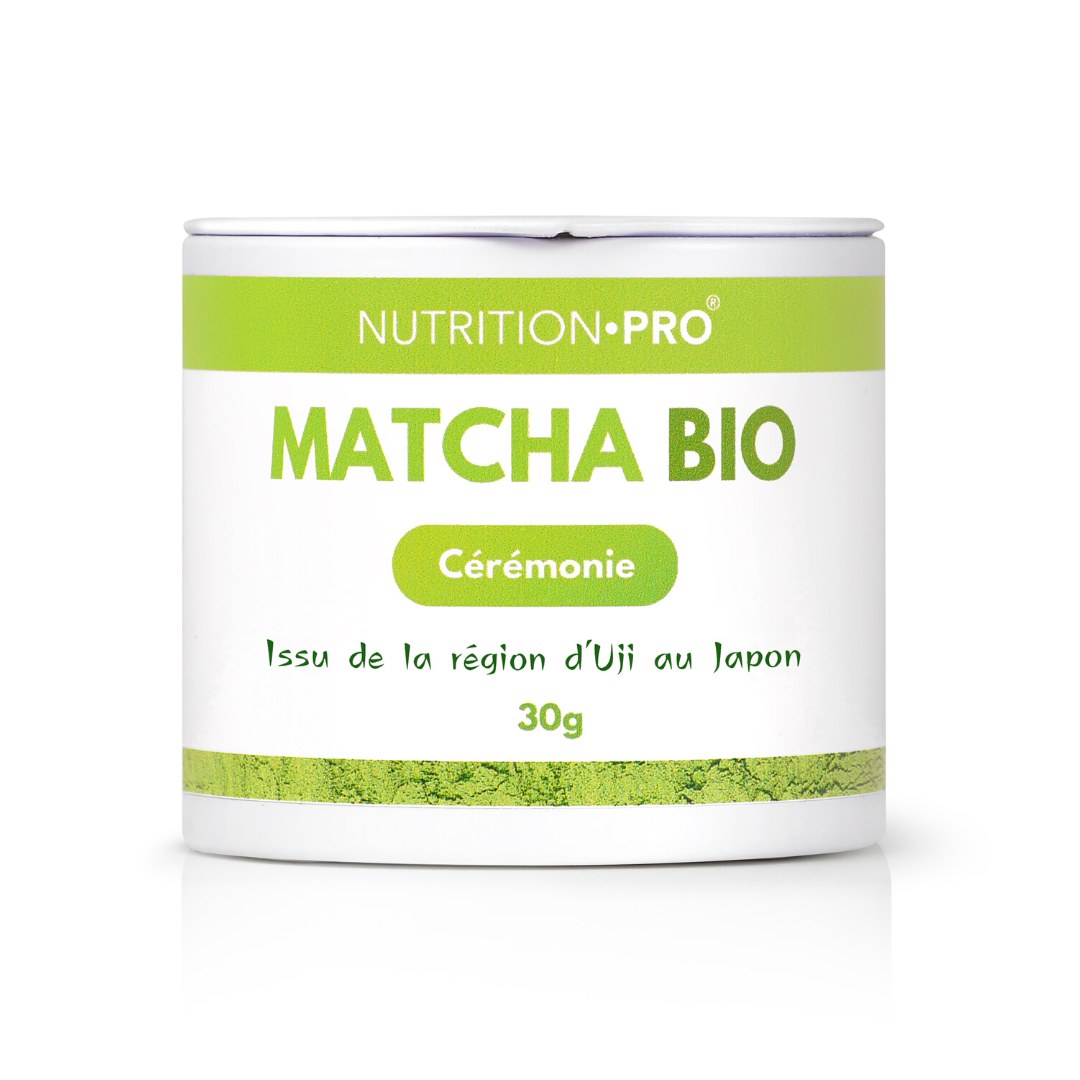
Nutrition•pro is a French brand based in Paris. For its Organic Matcha, the brand chose a tea grown and produced in Japan, which addresses the key point of origin:
- precise origin: Uji region, Kyoto prefecture;
- ceremonial grade, from the first harvest of shaded tea bushes, for a smooth, low-bitterness taste to drink straight;
- 100% organic matcha green tea, with dual certification: JONA (Japanese organic body) and EU organic, and each batch checked according to the brand;
- 30 g tin; at the recommended 1.5 g per bowl (100 ml of water at 80 °C), that makes 20 bowls;
- €29.99 per tin (price checked on 22/11/2026), about €1.50 per bowl. A ceremony set (matcha, handmade bowl, bamboo whisk, whisk holder and bamboo scoop) is also available at €69.99.
How does this dose compare? 1.5 g per bowl matches traditional preparation and provides about 28 to 67 mg of caffeine based on published values: one or two bowls a day stay well below EFSA limits. It is a tea to drink, not a concentrated extract, so it is not in the high-dose EGCG capsule category linked to liver issues. The studies above used various preparations, not this specific product.
The brand itself reminds that matcha contains caffeine: go easy if you are sensitive, and seek advice if pregnant, breastfeeding or on medication.
Promo code: SEOCONSULTINGSL for 10% off your order, €26.99 per tin, about €1.35 per bowl (as of 22/11/2026).
See Nutrition•pro Organic Matcha →
Partner link: we earn a commission if you order through this link, at no extra cost to you.
Frequently asked questions
Is matcha good for you?
As a drink, yes, within reason: one or two bowls a day fit within what EFSA considers safe for green tea. Its proven effect is short-term alertness from caffeine and theanine; long-term benefits for memory, weight or disease are not established.
Matcha vs coffee: which has more caffeine?
Per serving, coffee: a 1.5 g bowl of matcha has about 28 to 67 mg, versus 80 mg for an espresso and 90 mg for filter coffee. Per gram of powder, matcha contains more than coffee beans.
What are the side effects of matcha?
Mostly caffeine-related: jitteriness or poor sleep if you have too much or drink it late. It can reduce iron absorption if taken with meals. Liver issues are linked to high-dose EGCG supplements, not to matcha as a drink.
How much matcha per day is safe?
One or two bowls of 1 to 2 g each is reasonable for most adults. During pregnancy, keep total caffeine under 200 mg a day.
Does matcha help you lose weight?
Not meaningfully: the Cochrane review of green tea found no clinically relevant weight loss. Its value is replacing sugary drinks.
Sources
- EFSA Panel on Food Additives and Nutrient Sources added to Food (ANS). Scientific opinion on the safety of green tea catechins. EFSA J, 2018; 16(4): e05239. PubMed 32625874
- Hu J. et al. The safety of green tea and green tea extract consumption in adults: Results of a systematic review. Regul Toxicol Pharmacol, 2018; 95: 412-433. PubMed 29580974
- Oketch-Rabah H.A. et al. United States Pharmacopeia (USP) comprehensive review of the hepatotoxicity of green tea extracts. Toxicol Rep, 2020; 7: 386-402. PubMed 32140423
- Kochman J. et al. Health Benefits and Chemical Composition of Matcha Green Tea: A Review. Molecules, 2020; 26(1): 85. PubMed 33375458
- Camfield D.A. et al. Acute effects of tea constituents L-theanine, caffeine, and epigallocatechin gallate on cognitive function and mood: a systematic review and meta-analysis. Nutr Rev, 2014; 72(8): 507-22. PubMed 24946991
- Huang M.H. et al. Association of Matcha Tea with Cognitive Function: A Systematic Review and Meta-Analysis. J Epidemiol, 2026. PubMed 43000126
- Jurgens T.M. et al. Green tea for weight loss and weight maintenance in overweight or obese adults. Cochrane Database Syst Rev, 2012; 12: CD008650. PubMed 23235664
- Grządka E. et al. Do You Know What You Drink? Comparative Research on the Contents of Radioisotopes and Heavy Metals in Different Types of Tea from Various Parts of the World. Foods, 2024; 13(5): 742. PubMed 38472854
- EFSA. Scientific opinion on the safety of caffeine, 2015. efsa.europa.eu