Rhodiola rosea: benefits, side effects, dosage and who should avoid it
The short answer
Rhodiola (Rhodiola rosea) is a cold-climate plant whose root is used for stress-related fatigue. The European Medicines Agency (EMA) recognises a traditional use to relieve symptoms of stress, such as fatigue and exhaustion, in adults, at 144 to 400 mg of dry extract a day. Clinical trials are promising but mixed: a 2009 trial found an effect on burnout-type fatigue, while a 2014 trial found no benefit in nursing students. It is usually well tolerated (headache and digestive upset are possible). It is not recommended during pregnancy, breastfeeding or under 18.
This article is for information and does not replace medical advice.
What is rhodiola?
Rhodiola rosea, also called golden root, roseroot or Arctic root, grows in mountains and Arctic regions of Europe and Asia. Its root and rhizome (underground stem) are used. It is labelled an “adaptogen”, a term for plants said to help the body cope with stress. This is not an official medical category.
Its best-studied compounds are rosavins and salidroside. Supplements are often standardised to one of them, which makes products easier to compare. Note that the extracts used in research (such as SHR-5, or the one in the EU monograph) are specific preparations: their results do not automatically apply to every product.
What the European Medicines Agency says
The EMA’s herbal medicines committee (HMPC) has published a monograph on Rhodiola rosea root, revised and adopted on 20 March 2024. It is the most reliable reference on use and safety.
| Point | What the monograph says |
|---|---|
| Status | Traditional use (based on long-standing use, not on sufficient trials) |
| Indication | Relief of symptoms of stress, such as fatigue and exhaustion |
| Preparation | Dry extract (drug-to-extract ratio 1.5-5:1), ethanol 67 to 70% |
| Dose | 144 to 200 mg per dose, 1 to 2 times a day, i.e. 144 to 400 mg a day |
| Duration | See a doctor if symptoms persist beyond 2 weeks |
| Age | Not recommended under 18 |
| Contraindication | Hypersensitivity to the plant |
| Interactions | No clinically relevant interactions observed |
| Pregnancy, breastfeeding | Not recommended (safety not established) |
| Side effects | Headache, nausea, abdominal pain, diarrhoea, skin rash, itching (frequency not known) |
“Traditional use” means the EMA considers the plant plausible and safe at these doses, based on long use. It does not mean its efficacy is proven by strong clinical trials.
Rhodiola benefits: what the trials show
| Study | Participants | Dose and duration | Result |
|---|---|---|---|
| Olsson et al., 2009 (placebo-controlled, double-blind) | 60 adults aged 20 to 55 with stress-related fatigue | 576 mg SHR-5 extract a day, 28 days | Better than placebo on a burnout scale and several attention measures; altered cortisol response on waking |
| Punja et al., 2014 (placebo-controlled, double-blind) | 48 nursing students on shift work | 364 mg a day (up to 2 capsules), 42 days | No benefit: fatigue scores actually favoured placebo |
| Mao et al., 2015 (vs placebo and sertraline) | 57 adults with mild to moderate depression | Standardised extract, 12 weeks | Depression score fell by 5.1 points (rhodiola), 4.6 (placebo), 8.2 (sertraline), no significant difference; side effects in 30% on rhodiola vs 63.2% on sertraline |
Fatigue and stress
This is the best-supported use. Olsson’s trial, in people with burnout, showed an effect on fatigue and concentration after 4 weeks, with clear improvement on placebo too. Punja’s trial, in shift-working students, found nothing. Results depend on the extract, the dose and the type of fatigue. Lasting fatigue should first prompt a search for a cause (poor sleep, iron deficiency, thyroid, depression) with a doctor. Our best supplements for fatigue comparison reviews the options, and our guide on diet and stress management covers the food side.
Is rhodiola an antidepressant?
No. In the 2015 trial, rhodiola did no better than placebo for depression, although it was better tolerated than sertraline. Depression needs a health professional. Never stop an antidepressant to replace it with a plant.
Exercise and endurance: mixed results
A 2025 meta-analysis (26 trials, 668 healthy adults, 33 days of use on average) found a small effect on VO2max and time to exhaustion, with very variable results between studies. A 2026 meta-analysis (9 trials, 424 people) found no effect on VO2max and no protection against acute mountain sickness. For athletes, any gain is small and uncertain.
Rhodiola side effects and who should avoid it
At usual doses, rhodiola is generally well tolerated. The EU monograph lists headache, nausea, abdominal pain, diarrhoea, skin rash and itching, with unknown frequency. No overdose has been reported.
- Pregnancy and breastfeeding: not recommended, for lack of data.
- Under 18: not recommended.
- Allergy to the plant: contraindicated.
- Medication: the EMA observed no clinically relevant interactions. To be safe, talk to your doctor or pharmacist if you take any treatment, especially for mood, anxiety, diabetes or blood pressure.
- Liver: the monograph lists no liver effects. If you have liver disease, still ask for medical advice before any supplement.
Rhodiola is thought to be mildly stimulating. If it affects your sleep, take it in the morning (see also foods that help you sleep). Avoid combining it with lots of coffee (how much coffee per day).
How to take rhodiola
- Dose: 144 to 400 mg of dry extract a day according to the EMA, in 1 or 2 doses. Trials used 364 to 576 mg a day.
- Timing: morning and early afternoon, so it does not disturb sleep.
- Immediate effect? Trials measured effects after about 4 weeks. Do not expect an effect from the first dose.
- Duration: if fatigue persists beyond 2 weeks despite taking it, see a doctor, as the EMA advises.
Rhodiola or ashwagandha? Both are called adaptogens. Rhodiola is mostly used for fatigue, ashwagandha more for stress and sleep. Our best ashwagandha supplement comparison covers the other plant.
Nutrition•pro: a rhodiola extract standardised to salidroside
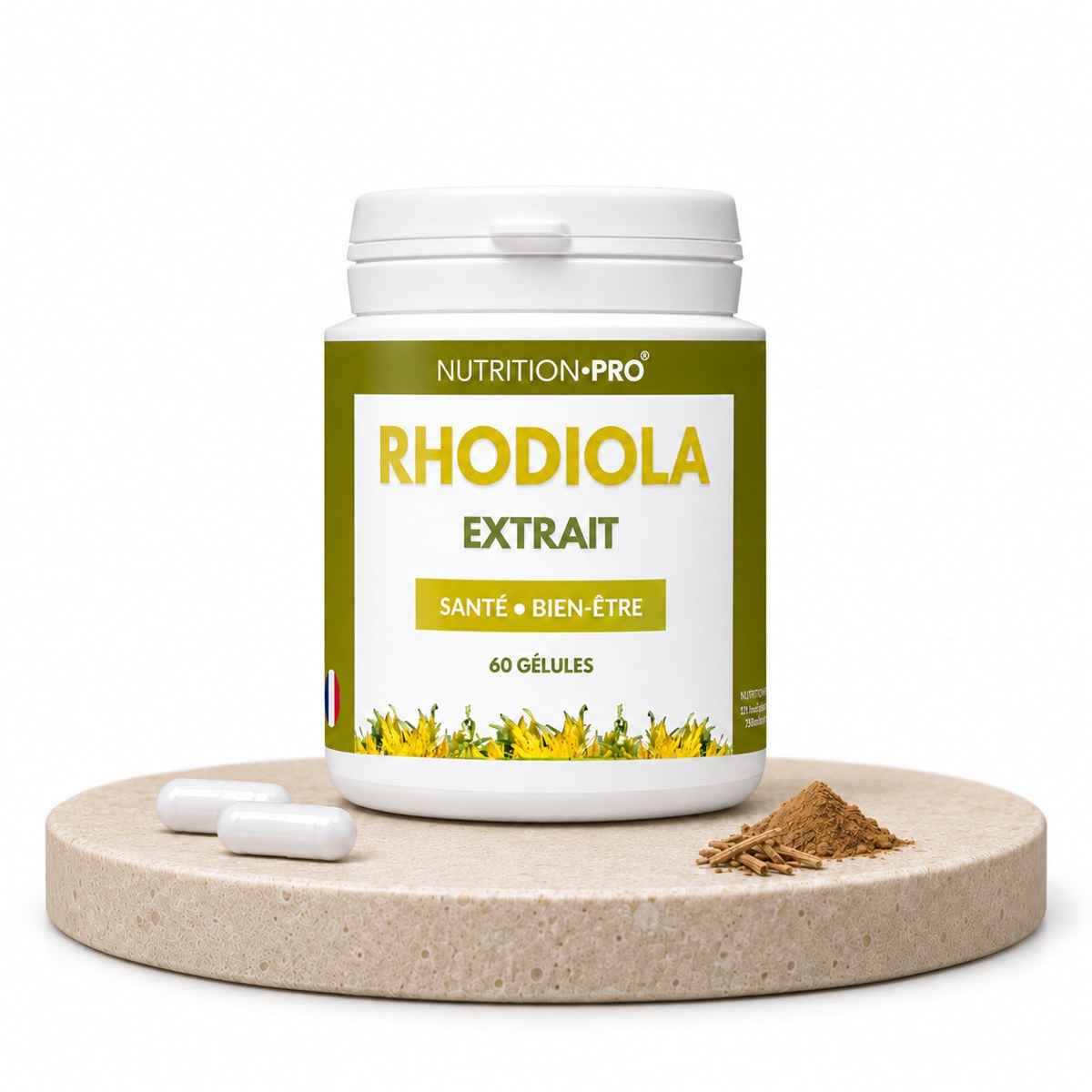
Nutrition•pro is a French brand based in Paris: the brand states that it designs and makes its formulas in France. Its Rhodiola uses an extract rather than plain root powder:
- Rhodiola rosea extract, the only species covered by the EU monograph;
- standardised to 1% salidroside, for a consistent content from batch to batch;
- 640 mg of root extract a day: 2 capsules with a large glass of water, preferably in the morning;
- 60 capsules, a 30-day course;
- €19.99 per jar (price checked on 22/11/2026), about €0.67 a day.
Promo code: SEOCONSULTINGSL for 10% off your order, €17.99 per jar (as of 22/11/2026).
Partner link: we earn a commission if you order through this link, at no extra cost to you.
How does 640 mg compare? It is above the EU monograph range (144 to 400 mg of dry extract a day) and slightly above the trials cited (364 mg in Punja, 576 mg in Olsson). The 2025 endurance meta-analysis saw a larger VO2max gain above 600 mg a day, but results varied widely. The trials used other extracts (notably SHR-5): their results do not automatically apply to this product. If you prefer to stay within the EMA range, ask your pharmacist or doctor, and see a doctor if fatigue persists beyond 2 weeks.
Frequently asked questions
What is rhodiola good for?
The EMA recognises a traditional use for relieving symptoms of stress such as fatigue and exhaustion. One placebo-controlled trial showed an effect on burnout-type fatigue and concentration, but other trials were negative. The evidence is modest.
What are the side effects of rhodiola rosea?
Headache, nausea, abdominal pain, diarrhoea, rash and itching are listed by the EMA, with unknown frequency. It may also disturb sleep if taken in the evening.
Who should not take rhodiola?
Pregnant or breastfeeding women, under-18s and anyone allergic to the plant. Ask for medical advice if you take medication or have a chronic condition.
How long does rhodiola take to work?
Studies measured effects after several weeks (4 weeks in the most positive trial). An immediate effect has not been shown.
Rhodiola rosea benefits for women?
The main trials included both men and women. There is no solid evidence of specific benefits for women; avoid it during pregnancy and breastfeeding.
Sources
- EMA, Committee on Herbal Medicinal Products. European Union herbal monograph on Rhodiola rosea L., rhizoma et radix, revision 1 (EMA/HMPC/24177/2023), 20/03/2024. ema.europa.eu
- Olsson E.M. et al. A randomised, double-blind, placebo-controlled, parallel-group study of the standardised extract SHR-5 of the roots of Rhodiola rosea in the treatment of subjects with stress-related fatigue. Planta Med, 2009; 75(2): 105-12. PubMed 19016404
- Punja S. et al. Rhodiola rosea for mental and physical fatigue in nursing students: a randomized controlled trial. PLoS One, 2014; 9(9): e108416. PubMed 25268730
- Mao J.J. et al. Rhodiola rosea versus sertraline for major depressive disorder: A randomized placebo-controlled trial. Phytomedicine, 2015; 22(3): 394-9. PubMed 25837277
- Wang X. et al. The effect of Rhodiola rosea supplementation on endurance performance and related biomarkers: a systematic review and meta-analysis. Front Nutr, 2025; 12: 1645346. PubMed 41080184
- Mou J. et al. Antioxidant but not ergogenic or altitude-protective: a meta-analysis of Rhodiola species in healthy adults. Front Physiol, 2026; 17: 1908897. PubMed 42908635