Shilajit: benefits, side effects, heavy metals and how to choose a safe one
The short answer
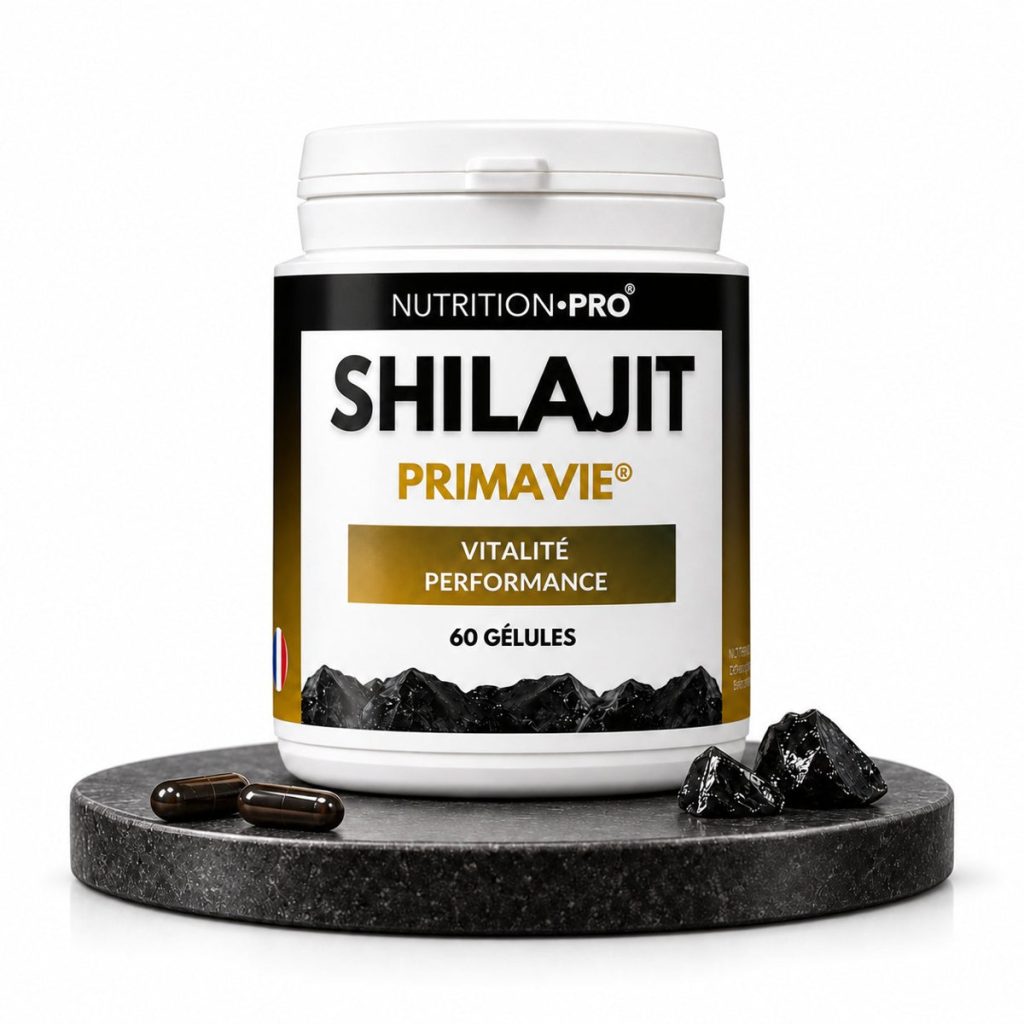
Shilajit is a black, tar-like resin that seeps out of high mountain rocks, mainly in the Himalayas. Used for centuries in Ayurvedic medicine, it contains fulvic acids and minerals. A few controlled trials exist, almost all on one purified extract (PrimaVie): in men aged 45 to 55, 500 mg a day for 90 days raised testosterone compared with placebo, and in active men, 500 mg a day helped preserve strength after an exhausting workout. These are small studies, mostly in men. The real risk lies elsewhere: raw, unpurified shilajit can contain heavy metals (lead, arsenic, mercury, cadmium). If you take it, choose a purified extract with batch testing for metals.
This article is for information and does not replace medical advice.
What is shilajit?
Shilajit (also called mumijo or mumie) is a sticky, dark brown substance that forms slowly in rock crevices at altitude, from decomposed plant matter. Scientists describe it as a “phyto-mineral”: a mix of humic substances, mainly fulvic acids, compounds called dibenzo-alpha-pyrones, minerals and traces of metals. Its make-up varies a lot by source: a 2024 review lists deposits in about 20 regions of the world.
It comes in three forms:
- resin, the traditional form, dissolved in a warm drink;
- liquid, a diluted resin that is easier to measure;
- extract capsules, with a fixed dose and often a standardised fulvic acid content. This is the form used in most clinical trials.
Shilajit is not a food: it does not provide useful amounts of protein or iron. If you are looking for energy, check the basics first, such as iron (see our guide on iron deficiency anaemia).
Shilajit benefits: what the research shows
Claims are everywhere (energy, testosterone, libido, anti-ageing). Human trials are few. Here are the main ones, with their limits.
| Study | Participants | Dose and duration | Result |
|---|---|---|---|
| Pandit et al., 2016 (placebo-controlled, double-blind) | Healthy men aged 45 to 55 | 250 mg twice a day, 90 days | Higher total testosterone, free testosterone and DHEAS than placebo; LH and FSH unchanged |
| Keller et al., 2019 (placebo-controlled) | 63 active men, average age 21 | 250 or 500 mg a day, 8 weeks (PrimaVie) | At 500 mg, in the stronger half: 8.9% strength loss after exercise vs 16.0% on placebo. No effect at 250 mg |
| Neltner et al., 2024 (placebo-controlled) | 35 trained men | 500 or 1,000 mg a day, 8 weeks | Rise in a blood marker of type 1 collagen synthesis, no change on placebo |
| Biswas et al., 2010 (no placebo) | 28 infertile men with low sperm count | 100 mg twice a day, 90 days | Total sperm count +61.4% and testosterone +23.5% from baseline |
Shilajit benefits for men: testosterone
A 2024 systematic review looked at 52 studies on “testosterone boosters”. Most failed to raise testosterone. The purified shilajit extract PrimaVie was one of the few ingredients rated “possibly effective”, in men with age-related low testosterone. “Possibly” means the evidence rests on very few trials. Low testosterone with fatigue or low libido calls for a blood test and a doctor’s advice first.
Energy, strength and recovery
Keller’s trial is the strongest on the sports side: placebo-controlled, with a defined product and dose. But the effect appeared only at 500 mg and only in the stronger half of the participants. Across the whole group, the difference was not clear. It is a promising sign for recovery, not proof of an everyday “energy boost”. For fatigue in general, our best supplements for fatigue comparison reviews the options, and maca is another plant often mentioned.
Male fertility
The 2010 study reports striking numbers, but it had no placebo group and 7 of the 35 men dropped out. We cannot tell how much of the improvement came from shilajit. If you are planning a baby, lifestyle and medical follow-up come first (see our guide on diet and fertility).
Shilajit benefits for women?
Almost all trials were done in men. There is no solid evidence of specific benefits for women.
What is not proven
Weight loss, memory, anti-ageing, “detox”: there are no solid human trials. Effects on the brain or cancer come from lab or animal studies.
Shilajit side effects and the heavy metal problem
Why raw shilajit can be risky
Shilajit forms in rock: it naturally concentrates minerals, but also metals. A 2024 review (Hussain and Saeed) pooled published analyses: about 65 metals have been found in shilajit, including toxic ones such as lead, arsenic, cadmium and mercury. In most studies, levels were below WHO and FDA limits, but not in all of them. The authors conclude that taking shilajit without knowing its metal content is not safe.
| Metal | Limit cited for herbal medicines (WHO, FDA) |
|---|---|
| Lead | 10 ppm |
| Arsenic | 10 ppm |
| Mercury | 1 ppm |
| Cadmium | 0.2 to 0.3 ppm |
This is not unique to shilajit. A 2008 study in JAMA bought 193 Ayurvedic products online: 20.7% contained lead, mercury or arsenic. Of those contaminated products, 75% claimed Good Manufacturing Practices, and all of them exceeded at least one standard for acceptable daily intake. A label claim is not enough.
Why a purified, batch-checked extract matters
- Purification removes part of the impurities found in raw resin.
- Batch analysis by a laboratory actually measures lead, arsenic, cadmium and mercury. It is the only way to know what is in the product.
- Standardisation (for example on fulvic acids) keeps the composition stable from batch to batch.
- A match with the research: the Pandit and Keller trials used a purified, standardised extract. Raw shilajit is not the same thing.
In practice: avoid resins sold with no origin or analysis, ask for the batch certificate of analysis, and be wary of very low prices.
Side effects and who should avoid it
In the trials above, lasting 8 to 12 weeks, no serious side effects were reported, and the 2010 study found no change in liver or kidney tests. But these trials are short and small. Ask a doctor before taking it:
- if you are pregnant or breastfeeding (no safety data);
- if you are under 18;
- if you take hormone therapy or have a prostate problem or a hormone-sensitive cancer, since shilajit may act on testosterone;
- if you have a chronic condition (kidney, liver, heart) or take long-term medication.
How to take shilajit
- Studied dose: 500 mg a day of purified extract (250 mg morning and evening), the dose most often used in trials.
- Duration: studies lasted 8 weeks to 90 days. Beyond that, data are lacking.
- Timing: no time of day has been shown to be best. The 2010 study gave it after main meals, which can limit stomach upset.
- Resin or liquid: follow the maker’s dose. A resin dose is not directly comparable with the 500 mg of extract used in studies.
Nutrition•pro: PrimaVie shilajit made in France
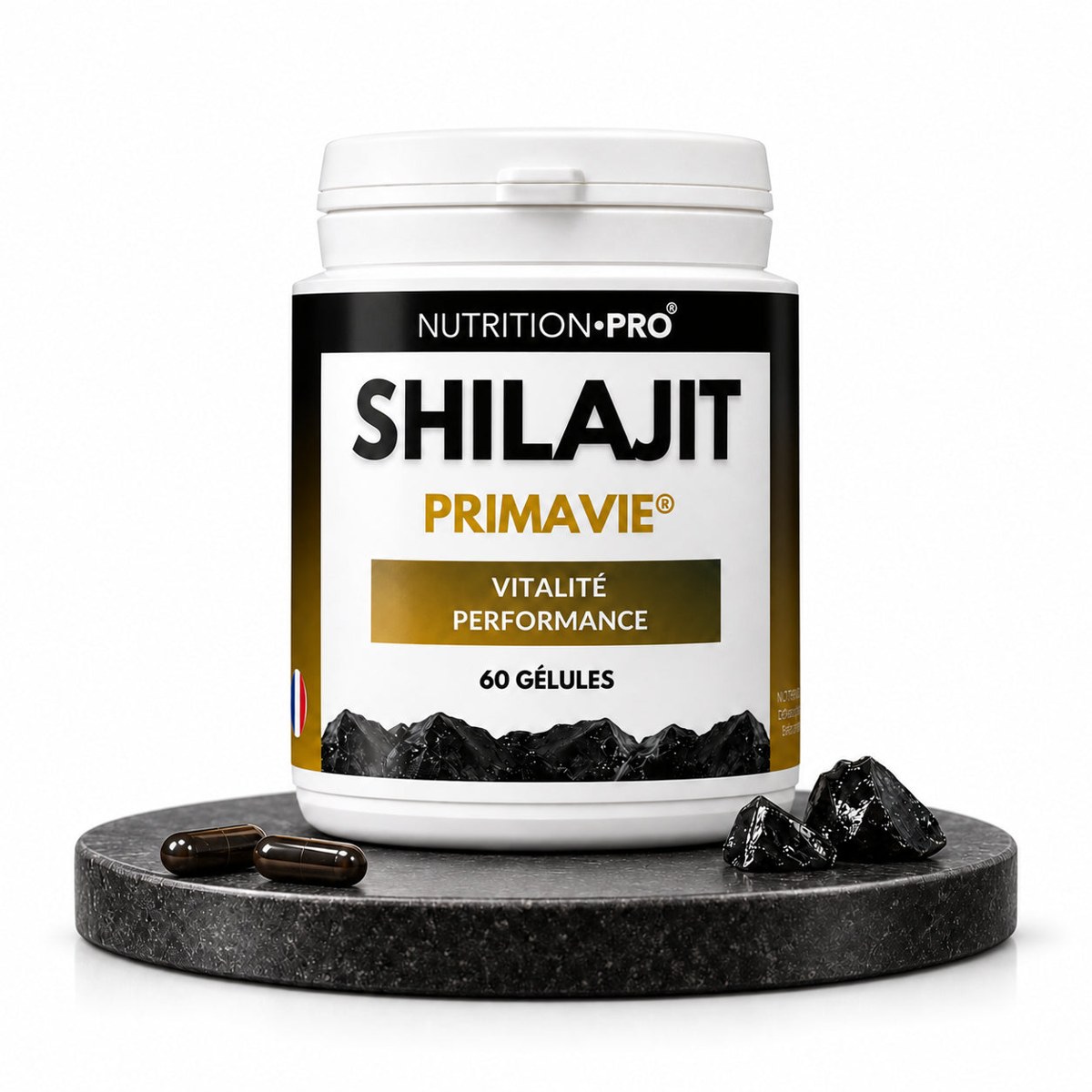
Nutrition•pro is a French brand based in Paris. Its PrimaVie Shilajit uses the purified extract used in the Pandit and Keller trials. Its strengths, according to the product page:
- purified, patented PrimaVie extract, standardised to over 50% fulvic acids and rich in dibenzo-alpha-pyrones;
- checked for heavy metals and contaminants, according to the brand;
- 250 mg per capsule, so 500 mg with 2 capsules a day: the dose used in the studies;
- HPMC vegetable capsules, no excipients, GMO-free and additive-free, made in France;
- 60 capsules, a 30-day course, at €34.99 (price checked on 22/11/2026), about €1.17 a day.
Promo code: SEOCONSULTINGSL for 10% off your order, €31.49 per jar (as of 22/11/2026).
See Nutrition•pro PrimaVie Shilajit →
Partner link: we earn a commission if you order through this link, at no extra cost to you.
Prefer the traditional form? The brand also offers a pure shilajit resin, gold grade, harvested above 5,100 m, sun-dried for 45 to 60 days and passed through 40 filtrations, with analyses by the independent laboratory Eurofins confirming no heavy metals on the parameters checked (€34.99 for 30 g, €54.99 for 50 g), and a liquid shilajit (95% shilajit, 5% spring water, 60 ml bottle at €19.99). Prices checked on 22/11/2026. The studies above used the capsule extract, not these two forms.
Frequently asked questions
What is shilajit good for?
A few placebo-controlled trials, mostly in men and with a purified extract, show higher testosterone in men aged 45 to 55 and better strength retention after exercise in active men. Effects are modest and need confirmation.
Does shilajit actually work?
For testosterone and recovery, there is an early signal from a handful of trials. For weight loss, memory or anti-ageing, there is no human evidence.
What are the side effects of shilajit?
Trials of 8 to 12 weeks reported no serious side effects. The main risk is heavy metal contamination in raw or poorly controlled products.
Shilajit resin or capsules: which is best?
Capsules of purified extract give a precise dose and match the research. Resin is the traditional form; choose one with batch analyses for heavy metals.
Who should not take shilajit?
Pregnant or breastfeeding women, under-18s, and anyone with a hormone-sensitive condition or on long-term medication without medical advice.
Sources
- Pandit S. et al. Clinical evaluation of purified Shilajit on testosterone levels in healthy volunteers. Andrologia, 2016; 48(5): 570-5. PubMed 26395129
- Keller J.L. et al. The effects of Shilajit supplementation on fatigue-induced decreases in muscular strength and serum hydroxyproline levels. J Int Soc Sports Nutr, 2019; 16(1): 3. PubMed 30728074
- Neltner T.J. et al. Effects of 8 Weeks of Shilajit Supplementation on Serum Pro-c1α1. J Diet Suppl, 2024; 21(1): 1-12. PubMed 36546868
- Biswas T.K. et al. Clinical evaluation of spermatogenic activity of processed Shilajit in oligospermia. Andrologia, 2010; 42(1): 48-56. PubMed 20078516
- Morgado A. et al. Do “testosterone boosters” really increase serum total testosterone? A systematic review. Int J Impot Res, 2024; 36(4): 348-364. PubMed 37697053
- Hussain A., Saeed A. Hazardous or Advantageous: Uncovering the Roles of Heavy Metals and Humic Substances in Shilajit. Biol Trace Elem Res, 2024; 202(12): 5794-5814. PubMed 38393486
- Saper R.B. et al. Lead, mercury, and arsenic in US- and Indian-manufactured Ayurvedic medicines sold via the Internet. JAMA, 2008; 300(8): 915-23. PubMed 18728265