Personal trainer: career guide, qualifications, salary and prospects
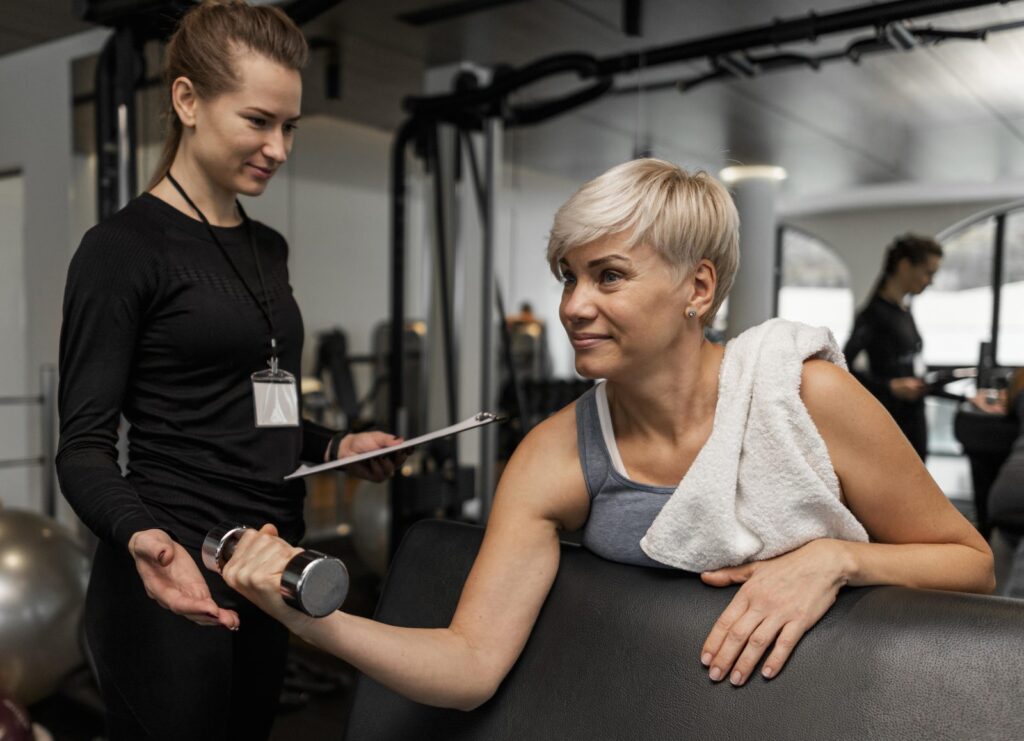
A personal trainer motivates, supervises and helps clients progress towards their goals: getting fit, losing weight, performance. A career driven by passion and open through regulated qualifications, it combines teaching, physiology and a head for business. Here is the full career guide.
The personal trainer profession in figures
| Entry-level salary | About €1,600 gross per month |
| Experienced salary | €2,000 to €3,500 (self-employed: variable) |
| Level of study | A-level equivalent to 3-year degree (BPJEPS, STAPS degree) |
| Training length | 1 to 3 years |
| Status | Employed (gym) or self-employed |
| Legal requirement | Qualification and professional card required to coach for pay |
What is a personal trainer?
A personal trainer (or sports educator) supervises physical activity safely. They assess clients’ level, design personalised training programmes, correct movements and support clients over time, in a gym, at home or outdoors.
What a personal trainer does day to day
- Assess physical condition and set realistic goals.
- Design personalised training programmes.
- Lead sessions while ensuring safety and good technique.
- Motivate and support clients over time, adjusting programmes as needed.
- Give lifestyle advice and refer clients to a professional for nutrition.
- Build and retain a client base (especially when self-employed).
Skills and qualities required
- Command of anatomy, physiology and training.
- Teaching skills and the ability to motivate a variety of clients.
- Good physical fitness and leading by example.
- Good people skills and a good listener.
- Sales and communication skills (when self-employed).

How to become a personal trainer: training and career path
Several routes lead into the profession, all of them qualification-based:
The Brevet Professionnel de la Jeunesse, de l’Éducation Populaire et du Sport (fitness activities or physical activities for all option) is the most direct route.
The STAPS university degrees (notably Sports Training or Adapted Physical Activity) offer a fuller, more theoretical training.
Once qualified, the sports educator obtains a professional card, which is compulsory to practise.
Additional certifications (cross-training, strength and conditioning, online coaching), then work in a gym or independently.
What does a personal trainer earn?
€1,600
€2,400
€3,500
In a gym, pay stays close to the French minimum wage (SMIC) early in your career. When self-employed, income depends on the number of clients and your positioning (personalised or online coaching can pay far better). Many people combine gym work with private clients.
Career opportunities and places of work
- Gyms and fitness clubs.
- Home coaching or outdoors (self-employed).
- Online coaching and content creation.
- Strength and conditioning in sports clubs.
- Companies (workplace sport, wellbeing at work).
Career progression
A personal trainer can specialise (strength and conditioning, rehabilitation through sport, older clients or clients with medical conditions through adapted physical activity, known as APA in France), set up their own business, build a brand and an online offer, or study nutrition to offer more rounded support (while referring clients to a dietitian for regulated follow-up).
Personal trainer and dietitian: complementary roles
| Aspect | Personal trainer | Dietitian |
|---|---|---|
| Field | Physical activity, training | Food, nutrition |
| Qualification | BPJEPS / STAPS (French sport-coaching qualifications) | BUT Diététique (3-year degree) |
| Can give a detailed meal plan? | No (general advice only) | Yes |
| Working together | Refers to the dietitian | Refers to the trainer |
Frequently asked questions
What qualification do you need to become a personal trainer?
The BPJEPS (A-level equivalent) is the most common route; STAPS degrees offer a fuller course. A qualification and a professional card are compulsory to coach for pay.
Can a personal trainer give nutrition advice?
They can give general advice on healthy eating, but not draw up a detailed nutrition plan: that is the dietitian’s job. The two professions complement each other.
How much does a personal trainer earn?
About €1,600 gross at the start of a gym career, and €2,000 to €3,500 (or more) when self-employed depending on clients and positioning.
Can you become a personal trainer as a career change?
Yes: the BPJEPS is available through adult training and attracts many career changers who are passionate about sport.
Going further
Sport and nutrition go hand in hand: read about sports dietitians, strength and conditioning coaches and adapted physical activity teachers, as well as our sports nutrition guides.
To advise accurately, draw on our guides to what to eat before and after exercise, hydration and performance and creatine, as well as our high-protein recipes.
Salary and training figures are indicative (2025) and vary with experience, region and status. This career guide is for information only and is not personalised careers advice. Figures relate to France.