Creatine: What It Does and How to Take It
Creatine monohydrate improves short, intense, repeated efforts: it is one of the few supplements whose effect is recognised by the European Food Safety Authority (EFSA), provided you take 3 g a day. The International Society of Sports Nutrition (ISSN, 2017) position stand settles on 3 to 5 g a day for maintenance, with or without a loading phase. It has no recognised effect on endurance and does not replace training. Here is what the authorities and meta-analyses say, figure by figure.
👉 Free tool: Protein needs – calculate in 30 seconds, no sign-up.
Creatine in brief: what to remember
- Dose: 3 g a day is enough for the claim authorised in Europe; the ISSN suggests 3 to 5 g a day to maintain your stores.
- Effect: better performance over successive bouts of brief, very intense effort (weight training, repeated sprints, team sports).
- No demonstrated effect on endurance, according to EFSA.
- Form: monohydrate is the most studied; no other form has done better in clinical trials.
- Most consistent side effect: a weight gain of 1 to 3 kg during a loading phase, mostly water.
What is creatine and where is it found?
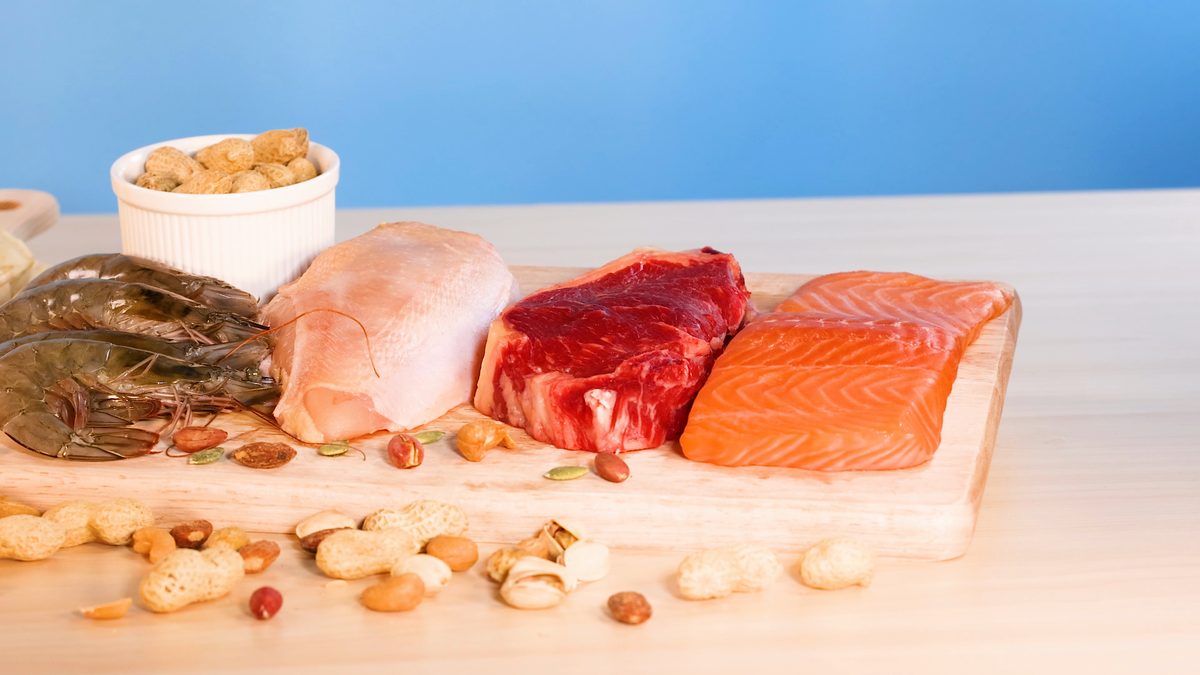
Creatine is a compound made by the body from three amino acids: arginine, glycine and methionine. Anses points out that it is synthesised by the kidney, liver and pancreas. It is also found in food, mainly in red meat and seafood.
About 95% of the body’s creatine is in skeletal muscle, with the rest mostly in the brain and testes. In muscle, around two thirds is stored as phosphocreatine, a reserve that very quickly regenerates ATP, the molecule that supplies the energy for muscle contraction. That is why it is useful for efforts lasting a few seconds: a sprint, a heavy set, a jump.
Every day, 1 to 2% of this reserve breaks down into creatinine, which is excreted in urine. According to the ISSN, the body therefore needs to replace 1 to 3 g of creatine a day, depending on muscle mass. Roughly half comes from food, and the rest is made by the body.
Why a supplement makes a difference
On an ordinary diet, which provides 1 to 2 g of creatine a day, muscles are filled to 60 to 80% of their capacity. The average store is around 120 mmol per kilo of dry muscle, against a ceiling of about 160 mmol/kg in most people. Supplementation raises muscle creatine and phosphocreatine by 20 to 40%. Vegetarians start lower (90 to 110 mmol/kg) and may therefore see a bigger increase.
What Europe recognises: two claims, one dose
A manufacturer cannot write whatever it likes on a tub of creatine. The authorised health claims are listed in Regulation (EU) No 432/2012, on the basis of EFSA opinions. For creatine, two wordings are permitted, and a third was rejected.
| Effect assessed | Verdict | Conditions |
|---|---|---|
| Performance during successive bursts of short-term, very high-intensity exercise | Authorised (EFSA opinion 2011) | 3 g of creatine a day, adults doing high-intensity exercise |
| Muscle strength in addition to resistance training, over 55 | Authorised (EFSA opinion 2016, Regulation 2017/672) | 3 g a day, with at least 3 strength sessions a week over several weeks, at 65 to 75% of maximum load or more |
| Endurance capacity and performance | Rejected | No cause-and-effect relationship established |
Two details matter. First, EFSA examined endurance on the basis of, among other things, a meta-analysis of 18 trials: no effect on endurance performance. If your sport is distance running or road cycling, creatine has no recognised benefit for you. Second, for the over-55 claim, EFSA noted that the effect appeared with daily intake, not with the same dose limited to training days.
What the studies show: a real but modest effect
According to the ISSN, after a loading phase, performance in intense or repeated efforts generally increases by 10 to 20%, depending on the rise in phosphocreatine achieved. A more recent review from the same society, in 2021, reports 5 to 10% more work capacity after a short loading phase. Both figures come from laboratory tests. On real movements such as the squat or bench press, the measured differences are more modest.
| Measure (creatine + training vs placebo) | Average difference | Significant? |
|---|---|---|
| Bench press or machine chest press | +1.43 kg | Yes |
| Squat | +5.64 kg | Yes |
| Vertical jump | +1.48 cm | Yes |
| Peak power in the Wingate test | +47.81 W | Yes |
| Leg press | +3.13 kg | No |
| Grip strength | +4.26 kg | No |
This meta-analysis also notes that the gains are more consistent in young adults and in men. Another, covering 53 studies, had already concluded that there was an effect on upper-body strength for exercises lasting less than 3 minutes (Lanhers et al., 2017).
In women
A 2026 meta-analysis of 34 studies and 692 female participants finds a small overall positive effect (effect size of 0.23), with a certainty of evidence rated low to very low. The effect probably exists for strength and intense efforts, but the trials are small and varied. In postmenopausal women, another meta-analysis of 7 trials (608 participants) finds +0.37 kg of lean mass and +7.5 kg on the leg press, mainly when the dose reaches at least 5 g a day with weight training. Without training, at 3 g a day or less, there was no measurable effect.
After 60
Eleven randomised trials in adults aged 60 and over show an additional strength gain, small in size (0.31), with moderate certainty. The effect on muscle mass and physical function is not significant. According to the 2021 ISSN review, creatine on its own, without exercise, is unlikely to improve strength: training remains the driver.
How to take it: two validated protocols
There are two ways to fill your stores. They lead to the same point; only the speed differs.
- With a loading phase: about 0.3 g per kilo of body weight a day for 5 to 7 days, which is roughly 20 g a day for 70 kg, in 4 doses of 5 g. Then 3 to 5 g a day. This is the fastest way to saturate the muscles.
- Without loading: 3 g a day for 28 days gives a gradual rise in stores. It is simpler, with no sudden weight gain, but the effect on performance takes longer to appear.
The 2021 review concludes that a loading phase is not necessary: 3 to 5 g a day, or 0.1 g per kilo, is enough. Heavy, highly trained athletes may need 5 to 10 g a day to keep their stores full, according to the ISSN.
| Your weight | Loading (0.3 g/kg, 5 to 7 days) | Relative daily intake (0.1 g/kg) |
|---|---|---|
| 55 kg | 16.5 g a day | 5.5 g |
| 70 kg | 21 g a day | 7 g |
| 85 kg | 25.5 g a day | 8.5 g |
The practical details that matter
- With a meal: the ISSN notes that taking it with carbohydrate, or carbohydrate and protein, improves creatine retention.
- Every day: it is the muscle stores that do the work, not the day’s dose. Rest days count as much as the others.
- Mix at the last moment: the powder is very stable, but creatine breaks down into creatinine once in solution, especially when hot and acidic. It dissolves poorly: about 14 g per litre of water at 20 °C. Mix it just before you drink it.
- When you stop: once your stores are full, it generally takes 4 to 6 weeks to return to baseline, without dropping below it.
- Hydration: creatine does not dehydrate you, but an intense session makes you sweat. You will find guidelines in our guide to hydration and sports performance.
Which creatine should you choose?
Monohydrate creatine is the form used in almost all bioavailability, dosing and efficacy studies. According to the ISSN, no clinical study has shown that creatine citrate, ethyl ester, « buffered » forms or creatine nitrate are better retained by the body. About 99% of the monohydrate you swallow is taken up by tissues or excreted unchanged in urine: there is not much left to improve.
Since the product is the same from one brand to another, price per gram is what separates them. Our creatine comparison does that calculation, format by format; we do not repeat it here.
The real safety criterion: traceability
The main risk with a sports supplement is not creatine itself, but what may end up in it. In its 2016 opinion on supplements for athletes, Anses recommends choosing products that comply with the AFNOR NF V 94-001 standard, which aims for the absence of doping substances, and the best-controlled sales channels. It stresses that buying online carries a higher risk of adulterated products. This French standard was replaced in 2021 by the European standard NF EN 17444. If you compete, this point is not a detail.
Creatine and diet: can you do without it?
Yes, and most people do. Your muscles already contain creatine without any supplement. The question is whether diet alone can fill them, and the answer is no, or only with unrealistic quantities.
| Source | Creatine provided | To get 3 g |
|---|---|---|
| Raw beef or salmon, 454 g (one pound) | 1 to 2 g | about 0.7 to 1.4 kg |
| Meat, 170 g portion | about 0.7 g | about 730 g |
| Monohydrate supplement | 3 g | one scoop |
Food sources are still useful: beef steak or salmon also provide complete protein, iron or omega-3. Chicken and other meats and fish contribute to your overall intake. Vegetarians and vegans, who do not eat them, have lower muscle stores: they are the ones who gain the most from supplementing, if their training justifies it. Our guide to becoming vegetarian covers the other nutrients to watch.
Common myths, checked one by one
« Creatine makes you bloated with water »
Partly true, at the start. The loading phase of 20 g a day for 5 to 7 days generally causes a gain of 1 to 3 kg, mostly water held in the muscle. On the other hand, over 5 to 10 weeks of training, several studies find no increase in total body water. Without a loading phase, weight gain is more gradual.
« It’s a steroid »
False. An anabolic steroid acts on androgen receptors. Creatine acts on the muscle’s energy reserve: it lets you do a few more repetitions or a few more sprints, and it is this extra volume of work that drives progress.
« It damages the kidneys »
Controlled trials do not show this in healthy people. The ISSN cites studies of up to 10 g a day for 10 months to 5 years, with no effect on kidney filtration. Anses is more cautious: it notes that these studies involve small samples or short durations, which does not allow long-term effects to be ruled out, and it reports the case of a 20-year-old man who developed interstitial nephritis after four weeks at 20 g a day. The most common pitfall is elsewhere: creatine raises blood creatinine, the marker used to estimate kidney function. Anses stresses that a false-positive diagnosis of kidney failure can be made if only the blood test is considered. So tell your doctor about your supplementation, and if you have known kidney disease, do not take creatine without their advice.
« It makes you lose your hair »
This fear rests on a single 2009 study in rugby players: dihydrotestosterone (DHT) had risen by 56% after 7 days of loading, and was still 40% above baseline after 14 days. This result has never been reproduced, the values stayed within normal ranges, and no study has measured hair loss. Of twelve other studies, ten found no change in testosterone and two a small rise, with no physiological significance. The honest answer: no evidence of a link, but a question that has been little studied.
« It causes cramps and dehydrates you »
No, according to controlled trials. In American footballers followed over a season, users even had fewer cramps, heat illnesses and injuries. The National Athletic Trainers’ Association (NATA, 2017) position statement concludes that at recommended doses, creatine does not compromise hydration.
« It makes you fat »
Weight goes up, fat mass does not. Trials lasting from one week to two years show no increase in fat mass. In people over 50 who train, a meta-analysis of 19 studies even finds a slightly greater drop in body fat percentage with creatine.
« Banned before 18 »
The « not recommended for under-18s » labels are legal precautions, according to the ISSN. The society considers creatine acceptable in young athletes under four conditions: supervised, serious training, a balanced diet, knowledge of the product, and recommended doses respected. For a teenager, diet remains the priority, and the decision should be made with a sports doctor.
Precautions and special situations
- Kidney disease or long-term medication: ask your doctor’s advice before any supplementation.
- Pregnancy and breastfeeding: there are no studies in pregnant women, only animal data. No supplementation without medical advice.
- Blood test: mention creatine, which can raise creatinine.
- « Complex » products: mass-gainer blends sometimes combine creatine, stimulants and plant extracts. Anses reminds us that supplement use should be reported to your doctor and pharmacist.
- Dose: in its opinion, Anses points out that EFSA estimated in 2004 that a dose below 3 g a day causes no adverse effect. For sports use, maintenance doses of 3 to 5 g a day are enough: the higher doses studied by the ISSN mainly concern rare disorders of creatine metabolism.
Creatine in a routine that works
Creatine only works when backed by strength training and a diet that covers your needs. The two main levers remain your protein intake and a slight energy surplus if you are trying to build muscle: it is all detailed in our guide to nutrition and muscle gain. To choose your protein sources, see the ranking of the highest-protein foods, and for organising meals around sessions, what to eat before and after exercise.
On the plate, three recipes suit taking creatine with a meal: the beef and rice protein bowl, teriyaki chicken and rice and salmon, brown rice and broccoli. They combine protein and carbohydrate, the combination that improves creatine retention. More ideas in our muscle-gain recipes.
Frequently asked questions
Do you need a loading phase?
No. According to the 2021 ISSN review, 3 to 5 g a day is enough to fill your stores in three to four weeks. Loading (about 20 g a day for 5 to 7 days) is faster, at the cost of a more marked water weight gain.
What time of day should you take creatine?
What matters is taking it daily, rest days included. The ISSN notes that taking it with carbohydrate and protein improves retention: taking it during a meal is therefore a simple solution.
Is creatine useful for running or cycling?
Not for pure endurance: EFSA concluded that no cause-and-effect relationship was established with endurance capacity or performance. It can help with repeated sprints and complementary strength work.
Do you need to take breaks?
The protocols studied go up to several years of continuous use, with no compulsory break. When you stop, stores return to baseline in about 4 to 6 weeks, without dropping below it, according to the ISSN.
Can you mix creatine into coffee or a protein shaker?
Yes, as long as you drink it quickly: in solution, creatine gradually turns into creatinine, especially when hot and acidic. The 2021 review also explains that the first studies gave it in hot tea to help it dissolve.
Does creatine build muscle without training?
No. In postmenopausal women, 3 g a day for 2 years without exercise did not increase lean mass. The gains measured appear with regular strength training.
This article is for information only and does not replace the advice of your doctor or a dietitian.
Our sources
- Kreider RB, Kalman DS, Antonio J et al. International Society of Sports Nutrition position stand: safety and efficacy of creatine supplementation in exercise, sport, and medicine. Journal of the International Society of Sports Nutrition, 2017. PMID 28615996.
- Antonio J, Candow DG, Forbes SC et al. Common questions and misconceptions about creatine supplementation: what does the scientific evidence really show? Journal of the International Society of Sports Nutrition, 2021. PMID 33557850.
- EFSA, NDA Panel. Scientific Opinion on the substantiation of health claims related to creatine and increase in physical performance during short-term, high intensity, repeated exercise bouts. EFSA Journal 2011;9(7):2303.
- EFSA, NDA Panel. Creatine in combination with resistance training and improvement in muscle strength: evaluation of a health claim pursuant to Article 13(5) of Regulation (EC) No 1924/2006. EFSA Journal 2016;14(2):4400.
- European Commission. Regulation (EU) No 432/2012 establishing a list of permitted health claims, annex, as amended by Implementing Regulation (EU) 2017/672.
- Anses. Avis relatif aux risques liés à la consommation de compléments alimentaires destinés aux sportifs, saisine n° 2014-SA-0008, 2016.
- Kazeminasab F, Kerchi AB, Sharafifard F et al. The Effects of Creatine Supplementation on Upper- and Lower-Body Strength and Power: A Systematic Review and Meta-Analysis. Nutrients, 2025. PMID 40944139.
- Lanhers C, Pereira B, Naughton G et al. Creatine Supplementation and Upper Limb Strength Performance: A Systematic Review and Meta-Analysis. Sports Medicine, 2017. PMID 27328852.
- Lin Y, Zhu W, Hong B. Effects of creatine supplementation on exercise performance, physiological outcomes, and body composition in females engaged in exercise or training: a systematic review and multilevel meta-analysis. Frontiers in Nutrition, 2026. PMID 42761190.
- Naddafha S, Antonio J, Kreider RB, Stout JR. Creatine monohydrate for lean mass, strength, and bone density in postmenopausal women: a systematic review and meta-analysis. Journal of the International Society of Sports Nutrition, 2026. PMID 42141930.
- Yao L, Yang D, Gao J. Effects of resistance training combined with creatine supplementation on muscle strength, physical function, and muscle mass in older adults: a systematic review and three-level meta-analysis. Frontiers in Nutrition, 2026. PMID 42712402.
- van der Merwe J, Brooks NE, Myburgh KH. Three weeks of creatine monohydrate supplementation affects dihydrotestosterone to testosterone ratio in college-aged rugby players. Clinical Journal of Sport Medicine, 2009. PMID 19741313.
- McDermott BP, Anderson SA, Armstrong LE et al. National Athletic Trainers’ Association Position Statement: Fluid Replacement for the Physically Active. Journal of Athletic Training, 2017. PMID 28985128.