Turmeric: dangers, contraindications and dose, what Anses says
The short answer
Turmeric in cooking poses no known danger; turmeric supplements, however, have been linked to hepatitis. Anses analysed 15 cases of liver damage linked to turmeric or curcumin supplements in France, and more than 40 cases of hepatitis have been recorded over ten years in France and Italy. « Enhanced bioavailability » forms, with piperine from black pepper or special formulations, can push you over the acceptable daily intake of curcumin, 3 mg per kilo per day. Supplements should be avoided if you have bile duct disease, and discussed with your doctor or pharmacist if you take any medication, especially an anticoagulant.
This article is for information only and does not replace medical advice. If you have a chronic illness or take medication, talk to your doctor or pharmacist.
Spice or supplement: not the same product
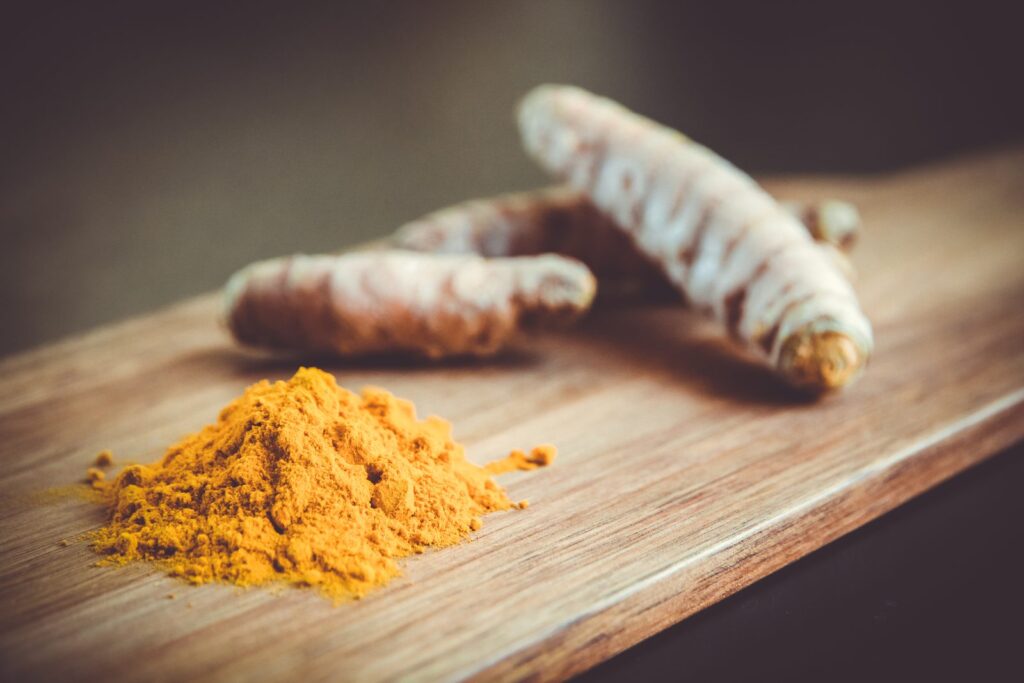
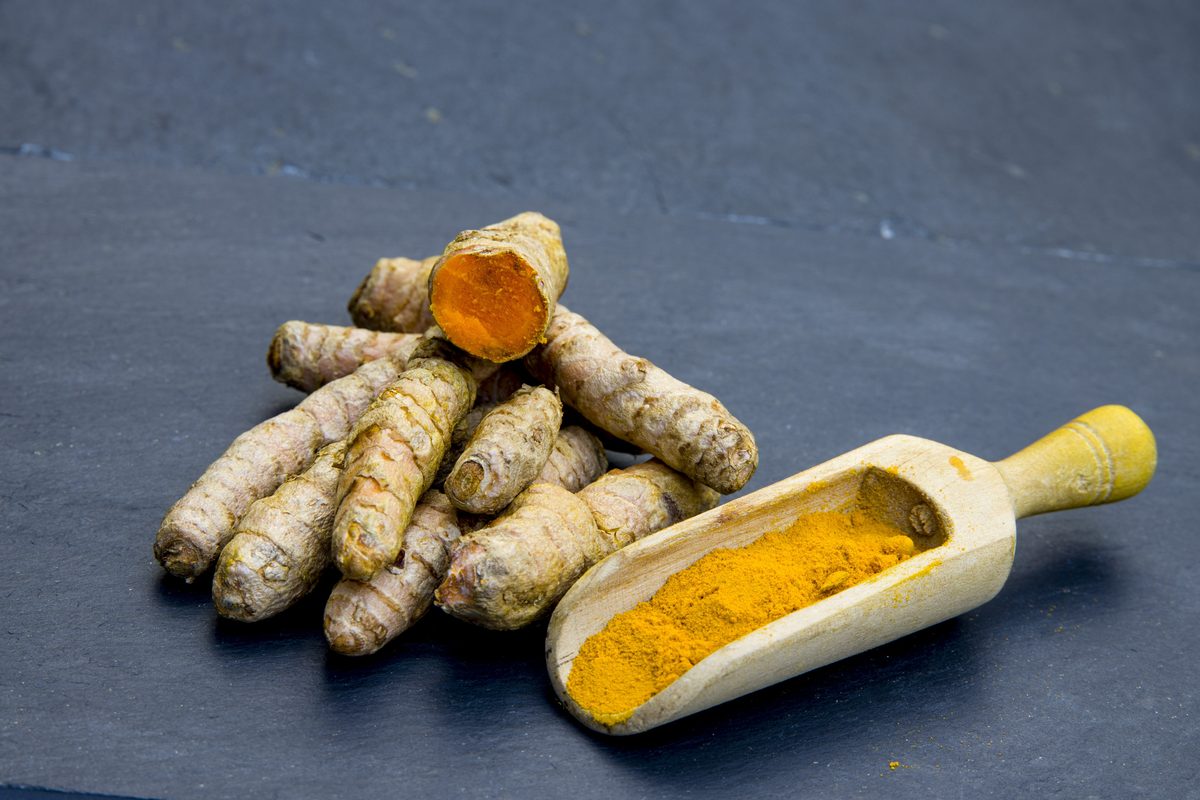
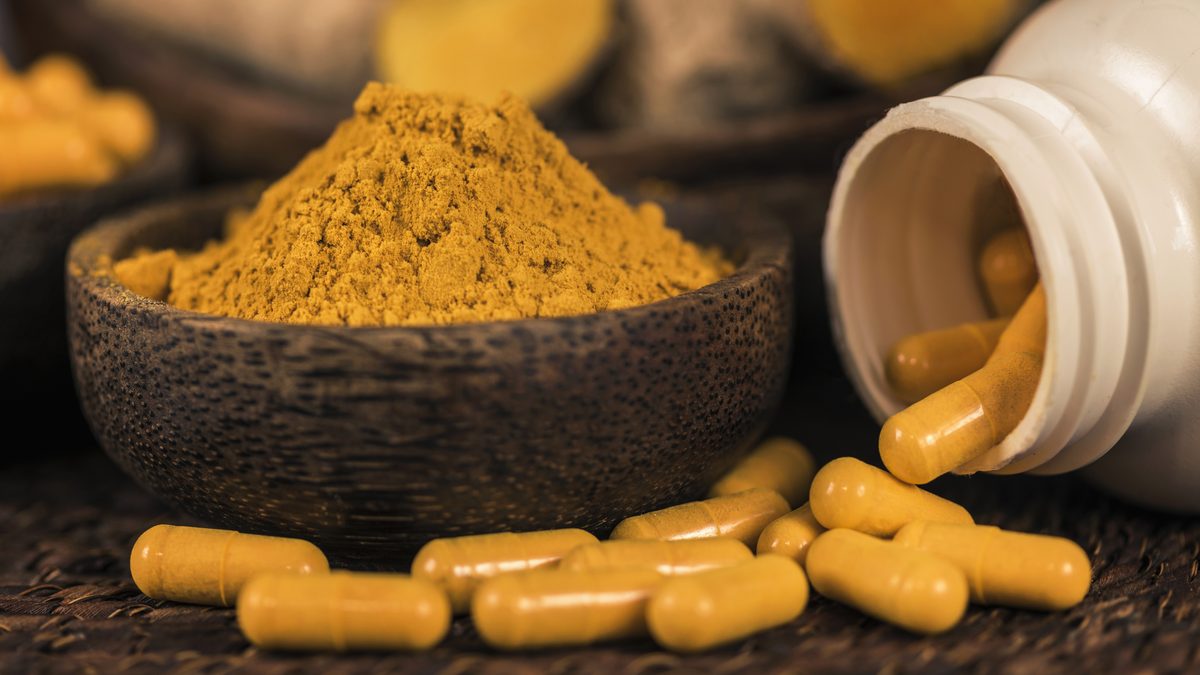
Turmeric is the rhizome of a plant, Curcuma longa, used as a powdered spice, in curry or ras el hanout. Its most studied molecule, curcumin, is also used as a food colouring under the code E100. The amounts eaten in cooking are small. Supplements, on the other hand, concentrate curcumin, sometimes at several hundred milligrams a day, and often use tricks to increase absorption, because curcumin is naturally very poorly absorbed by the gut. According to Anses, more than 1,600 products containing turmeric or curcumin were notified for sale in France over five years.
The hepatitis cases concern supplements, not kitchen turmeric.
How much curcumin is on your plate, and in a capsule?
To understand why the spice and the supplement do not carry the same risk, you need to compare the amounts. According to Anses, turmeric rhizome contains 2 to 8% curcuminoids, the family of pigments that curcumin belongs to, and turmeric intake is generally between 0.2 and 0.6 g a day.
| Situation | Turmeric | Curcuminoids supplied |
|---|---|---|
| Usual intake in cooking | 0.2 to 0.6 g a day | about 4 to 48 mg |
| One teaspoon of turmeric powder | 3 g | about 60 to 240 mg, very poorly absorbed |
| EMA dose as a digestive remedy | 1 to 3 g of powder a day | about 20 to 240 mg |
| Typical supplements on the market | 1 to 3 g of rhizome, or extract | often 500 mg to 1 g of curcumin a day |
| Anses ceiling for a supplement, 60 kg adult | less than 153 mg of curcumin a day |
Two key differences separate the spice from the supplement. First, dose and regularity: you do not put a spoonful of turmeric in every meal, every day, for months, whereas a supplement is taken daily. Second, absorption: the curcumin in the spice passes very poorly into the blood, whereas many supplements are formulated, with piperine or other methods, to multiply it. It is this combination, high dose, daily intake, increased absorption, that is found in the hepatitis cases.
What the DGCCRF found in supplements
In 2019, the DGCCRF, which is responsible for product inspection in France, analysed 64 turmeric or curcumin food supplements sold on the French market. The results, repeated by Anses, are striking:
| Survey result | Number of supplements |
|---|---|
| Supplements that on their own took you above the acceptable daily intake of 3 mg per kilo | 29 out of 64, nearly 45% |
| Curcuminoid intake above 500 mg a day | 20 |
| Intake above 1,000 mg a day | 7 |
| Intake above 1,500 mg a day | 5 |
| Highest intake, a pure curcumin supplement | 7,272 mg a day |
In other words, nearly one supplement in two exceeded the dose considered risk-free over a lifetime, before even counting diet. Anses also flags a risk of adulteration of turmeric powder, sometimes cut with other, cheaper species of turmeric, which dilutes the curcumin without, in its view, raising a safety problem.
What Anses says
| Point | What Anses says |
|---|---|
| Reports | 120 cases of side effects possibly linked to turmeric supplements, from 2009 to 2021, of which 67 were analysed |
| Most common effects | hepatitis, headaches, dizziness, digestive problems |
| Liver damage | 15 cases of hepatitis, 3 of them highly severe and 1 life-threatening; median onset of two months |
| Doses involved | from 10 mg to 1.2 g of curcumin a day, median dose 186 mg |
| Acceptable daily intake | 3 mg of curcumin per kilo of body weight per day, set by JECFA |
| Enhanced bioavailability forms | piperine, new formulations: the acceptable daily intake does not apply and can be exceeded |
| Bile ducts | turmeric not recommended with bile duct disease, because of its effect on bile secretion |
| Ceiling for supplements | less than 2.55 mg of curcumin per kilo per day, or 153 mg for 60 kg |
| Interactions | « proven hazard »: curcumin acts on several cytochromes P450 and can change the effect of anticoagulants, anticancer drugs and immunosuppressants; supplements to be avoided with anticancer drugs or medicines with a narrow therapeutic margin |
For a person weighing 60 kg, the acceptable daily intake corresponds to 180 mg of curcumin a day. Since diet already provides up to 15% of it in the heaviest consumers, Anses estimates that supplements should provide less than 2.55 mg per kilo per day, or 153 mg for a 60 kg adult, and less than 2.2 mg per kilo in children, for unmodified curcumin. Many supplements provide more, and Anses stresses that the label rarely states whether the formula increases absorption, which can lead you to take a potentially toxic dose without knowing it.
The real dangers: for whom?
Liver
The reported cases of hepatitis appeared between three days and one year after starting to take it, and, in the eight cases published in the literature, cleared up once the supplement was stopped. Anses did not identify any particular at-risk profile: most people had no history of liver problems. The key message is therefore to stop the supplement and see a doctor if you have unusual tiredness, nausea, dark urine or jaundice. In 14 of the 15 cases, turmeric was combined with other ingredients, some known for liver toxicity, such as green tea extract or Garcinia cambogia.
Bile ducts and gallstones
Turmeric stimulates bile secretion. Anses advises against it with bile duct disease, gallstones or obstruction, where this effect can be harmful.
Anticoagulants, anticancer drugs, immunosuppressants
Anses speaks of a proven hazard of drug interactions: curcumin changes intestinal absorption and the activity of several liver enzymes that process medicines, the cytochromes P450. It can therefore alter the effectiveness or safety of anticoagulants, anticancer drugs and immunosuppressants. Anses considers that these supplements should be avoided by people treated with anticancer drugs or with medicines that have a narrow therapeutic margin. Laboratory and animal studies have also shown an anticoagulant and antiplatelet effect of curcumin. The Anses opinion cites labelling rules already in force elsewhere in Europe that require people to ask a doctor or pharmacist for advice if they take anticoagulants. If you take an anticoagulant or aspirin long term, do not start a turmeric supplement without talking about it first.
Pregnancy, breastfeeding, children
The European Medicines Agency notes the absence of data in pregnant or breastfeeding women. The labelling rules cited by Anses provide that these supplements should not be used by pregnant or breastfeeding women or by under-18s. Turmeric in cooking is not affected. See our guide to eating during pregnancy.
Long-term treatments
Anses recommends that anyone on medication ask their doctor or pharmacist before taking a turmeric supplement: in 12 of the 15 hepatitis cases, the person was taking another supplement or a medicine at the same time.
Turmeric according to the European Medicines Agency
In 2018 the EMA published a monograph on turmeric rhizome used as a herbal medicine. It sheds light on its use at remedy doses:
| Point | What the monograph says |
|---|---|
| Recognised use | traditional use for digestive complaints: feeling of heaviness, slow digestion, wind |
| Powder dose | 0.5 to 1 g, 2 to 3 times a day |
| As a tea | 0.5 to 1 g in 150 ml of boiling water, 2 to 3 times a day |
| Duration | see a doctor if symptoms last more than 2 weeks |
| Not recommended | bile duct obstruction, cholangitis, liver disease, gallstones, any other biliary disease |
| Children and teenagers | not recommended under 18 |
| Pregnancy and breastfeeding | not recommended, for lack of data |
| Side effects | slight dry mouth, wind, stomach irritation |
Two points overlap with the Anses opinion: the warning about the bile ducts, and the absence of data during pregnancy. The monograph is, however, older than the Anses opinion on hepatitis, and does not mention any interaction: it was Anses that, in 2022, described the risk of interactions as a « proven hazard ».
The traffic light
| Situation | Turmeric |
|---|---|
| Turmeric powder in cooking, for everyone | 🟢 no known risk |
| « Standard » turmeric supplement, healthy adult, no medication | 🟠 possible, staying under 3 mg/kg/day of curcumin and stopping at the slightest sign of liver trouble |
| « High bioavailability » supplement, with piperine or a special formula | 🟠 be careful: the safe dose is not established |
| Supplement combined with green tea, Garcinia, Chinese cinnamon | 🔴 avoid: liver-toxic ingredients cited by Anses |
| Anticoagulant, anticancer drug, immunosuppressant, narrow-margin medicine | 🔴 avoid without medical advice |
| Other long-term treatment | 🟠 ask your doctor or pharmacist |
| Bile duct disease, gallstones | 🔴 not recommended by Anses |
| Pregnancy, breastfeeding, under 18 | 🔴 avoid supplements |
The benefits: what is proven
Turmeric is often sold for joints, inflammation or digestion. Anses points out that no health claim has been authorised by the European Commission for curcumin: a cause-and-effect relationship has notably not been established for « contributes to the normal function of joints ». Studies on osteoarthritis pain or inflammation exist, but according to the European authorities their results are not enough to justify a promise on the label. For an anti-inflammatory diet in general, see our guide to the anti-inflammatory diet.
Osteoarthritis: what the studies show, and at what dose
Although no claim is authorised, there are many clinical trials on knee osteoarthritis. A 2021 meta-analysis pooled 16 trials and 1,810 adults, followed for up to 16 weeks:
- turmeric extracts reduced knee pain and improved function compared with placebo;
- their effects were comparable to those of standard anti-inflammatory drugs, with slightly fewer side effects;
- but the authors point to short, highly heterogeneous studies at moderate risk of bias, hence uncertainty about the real effect; the benefit was also smaller in people who were overweight.
The most important point for your safety is the dose. Another 2021 meta-analysis, of 11 trials, compared curcuminoid doses of at least 1,000 mg a day with lower doses: it found no difference in relief. Many trials therefore use doses far above the 153 mg ceiling proposed by Anses for a 60 kg adult, and for only a few weeks, whereas the hepatitis cases recorded appeared after a median of two months of use.
In practice, if you are considering turmeric for joint pain, talk to your doctor: they can weigh the modest expected benefit against the risk, especially if you take other treatments. For other approaches, see our guide to the anti-inflammatory diet.
Turmeric in cooking: worry-free ideas
In cooking, turmeric adds colour and flavour with no known risk. On paper it is also an iron-rich spice: 55 mg per 100 g according to Ciqual, or about 1.6 mg in a teaspoon, plant-based iron that is less well absorbed than the iron in meat. A few recipes on the site where it has its place:
For its full nutritional values, see the turmeric powder page.
And turmeric with pepper, in cooking?
Combining turmeric and black pepper in a dish is an age-old culinary practice and poses no known problem: the amounts are small. The concern with piperine applies to supplements, where it is added to large doses of curcumin to multiply absorption.
If you want to take a supplement
- Talk to your doctor or pharmacist if you take any medication or have liver or gallbladder disease.
- Check the daily curcumin dose: less than 2.55 mg per kilo of your body weight, or 153 mg for 60 kg, according to Anses.
- Be wary of « high absorption » formulas and of blends with green tea or Garcinia.
- Stop immediately if you have tiredness, nausea, dark urine or jaundice, and see a doctor.
- Report any side effect to Anses’s nutrivigilance scheme.
To compare the real doses of supplements on the market against this ceiling, see our comparison of turmeric supplements. See also our guides to nettle tea and thyme tea.
Another spice to watch in large amounts: cassia cinnamon and its coumarin.
Ginger, for its part, has no known drug interaction according to the EMA: see ginger, is it dangerous?
Frequently asked questions
Is turmeric dangerous?
In cooking, no known danger. Turmeric food supplements have been linked to hepatitis: Anses analysed 15 cases in France.
Is turmeric bad for the liver?
Supplements can be, especially in highly absorbable forms. Kitchen turmeric is not affected.
What dose of turmeric a day?
As a supplement, Anses recommends less than 2.55 mg of curcumin per kilo per day, or 153 mg for 60 kg. This benchmark does not apply to enhanced bioavailability forms.
Can you take turmeric with anticoagulants?
Not without medical advice: Anses reports a proven hazard of interaction with anticoagulants, anticancer drugs and immunosuppressants.
Is turmeric not recommended during pregnancy?
As a supplement, yes: there are no safety data. In cooking, it can be used normally.
Is turmeric with piperine more dangerous?
Piperine increases curcumin absorption: the acceptable daily intake no longer applies and can be exceeded, according to Anses.
Is a spoonful of turmeric a day too much?
In cooking, there is no known danger, and the curcumin in the spice is very poorly absorbed. A teaspoon weighs 3 g and contains about 60 to 240 mg of curcuminoids. The risk identified by Anses concerns supplements taken every day, especially with enhanced absorption.
Is turmeric not recommended with gallstones?
Yes, at remedy doses or as a supplement: the EMA and Anses advise against it with gallstones, bile duct obstruction or liver disease, because it stimulates bile secretion.
Does turmeric relieve osteoarthritis?
Trials show a modest reduction in knee pain, but with short, heterogeneous studies, and often at doses well above the Anses ceiling. No claim is authorised in Europe.
Do turmeric supplements respect the safe dose?
Not always: in 2019, the DGCCRF found that 29 out of 64 supplements on their own took you above the acceptable daily intake.
Our sources
- Anses, avis relatif à l’évaluation des risques liés à la consommation de compléments alimentaires contenant du curcuma (saisine 2019-SA-0111), 2022.
- Anses, Vigil’Anses No. 17, « Curcuma ou curcumine dans les compléments alimentaires : des cas d’effets indésirables hépatiques », June 2022.
- JECFA, 2004: acceptable daily intake of curcumin (E100).
- EMA, Curcuma longa rhizome monograph: absence of data during pregnancy and breastfeeding.
- EMA, HMPC. European Union herbal monograph on Curcuma longa L., rhizoma, revision 1 (EMA/HMPC/329755/2017), 25 September 2018.
- DGCCRF, 2019 survey of food supplements containing turmeric or curcumin, cited in Anses opinion 2019-SA-0111.
- Wang Z et al. Efficacy and safety of turmeric extracts for the treatment of knee osteoarthritis: a systematic review and meta-analysis of randomised controlled trials. Curr Rheumatol Rep, 2021 (PMID 33511486).
- Hsiao AF et al. The efficacy of high- and low-dose curcumin in knee osteoarthritis: a systematic review and meta-analysis. Complement Ther Med, 2021 (PMID 34537344).
- USDA, FoodData Central, SR Legacy: Spices, turmeric, ground (weight of a teaspoon); Ciqual 2025 table (Anses): turmeric, powder.