Is Cinnamon Bad for Your Liver? Coumarin, Maximum Dose and Ceylon
The short answer
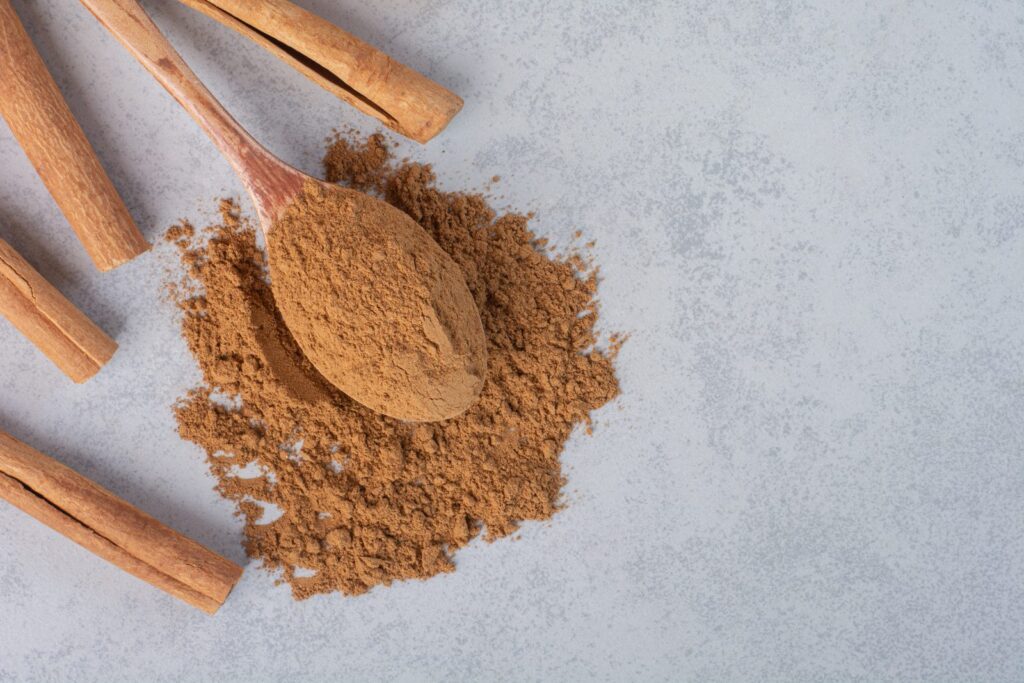
Cinnamon is not dangerous in normal culinary use, but cassia cinnamon, the most common kind, contains a lot of coumarin, a substance that is toxic to the liver at high doses. According to the German Federal Institute for Risk Assessment (BfR), a 60 kg adult reaches the tolerable daily intake with about 2 g of cassia cinnamon a day, less than a teaspoon, and a 15 kg child with 0.5 g. If you eat it often and in quantity, choose Ceylon cinnamon, which contains very little. Cinnamon capsules, on the other hand, can be very high in it.
This article is for information only and does not replace medical advice.
The problem: coumarin
Coumarin is a substance found naturally in some plants, especially in cassia cinnamon. At high doses, it can damage the liver. The BfR specifies that even relatively low doses can cause liver damage in a small group of particularly sensitive people: raised liver enzymes, or inflammation showing up as jaundice. These effects are generally reversible.
To protect everyone, including these sensitive people, the BfR and the European Food Safety Authority (EFSA) have set the same tolerable daily intake: 0.1 mg of coumarin per kilo of body weight. This is the amount you can consume every day, for life, without significant risk.
Coumarin and the liver: what the human data show
The tolerable daily intake was set from animal studies and from the sensitivity of certain people. What do we see in real heavy consumers? A Japanese study published in 2016 offers rare insight. In Japan, traditional medicines known as Kampo contain cinnamon bark, sometimes at high doses.
| Measure | Result |
|---|---|
| Patients followed | 129, median age 58 |
| Coumarin in 1 g of cinnamon bark as a decoction | 3.0 mg |
| Patients above the tolerable intake of 0.1 mg per kilo | 98, or 76% |
| Abnormal liver tests, below the tolerable intake | 19.4% |
| Abnormal liver tests, above the tolerable intake | 17.3%, no significant difference |
No liver abnormality was linked to cinnamon in these patients. The EMA, in its 2021 review, concludes that there is no evidence of liver damage due to the coumarin in cinnamon in these data. This does not call the BfR limit into question, which also protects the most sensitive people, but it confirms that a moderate excess is not poisoning.
Conversely, a case published in 2015 describes a 73-year-old woman hospitalised for acute hepatitis, one week after starting cinnamon supplements for her diabetes, while she was also taking a high-dose statin. Both were stopped, and the liver returned to normal; the statin was later restarted without problems. The link with cinnamon was judged probable. The EMA notes that the species and dose of cinnamon were not known. The authors warn against combining statins and cinnamon supplements.
Cassia or Ceylon: the difference that matters
| Cassia cinnamon | Ceylon cinnamon | |
|---|---|---|
| Coumarin | about 3 g per kg on average, up to 10 g per kg measured | low |
| Flavour | stronger | milder |
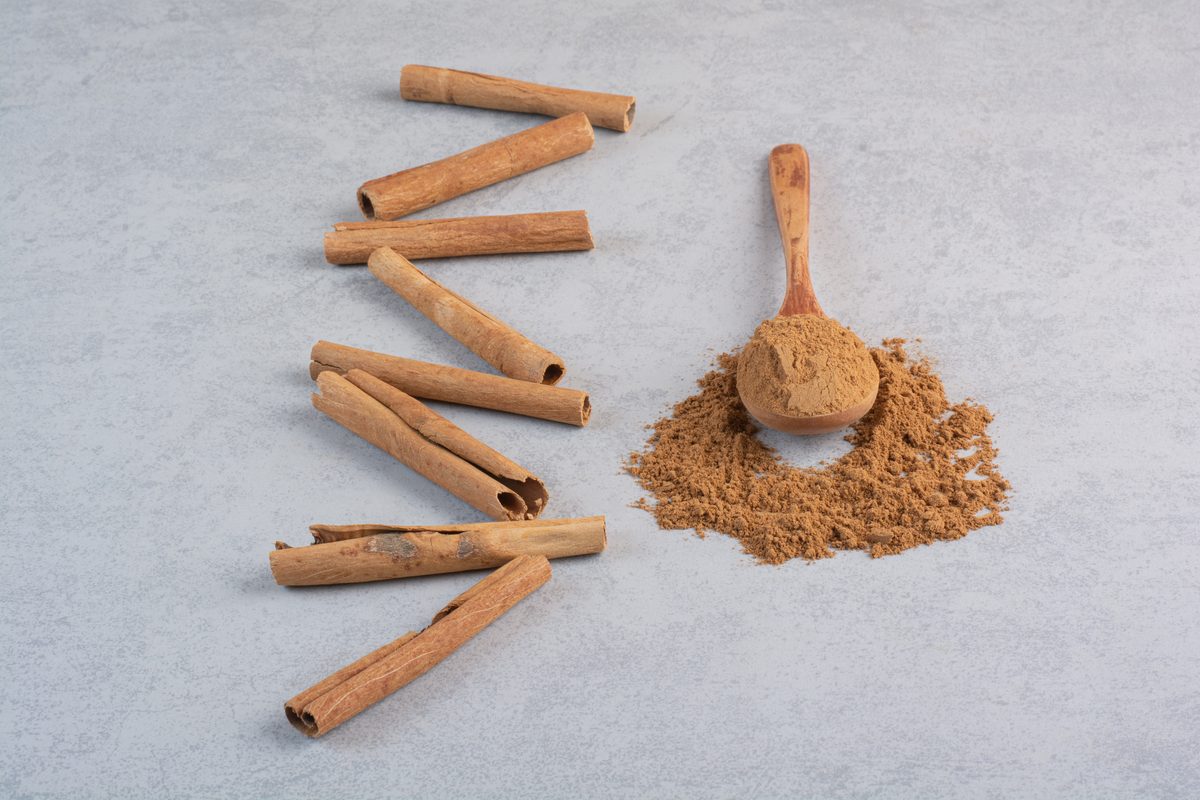
| Stick | a single roll of thick bark | several thin layers rolled up, like a cigar |
| Label | often simply « cinnamon » | generally marked « Ceylon cinnamon » |
In practice: if the packet of ground cinnamon does not say « Ceylon », assume it is cassia.
What labels say: Ceylon is rarely stated
To apply the BfR advice, you still need to know which cinnamon you are buying. We went through the products in the cinnamon category sold in France and listed on Open Food Facts: 82 cinnamons, ground or in sticks, national brands, supermarket own brands and delicatessens.
| What the label states | Number of products |
|---|---|
| Ceylon cinnamon, or Cinnamomum verum, or origin Sri Lanka | 10 |
| A cassia type: cassia, Chinese, Saigon or Indonesian cinnamon | 3 |
| Simply « cinnamon », with no further detail | 69, or 84% |
The vast majority of cinnamons therefore do not state their species. Yet the BfR notes that products made with Ceylon cinnamon generally say so explicitly: a cinnamon with no detail therefore has a good chance of being cassia. If you eat it every day, choose a product explicitly labelled « Ceylon » or « Cinnamomum verum« .
How much cinnamon a day?
| Weight | Tolerable coumarin intake | Equivalent cassia cinnamon | In teaspoons |
|---|---|---|---|
| 15 kg child | 1.5 mg a day | about 0.5 g | about 1/5 of a teaspoon |
| 60 kg adult | 6 mg a day | about 2 g | about 3/4 of a teaspoon |
Two important points:
- these are averages: a cassia very rich in coumarin reaches the limit with less;
- an occasional excess is not serious: according to the BfR, slightly exceeding the tolerable intake for one to two weeks can be considered harmless. It is high, regular consumption that is the concern.
The coumarin in our recipes, serving by serving
To make these figures concrete, here is an estimate of the coumarin provided by one serving of a few recipes on the site, if they are made with cassia cinnamon at the average level found by the BfR, 3 g of coumarin per kilo:
| Recipe | Cinnamon per serving | Estimated coumarin | Share of the limit, 60 kg adult | Share of the limit, 15 kg child |
|---|---|---|---|---|
| Cinnamon rolls, 2 tbsp for 10 rolls | 1.6 g | 4.7 mg | 78% | more than 3 times the limit |
| Apple cinnamon porridge, 1 tsp for 2 | 1.3 g | 3.9 mg | 65% | 2.6 times the limit |
| Stewed apples, 1 tsp for 4 | 0.65 g | 2 mg | 33% | 1.3 times the limit |
| Apple tart, 1 tsp for 8 | 0.33 g | 1 mg | 16% | 65% |
For an adult, one serving of these desserts stays below the daily limit. For a young child, however, a single cassia cinnamon roll can exceed it by a wide margin. Do not panic: according to the BfR, an occasional excess is not dangerous. But if your child eats a cinnamon porridge every morning, cinnamon stewed fruit as an after-school snack and biscuits in the evening, the intakes add up day after day. In that case, Ceylon cinnamon, or simply a pinch, changes everything.
The cinnamon traffic light
| Use | Verdict | Why |
|---|---|---|
| A pinch in a dessert, a coffee, stewed fruit | 🟢 no problem | quantity far below the limit |
| Shop-bought cinnamon pastries and cakes | 🟢 no problem in a normal portion | coumarin content capped by European law |
| Ceylon cinnamon, even every day | 🟢 no problem | very little coumarin |
| Cassia every day, a teaspoon or more | 🟠 cut down | tolerable intake reached or exceeded for an adult |
| Child who eats cassia every day, porridge, biscuits | 🟠 be careful | the limit is reached with 0.5 g at 15 kg |
| Cinnamon capsules or supplements | 🔴 be careful | can contain a lot of coumarin, according to the BfR |
| Liver disease | 🔴 avoid cassia in quantity | coumarin acts on the liver |
What the law says about food
Since 2011, the European regulation on flavourings has set maximum coumarin levels in processed foods:
| Food | Maximum coumarin |
|---|---|
| Traditional or seasonal bakery products containing cinnamon, such as Christmas biscuits | 50 mg per kg |
| Breakfast cereals, including muesli | 20 mg per kg |
| Other pastries and biscuits | 15 mg per kg |
| Desserts | 5 mg per kg |
These caps do not apply to cinnamon sold in a jar, nor to what you cook yourself. It is therefore mainly at home that the amount of cassia can be controlled.
Cinnamon and blood sugar: what the studies show
Cinnamon is often recommended online for lowering blood sugar. A 2013 meta-analysis, pooling 10 trials and 543 people with type 2 diabetes, measured its effect:
| Measure | Effect of cinnamon |
|---|---|
| Fasting blood glucose | fall of about 25 mg/dL |
| Glycated haemoglobin, HbA1c, the marker of long-term control | no significant effect |
| Total cholesterol, LDL, triglycerides | modest falls |
| Doses used | from 120 mg to 6 g a day, for 4 to 18 weeks |
The authors stress very large differences between the studies, which make it impossible to know which dose and duration would be useful. Above all, the doses tested go up to 6 g a day: with cassia, that is three times the amount that reaches the tolerable daily intake of coumarin for a 60 kg adult. Taking cinnamon capsules for your blood sugar therefore exposes you to exactly the risk described above, for an uncertain benefit. Diabetes is treated with your medical team, not with spice capsules.
Cinnamon, pregnancy and children
The European Medicines Agency, in its monograph on Ceylon cinnamon bark used as a herbal medicine, advises against its use during pregnancy and breastfeeding, for lack of sufficient data, as well as in under-18s. This recommendation applies to herbal teas and extracts taken as a remedy, not to the pinch of cinnamon in a dessert. For cooking, the rule remains that of coumarin: in children, the limit is quickly reached with cassia. See also our guide to eating during pregnancy.
The same monograph cites one contraindication: allergy to balsam of Peru.
And cinnamon for blood sugar?
You often read that cinnamon « regulates blood sugar ». It is not a treatment, and it is precisely for this type of use that some people take high doses, in capsules: the case where the coumarin risk is highest. If you have diabetes, cinnamon can replace sugar for flavour, as in our ideas on apples and diabetes, but not a treatment.
Cinnamon tea and essential oil: what the EMA provides for
Ceylon cinnamon is also a herbal remedy. The European Medicines Agency devotes two monographs to it, one for the bark, the other for its essential oil. They cover only Ceylon cinnamon: cassia is not taken into account.
| Point | Bark, as a herbal tea | Essential oil |
|---|---|---|
| Traditional use | mild digestive problems such as cramps, bloating, wind; mild diarrhoea | mild digestive problems such as cramps, bloating, wind |
| Adult dose | 0.5 to 1 g of bark as an infusion, up to 4 times a day | 50 to 200 mg a day in 2 to 3 doses, never undiluted |
| Duration | see a doctor beyond 2 weeks, or 2 days in case of diarrhoea | see a doctor beyond 2 weeks |
| Under 18 | not recommended | not recommended |
| Contraindication | allergy to cinnamon or balsam of Peru | allergy to cinnamon or balsam of Peru |
| Interactions | none reported | none reported |
In case of diarrhoea, the monograph reminds us that rehydration comes first, and that diarrhoea that keeps coming back or blood in the stools should prompt you to see a doctor. Be careful with the species: made with 1 g of cassia at the average BfR level, 3 g of coumarin per kilo, a single cup already provides about 3 mg of coumarin, half the tolerable intake of a 60 kg adult. Four cups would exceed it. The Japanese study cited above measured 3.0 mg of coumarin in a decoction of 1 g of bark.
Cinnamon allergy: the cases described
The main component of cinnamon essential oil, cinnamaldehyde, is irritant and sensitising: according to the EMA, it can cause contact eczema. A 2019 systematic review identified 20 clinical cases, 7 case series and 160 adverse effects reported to pharmacovigilance systems. The most frequent were digestive problems and allergic reactions, which went away on their own in most cases.
- In the mouth: a 26-year-old woman had severe itching of the mouth and throat after cinnamon chewing gum, then, less severely, after cinnamon rice pudding. The allergy tests were positive.
- On the skin: another 26-year-old woman had a generalised rash lasting a week, after drinking several cups of a herbal tea containing 27.1% Ceylon cinnamon bark. It did not recur when she avoided cinnamon.
The authors of the review conclude that cinnamon is safe as a spice, but that its medicine-type uses, at high doses or over long periods, can cause adverse effects and need monitoring. If you are allergic to balsam of Peru, talk to your allergist before eating cinnamon in quantity.
How to enjoy it safely
- Choose Ceylon cinnamon if you add it every day, to your porridge or your coffee.
- With cassia, keep to a pinch, not a whole spoonful every day.
- Be more careful with children, whose limit is four times lower.
- Avoid cinnamon capsules without medical advice.
For its nutritional values, see the page on ground cinnamon, and for a festive recipe: our cinnamon rolls.
Frequently asked questions
Is cinnamon dangerous for the liver?
At high doses and on a regular basis, the coumarin in cassia cinnamon can damage the liver, especially in sensitive people. The effects are generally reversible. In normal culinary use, there is no danger.
What is the maximum amount of cinnamon a day?
For cassia, about 2 g a day for a 60 kg adult, which is three quarters of a teaspoon, and 0.5 g for a 15 kg child. Ceylon cinnamon contains much less coumarin.
How can you recognise Ceylon cinnamon?
It is generally labelled « Ceylon ». As a stick, it forms several thin layers rolled up, whereas cassia is a single thick roll.
Can you eat cinnamon when pregnant?
In cooking, a pinch poses no known problem. The European Medicines Agency does, however, advise against cinnamon as a remedy, as a herbal tea or extract, during pregnancy.
Are cinnamon capsules dangerous?
They can contain a lot of coumarin, according to the BfR. Do not take them without medical advice, especially if your liver is fragile.
Does cinnamon lower blood sugar?
Cinnamon does not replace a treatment, and high doses in capsules expose you to a lot of coumarin.
How do I know if my cinnamon is cassia?
If the label simply says « cinnamon », it has a good chance of being cassia: out of 82 cinnamons sold in France listed on Open Food Facts, only 10 stated Ceylon. As a stick, cassia forms a single thick roll.
Does cinnamon lower blood sugar?
A meta-analysis of 10 trials shows a fall in fasting blood glucose, but no effect on HbA1c, with doses of up to 6 g a day, which expose you to a lot of coumarin with cassia.
Have there been cinnamon recalls?
A few products containing cinnamon have been recalled since 2021 according to RappelConso, for ethylene oxide, pesticide or heavy metals, but not for coumarin, whose regulatory limits apply to processed foods and not to cinnamon in a jar.
Is cinnamon tea dangerous?
With Ceylon cinnamon, the EMA provides for 0.5 to 1 g of bark per cup, up to 4 times a day in adults, with no reported interactions. It does not recommend it under 18, nor during pregnancy and breastfeeding.
Can you be allergic to cinnamon?
Yes. Cinnamaldehyde is sensitising, and reactions have been described after cinnamon chewing gum, a dessert or a herbal tea. Allergy to cinnamon or balsam of Peru is a contraindication for the EMA.
Can you take cinnamon capsules with a statin?
A case of acute hepatitis has been published in a patient who combined cinnamon supplements with a high-dose statin. Ask your doctor for advice before taking any cinnamon supplement if you are on treatment.
Our sources
- BfR, Bundesinstitut für Risikobewertung: questions fréquentes sur la coumarine dans la cannelle et d’autres aliments, 27 September 2012.
- EFSA. Coumarin in flavourings and other food ingredients with flavouring properties. EFSA Journal, 2008.
- Regulation (EC) No 1334/2008 on flavourings, Annex III.
- European Medicines Agency, HMPC. Community herbal monograph on Cinnamomum verum J.S. Presl, cortex. EMA/HMPC/246774/2009, 2011.
- USDA, FoodData Central, SR Legacy: Spices, cinnamon, ground (weight of a teaspoon).
- Allen RW et al. Cinnamon use in type 2 diabetes: an updated systematic review and meta-analysis. Ann Fam Med, 2013 (PMID 24019277).
- Open Food Facts, products in the cinnamon category sold in France, survey of 25 September 2026.
- RappelConso, public product recall dataset (data.economie.gouv.fr), cannelle, 2021 to September 2026.
- European Medicines Agency, HMPC. Community herbal monograph on Cinnamomum verum J.S. Presl, corticis aetheroleum, 2011.
- EMA, HMPC. Addendum to assessment report on Cinnamomum verum J.S. Presl, cortex (EMA/HMPC/601683/2020), 3 March 2021.
- Iwata N et al. The relation between hepatotoxicity and the total coumarin intake from traditional Japanese medicines containing cinnamon bark. Front Pharmacol, 2016 (PMID 27378929).
- Brancheau D, Patel B, Zughaib M. Do cinnamon supplements cause acute hepatitis? Am J Case Rep, 2015 (PMID 25923145).
- Hajimonfarednejad M et al. Cinnamon: a systematic review of adverse events. Clin Nutr, 2019 (PMID 29661513).