Probiotics: Morning or Evening, Before or After a Meal?
The short answer
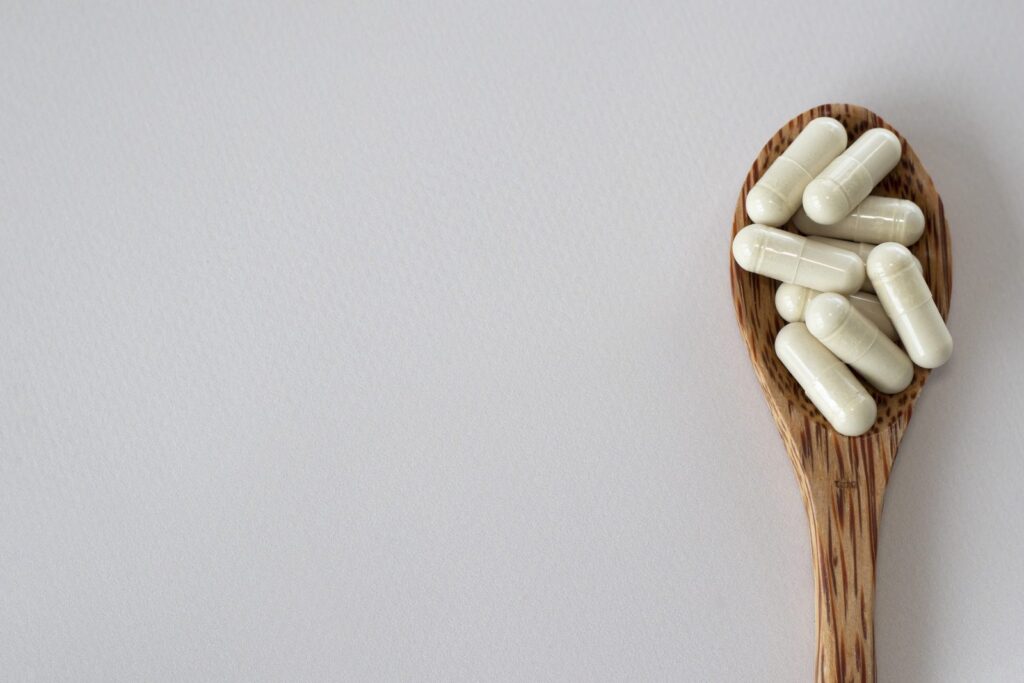
Morning or evening, it hardly matters: what counts is the timing relative to the meal, and regularity. The only study that has compared times of intake, carried out on a laboratory digestion model, found that probiotic bacteria survived best when taken during the meal or within the 30 minutes before, and far less well 30 minutes after. The yeast Saccharomyces boulardii was not affected by the timing of the meal. The very widespread advice to take them “on an empty stomach in the morning” is therefore not based on solid evidence. In practice, follow the leaflet for your product and take it at the same time every day.
This article is for information only and does not replace the advice of your doctor or pharmacist.
What is a probiotic?
The international definition, set by the FAO and the WHO and confirmed by an expert consensus in 2014, is: “live micro-organisms that, when administered in adequate amounts, confer a health benefit”. Three conditions, then: alive, in sufficient quantity, with a demonstrated effect. Each strain has its own effects, and a result obtained with one does not necessarily hold for another.
Before, during or after the meal: what the study says
In 2011, Canadian researchers ran a commercial probiotic, containing two lactobacilli, one bifidobacterium and the yeast S. boulardii, through a laboratory model that reproduces the stomach and the start of the intestine. They compared several times of intake, with a meal of oat flakes and milk.
| Time of intake | Bacterial survival |
|---|---|
| 30 minutes before the meal | 🟢 the best |
| During the meal | 🟢 the best |
| 30 minutes after the meal | 🔴 poor |
Other results from this study:
- the bacteria survived better in milk with 1% fat or oat porridge made with milk than in apple juice or water;
- the fat content of the meal seemed more important than its protein content;
- the yeast S. boulardii was influenced neither by the timing nor by the type of meal.
The authors conclude that bacterial probiotics without a gastro-resistant coating should ideally be taken during or just before a meal containing a little fat. Important limits: it is a laboratory study, not in humans, on a single product, and its lead author works for the Rosell Institute (Lallemand group), a probiotics manufacturer. It gives a lead, not a certainty.
Depending on the form of the product
| Form | How to take it |
|---|---|
| Plain capsule, powder | during or just before a meal, based on the 2011 study |
| Gastro-resistant capsule | the coating already protects against acidity: follow the manufacturer’s leaflet |
| Yeast S. boulardii, such as Ultra-Levure | timing does not matter; do not mix with a hot, iced or alcoholic food or drink |
| Yoghurt, kefir, fermented foods | these are already foods, eaten as part of a meal |
For the yeast, all the details are in our guide Ultra-Levure: probiotic or medicine?
Reading the label of a probiotic
Before asking when to take a probiotic, you still have to choose it well. Three pieces of information matter on the label:
| Item | Example | Why it matters |
|---|---|---|
| Genus, species and strain | Lactobacillus rhamnosus GG, Saccharomyces boulardii CNCM I-745 | effects are demonstrated strain by strain: a result obtained with one strain does not necessarily hold for another of the same species |
| Quantity of micro-organisms, in CFU | 5 billion CFU a day | in children on antibiotics, doses of at least 5 billion CFU a day proved more effective than lower doses |
| Storage conditions | in the fridge, or at room temperature | these are living organisms: poor storage can reduce their numbers |
A product that states neither the strain nor the quantity does not let you know whether it matches what has been studied. And the expression “billions of live cultures” with no date given, at manufacture or at end of shelf life, stays vague. If in doubt, your pharmacist can help you compare.
Probiotics and antibiotics
This is the situation where probiotics have the best evidence. Two Cochrane reviews, the reference in evidence-based medicine, take stock:
| What was measured | Without probiotic | With probiotic |
|---|---|---|
| Diarrhoea on antibiotics in children (33 trials, 6,352 children) | 19% | 8% |
| Clostridium difficile diarrhoea, adults and children (31 trials, 8,672 people) | 4% | 1.5% |
In children, doses of at least 5 billion CFU a day proved more effective than lower doses. For C. difficile, the benefit was clearest in the people at highest risk, particularly those in hospital.
Should you space out the probiotic and the antibiotic? People often advise leaving two hours between the two, so that the antibiotic does not destroy the probiotic’s bacteria. It is logical, but we found no trial that compared the two approaches. Follow the leaflet for your product. For the yeast S. boulardii, the question does not arise: antibiotics do not act on yeasts.
Against gastroenteritis: an uncertain benefit
Probiotics are very often taken during gastroenteritis. The 2020 Cochrane review, the most complete on the subject, calls for caution: it pooled 82 studies and more than 12,000 participants, mostly children.
| Outcome, in the most reliable studies | Result |
|---|---|
| Diarrhoea lasting 48 hours or more | no difference from the control group, 2 trials, 1,770 participants |
| Duration of diarrhoea | possibly shortened by 8.6 hours, but with very great uncertainty |
| Quality of the studies as a whole | high or unclear risk of bias for many, large differences between studies, publication bias |
The authors checked this result for the most widely used strains, including Lactobacillus rhamnosus GG and Saccharomyces boulardii, with no change in conclusion. In other words, probiotics have better evidence for preventing diarrhoea on antibiotics than for treating gastroenteritis that has already started. With gastroenteritis, the priority remains rehydration.
Irritable bowel and bloating: what the largest meta-analysis shows
Irritable bowel syndrome is one of the most frequent reasons for taking a probiotic long term. The most complete meta-analysis to date, published in 2023, pooled 82 trials and 10,332 patients. Only 24 of these trials were at low risk of bias on all criteria.
| Symptom | Probiotics for which a benefit appears | Certainty of evidence |
|---|---|---|
| Overall symptoms | Escherichia strains | moderate |
| Overall symptoms | Lactobacillus strains, including L. plantarum 299V | low |
| Abdominal pain | Saccharomyces cerevisiae I-3856, Bifidobacterium strains | low |
| Bloating, swollen belly | certain combinations of probiotics, Bacillus strains | very low |
| Adverse effects, 55 trials, more than 7,000 patients | no more frequent than with a placebo | – |
Two practical lessons. First, the benefit depends on the strain: this is where the precise wording on the label, seen above, makes full sense. A product that only says “lactic ferments” does not let you know whether it matches a studied strain. Second, certainty remains low to very low for almost all comparisons: if a probiotic changes nothing in your symptoms, talk to your doctor rather than going from one product to the next. For irritable bowel, diet also has evidence: see our guide to the low-FODMAP diet.
How long should you take probiotics?
There is no universal duration: it depends on the strain and the goal. A few guides:
- probiotics do not settle in permanently: the yeast S. boulardii, for example, disappears from the stools 2 to 5 days after stopping;
- a course of several weeks with no specific goal has no solid basis.
To look after your microbiota day to day, your plate remains the best strategy: fibre, vegetables, pulses, wholegrain cereals. See our guide to probiotics and the gut microbiota.
Yoghurt, kefir, sauerkraut: fermented foods, not necessarily probiotics
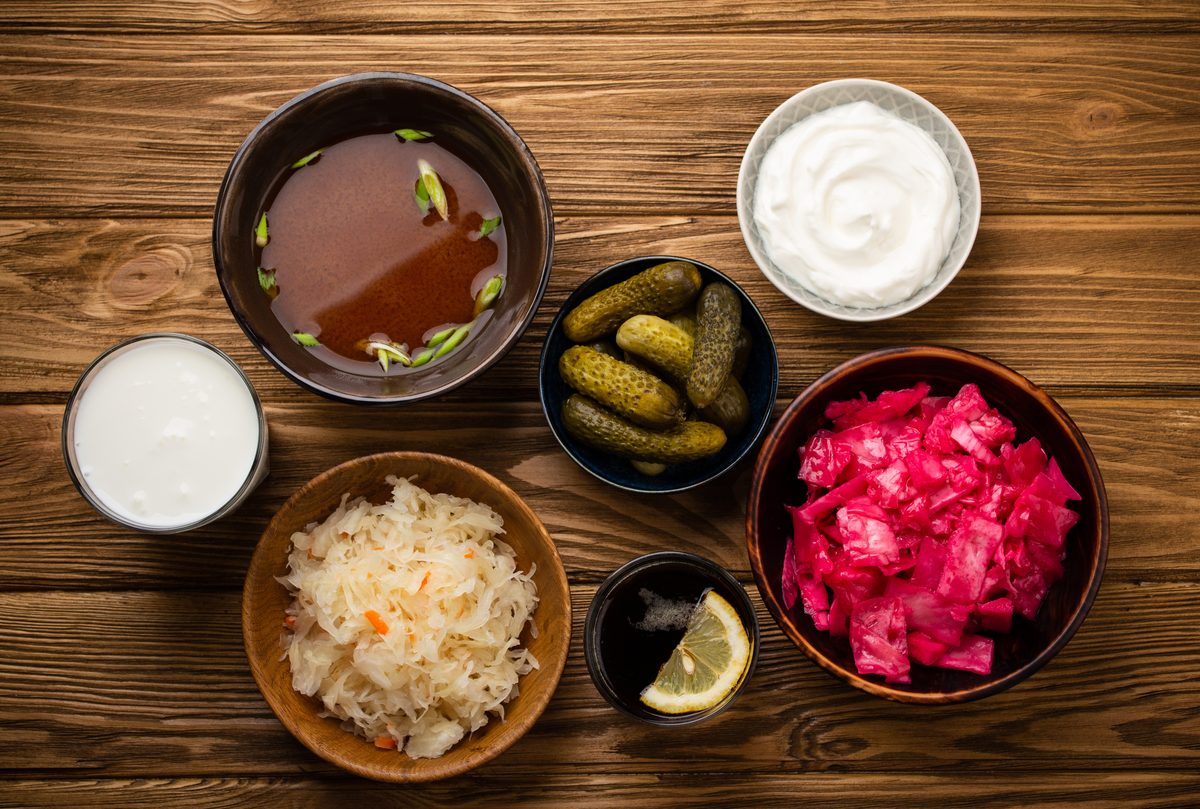
Fermented foods are often presented as “natural probiotics”. The ISAPP experts, in a 2021 consensus, nevertheless clearly distinguish the two:
- a fermented food is a food made through the growth of micro-organisms: yoghurt, kefir, sauerkraut, kimchi, miso, sourdough bread, certain cheeses;
- a probiotic is a live, identified micro-organism whose effect on health has been demonstrated at a given dose.
A fermented food can contain live microbes without a specific benefit having been proven; some, such as bread or pasteurised sauerkraut, no longer contain any. Yoghurt is an exception: the European Union authorises a claim that the live cultures in yoghurt improve the digestion of its lactose in people who digest it poorly. It is one of the very few health claims linked to live cultures authorised in the Union.
During pregnancy, there is no particular precaution for yoghurts and fermented milks made with pasteurised milk; cheeses and fermented milks made with raw milk follow the usual pregnancy rules.
Which medicines should you not take with probiotics?
| Medicine | Verdict | Why |
|---|---|---|
| Antibiotics and bacterial probiotic | 🟠 space out according to the leaflet | the antibiotic can kill the bacteria |
| Antifungals and the yeast S. boulardii | 🔴 do not combine | the antifungal destroys the yeast |
| Immunosuppressants, chemotherapy | 🔴 medical advice essential | risk of infection in immunocompromised people |
Probiotics and pregnancy
Pregnant women often wonder whether probiotics could prevent an allergy in their baby. The European allergy guidelines from the EAACI, updated in 2020, make neither a recommendation for nor a recommendation against probiotics during pregnancy, breastfeeding or in infants for this purpose: the evidence does not allow a decision. As with any supplement during pregnancy, talk to your midwife or doctor before taking one, particularly for yeast-based products, which the Ultra-Levure leaflet advises against during pregnancy as a precaution.
Premature babies: where the evidence is strongest
One area has progressed a great deal in recent years: the prevention of necrotising enterocolitis, a serious inflammation of the intestine that mainly affects very premature babies. Here it is not for parents to buy a product: it is the neonatal units that decide.
| Study | Babies | Result |
|---|---|---|
| Network meta-analysis, 51 trials, 2025 | 11,661 premature babies | most probiotics reduce the frequency of enterocolitis; certain combinations of bifidobacteria and lactobacilli also reduce mortality |
| National study in England and Wales, 2016 to 2022 | 48,048 babies born before 32 weeks, of whom 16,586 were matched in pairs | severe enterocolitis in 3.3% of babies given probiotics versus 4.2%; survival to discharge of 96.6% versus 94.2% |
The authors of the British study recommend that units not yet using them consider products that meet the guidelines. These results concern hospitalised babies, with products chosen by the medical team. They do not justify giving probiotics to a healthy full-term infant without the paediatrician’s advice.
Depending on your goal: the level of evidence at a glance
| Goal | What the reviews say |
|---|---|
| Preventing diarrhoea on antibiotics | 🟢 benefit, moderate evidence, especially with sufficient doses |
| Very premature babies, in hospital | 🟢 less severe enterocolitis; decision for the neonatal team |
| Irritable bowel | 🟠 possible benefit depending on the strain, low to very low certainty |
| Treating gastroenteritis that has already started | 🟠 uncertain benefit in the most reliable studies |
| Preventing allergy in the baby, during pregnancy | ⚪ neither for nor against |
The timing of intake, morning or evening, comes well after these questions: choosing a studied strain for the right goal matters much more than the time at which you swallow it.
Who should avoid probiotics?
In healthy people, probiotics are well tolerated: in the 2017 Cochrane review, adverse effects were no more frequent than with a placebo. However, for the yeast S. boulardii, very rare cases of passage into the blood have been reported in people who are immunocompromised, in intensive care or have a central venous catheter, who must not take it. More broadly, anyone with weakened immunity should ask their doctor before taking a probiotic.
Frequently asked questions
Should you take probiotics in the morning or the evening?
The time of day matters less than the timing relative to the meal. In the laboratory, bacteria survive better when taken during or just before a meal. Choose the time when you will not forget.
Should you take probiotics on an empty stomach?
This advice is very widespread, but the only study that compared times found the opposite for bacteria: better survival with a meal, especially one containing a little fat.
Before or after the meal?
Preferably during, or within the 30 minutes before. Thirty minutes after the meal, survival was poor in the 2011 study.
Can you take probiotics with an antibiotic?
Yes, it is even the situation where the evidence for them is best. For a bacterial probiotic, people often advise spacing out the doses; follow the leaflet.
What should you swallow a probiotic with?
In the 2011 study, bacteria survived better in milk than in water or apple juice.
How long should you take probiotics?
It depends on the strain and the goal: follow the leaflet. They do not settle permanently in the gut.
Do probiotics cure gastroenteritis?
According to the 2020 Cochrane review, the most reliable studies show no reduction in the risk of prolonged diarrhoea. Their best evidence concerns preventing diarrhoea on antibiotics.
Is kefir a probiotic?
It is a fermented food that contains live microbes, but not a probiotic in the strict sense, as no effect has been shown for a specific strain and dose.
Should you take probiotics during pregnancy to prevent allergies in the baby?
The European EAACI guidelines come down neither for nor against: the evidence is insufficient.
Do probiotics relieve irritable bowel?
Some strains seem to help, but certainty is low to very low according to the 2023 meta-analysis of 82 trials. The benefit depends on the strain: choose a product that states it.
Do probiotics reduce a bloated belly?
For the bloating of irritable bowel, the evidence is of very low certainty, for a few combinations of probiotics and Bacillus strains only.
Are probiotics given to premature babies?
Yes, more and more neonatal units do so for babies born before 32 weeks: a large British study observed less severe enterocolitis and better survival. It is a decision for the medical team.
Our sources
- Tompkins TA, Mainville I, Arcand Y. The impact of meals on a probiotic during transit through a model of the human upper gastrointestinal tract. Benef Microbes, 2011 (PMID 22146689).
- Hill C et al. The International Scientific Association for Probiotics and Prebiotics consensus statement on the scope and appropriate use of the term probiotic. Nat Rev Gastroenterol Hepatol, 2014 (PMID 24912386).
- Guo Q et al. Probiotics for the prevention of pediatric antibiotic-associated diarrhea. Cochrane Database Syst Rev, 2019 (PMID 31039287).
- Goldenberg JZ et al. Probiotics for the prevention of Clostridium difficile-associated diarrhea in adults and children. Cochrane Database Syst Rev, 2017 (PMID 29257353).
- ANSM, public medicines database: leaflet and summary of product characteristics for Ultra-Levure, 2024.
- Collinson S et al. Probiotics for treating acute infectious diarrhoea. Cochrane Database Syst Rev, 2020 (PMID 33295643).
- Marco ML et al. The ISAPP consensus statement on fermented foods. Nat Rev Gastroenterol Hepatol, 2021 (PMID 33398112).
- Halken S et al. EAACI guideline: preventing the development of food allergy in infants and young children, 2020 update (PMID 33710678).
- Regulation (EU) No 432/2012: authorised claim on live yoghurt cultures and lactose digestion.
- Goodoory VC et al. Efficacy of probiotics in irritable bowel syndrome: systematic review and meta-analysis. Gastroenterology, 2023 (PMID 37541528).
- Dai Y et al. Effect of probiotics on necrotizing enterocolitis in preterm infants: a network meta-analysis of randomized controlled trials. BMC Pediatr, 2025 (PMID 40140789).
- Aveline A et al. Evaluating the effect of probiotics on severe necrotising enterocolitis in preterm infants born before 32 weeks gestation in England and Wales: a propensity-matched population study. Lancet Reg Health Eur, 2026 (PMID 41536855).