Low FODMAP Diet: Easing Irritable Bowel Syndrome

The low FODMAP diet involves cutting back for 3 to 6 weeks on certain poorly absorbed sugars (fructans from wheat and onion, galactans from pulses, lactose, excess fructose, polyols), then reintroducing them one by one to find your own tolerance. In trials, it is the dietary approach that most often relieves the bloating and pain of irritable bowel syndrome. But it is neither a lifelong diet nor the first step: guidelines start with simple advice, and keep strict FODMAP restriction for support from a professional.
👉 Free tool: Calorie deficit: calculate it in 30 seconds, no sign-up.
Irritable bowel syndrome: what are we talking about?
Irritable bowel syndrome (IBS) is a functional disorder: the gut has no visible damage, but it works poorly and is more sensitive. The British NICE guidelines identify three signs, present for at least 6 months: abdominal pain or discomfort, bloating, and a change in bowel habit. The pain is typically relieved by passing a stool or linked to a change in the frequency or appearance of stools.
According to the Rome Foundation’s worldwide study (73,076 adults in 33 countries), 4.1% of people surveyed online and 1.5% of those surveyed face to face met the current criteria (Rome IV) for IBS. With the older, less strict criteria, the figures were 10.1% and 3.5%. So it is a common disorder. And functional digestive disorders, of which it is one, affect women more often than men in the same study.
Before talking about FODMAPs, one essential point: diagnosis is made with a doctor. NICE notably recommends a blood test to rule out coeliac disease and inflammation. Our guide understanding gluten intolerance explains why this test must be done before you change your diet.
What are FODMAPs?
FODMAP is an acronym: Fermentable Oligo-, Di-, Mono-saccharides And Polyols. These are short-chain carbohydrates, found naturally in many healthy foods. What they have in common: the small intestine absorbs them slowly or poorly.
The SNFGE (French national society of gastroenterology) describes two effects. First, they draw water into the gut by osmosis, which distends it. Then, once they reach the colon, they feed the bacteria that ferment them and produce gas (hydrogen, methane). In a person without IBS, this often goes unnoticed. In a person whose gut is hypersensitive, this distension triggers pain and bloating.
| FODMAP family | Molecule | Richest food sources |
|---|---|---|
| Oligosaccharides | Fructans (fructo-oligosaccharides) | Wheat, rye, onion, garlic, artichoke |
| Oligosaccharides | Galacto-oligosaccharides (GOS) | Pulses |
| Disaccharides | Lactose | Milk |
| Monosaccharides | Fructose | Honey, apples, pears, melon, mangoes, fizzy drinks, corn syrup |
| Polyols | Sorbitol | Apples, pears, stone fruit, sugar-free mints and gum |
| Polyols | Mannitol | Mushrooms, cauliflower, sugar-free mints and gum |
The case of fructose: it’s the excess that counts
Fructose on its own is poorly absorbed by many people. In a 1988 Australian study, 58% of 103 healthy volunteers incompletely absorbed a 50 g dose of pure fructose, and about half of them had symptoms. But the researchers also showed that glucose, taken at the same time, clearly helps fructose absorption. That is why we talk about fruits high in « excess fructose »: those where fructose clearly exceeds glucose.
Anses’s Ciqual table gives these contents. The table below compares a few common fruits, per 100 g.
| Fruit (raw) | Fructose (g) | Glucose (g) | Polyols (g) | Interpretation |
|---|---|---|---|---|
| Apple, flesh and skin | 6.06 | 2.33 | not measured | Fructose more than 2 times higher than glucose |
| Pear, flesh and skin | 6.42 | 2.6 | 2.02 | Excess fructose and polyols |
| Mango | 3.4 | 1 | < 0.5 | Fructose 3 times higher than glucose |
| Watermelon | 3.6 | 1.8 | < 0.5 | Fructose 2 times higher than glucose |
| Cherry | 4.6 | 5.4 | 2.8 | No excess fructose, but high in polyols |
| Banana | 3.8 | 3.9 | < 0.5 | Balanced |
| Orange | 2.1 | 2 | < 0.5 | Balanced |
| Kiwi | 4.3 | 3.8 | < 0.5 | Close to balanced |
| Blueberry | 4.97 | 4.88 | 0.014 | Balanced |
| Honey | 40.4 | 35.3 | not measured | Very concentrated in fructose |
This table doesn’t tell the whole story: the SNFGE stresses the notion of tolerable dose, so the amount eaten matters as much as the composition. And polyols are only measured for some fruits in Ciqual. It mainly helps to understand why apple, pear and mango come up so often in « avoid » lists, while banana, orange or kiwi are generally better tolerated.
What the studies say
The founding work on the FODMAP approach comes from the team of Peter Gibson and Susan Shepherd at Monash University in Australia, who also authored the 2014 trial presented below. Here are the key results.
| Study | What was tested | Main result |
|---|---|---|
| Halmos et al., Gastroenterology, 2014 | 30 IBS patients, 21 days of a low FODMAP diet (less than 0.5 g per meal) versus a typical Australian diet, meals provided, crossover design | Overall symptom score of 22.8 mm versus 44.9 mm on a 100 mm scale |
| Staudacher et al., Journal of Nutrition, 2012 | 41 patients, 4 weeks of fermentable carbohydrate restriction versus usual diet | Satisfactory symptom control in 68% versus 23%; drop in bifidobacteria |
| Black, Staudacher, Ford, Gut, 2022 (network meta-analysis) | 13 randomised trials, 944 patients | Ranked first for all outcomes; reduced risk of not improving (RR 0.67) compared with usual diet |
The 2022 meta-analysis adds two important caveats. First, against standard British dietary advice (BDA/NICE), FODMAP only did clearly better for bloating (RR 0.72). Second, most trials did not study the reintroduction and personalisation phases, which are nevertheless the heart of the method.
The SNFGE, in its 2016 practice guidance, remains cautious: studies with exclusion then reintroduction point towards effectiveness, notably for discomfort and bloating, but this effectiveness as a first-line treatment had not been demonstrated in France, where the diet differs from that of North America and Australia. It also notes that it has not been established that this diet does better than usual dietary advice.
Step zero: the basic advice before FODMAP
NICE recommends starting with general advice, and only offering an exclusion diet like FODMAP if symptoms persist. This basic advice is simple:
- have regular meals, take time to eat, don’t skip meals;
- drink at least 8 cups of fluid a day, especially water or caffeine-free drinks;
- limit tea and coffee to 3 cups a day;
- cut down on alcohol and fizzy drinks;
- limit fresh fruit to 3 portions of 80 g a day;
- reduce resistant starch, common in processed or reheated foods;
- avoid the sorbitol in sugar-free sweets and chewing gum if you have diarrhoea;
- if you have gas and bloating, try oats and linseeds (up to one tablespoon a day).
On fibre, NICE advises limiting insoluble fibre such as bran, and, if you want to increase fibre, favouring soluble fibre (oats, ispaghula, that is psyllium). The French health insurance service (Assurance Maladie) says the same and points out that eating at least 25 g of fibre a day is recommended. Our guide to psyllium details how to use it.
If these measures are enough, there is no need to go further. Otherwise, FODMAP becomes an option.
The three phases of the diet, in practice
Phase 1: reduction (2 to 6 weeks)
You cut back as much as possible on foods high in FODMAPs. The SNFGE speaks of 3 to 4 weeks and warns that a very strict diet is impossible to follow for longer. The Assurance Maladie gives 2 to 6 weeks to judge improvement. If nothing changes after this period, the diet is probably not the right path: there is no point prolonging it.
Phase 2: reintroduction (several weeks)
You reintroduce the families one by one, gradually increasing the dose, to work out how much you tolerate. For example: lactose with a yoghurt then a glass of milk, fructans with wheat bread, GOS with a small portion of lentils, fructose with honey or mango, polyols with mushrooms or an apple. Between two tests, you go back to the low FODMAP diet so as not to mix up the effects.
Phase 3: personalisation (long term)
You keep only the restrictions that are really useful, at the doses that cause problems. Many people discover that they tolerate most families, and that only one or two bother them. That is the end goal: to eat as varied a diet as possible with as few symptoms as possible.
The SNFGE stresses that adherence is the weak point: in studies, 75% of patients adhered to the diet, but only 12.2% followed it permanently. Hence, in its view, the value of help from a dietitian. NICE goes further: it recommends that exclusion diets like FODMAP should only be offered by a healthcare professional trained in dietary management.
What to put on your plate during phase 1
Here are general guidelines, built from the SNFGE and Assurance Maladie lists. The foods below do not appear there among the sources of FODMAPs. Portions matter: these are starting points, not guarantees.
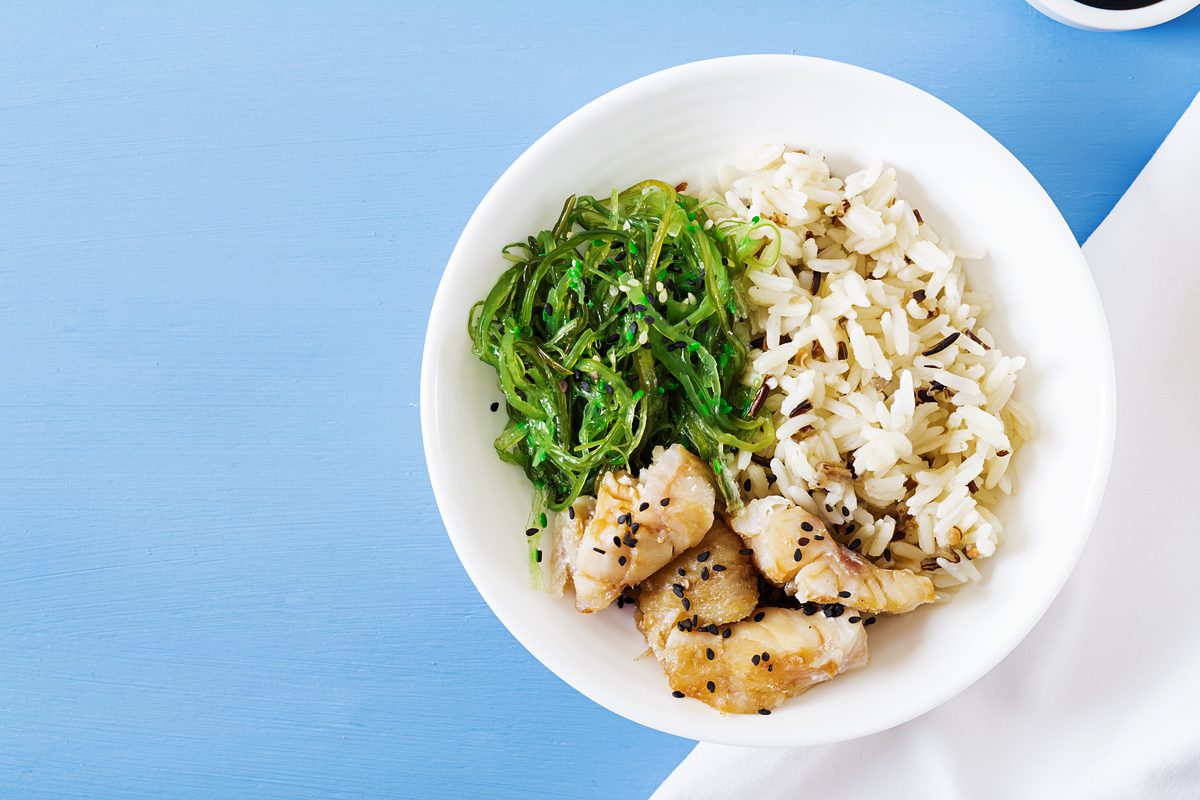
- Starchy foods: rice, potato, quinoa, oats, polenta.
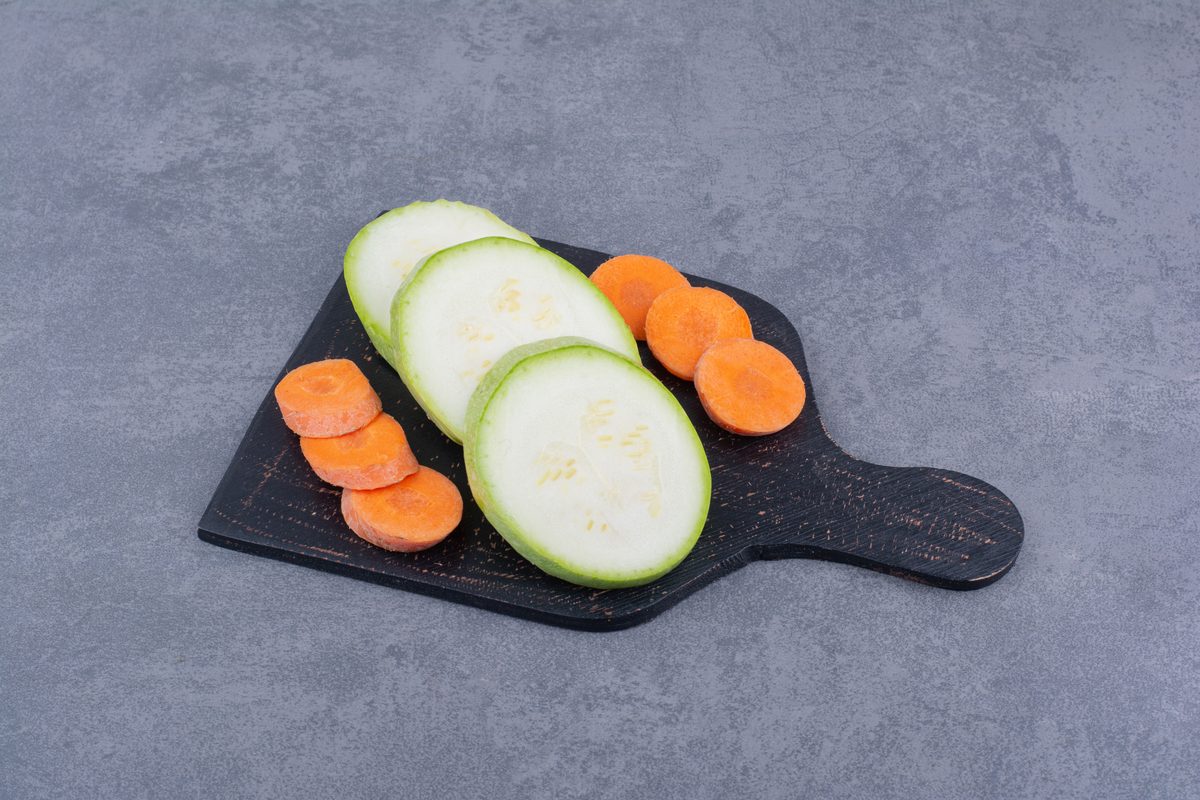
- Vegetables: carrot, courgette, spinach, green beans, tomato, cucumber, lettuce.
- Protein: plain meat, fish and eggs, without sauce or breadcrumbs.
- Dairy products: mature hard cheeses (emmental, comté, parmesan) contain less than 0.3 g of lactose per 100 g according to Ciqual; so does reduced-lactose milk.
- Fruit: banana, orange, kiwi, blueberries, in moderate portions (see the Ciqual table above).
And the ones that come up most often in the lists of foods to limit, according to the SNFGE and Assurance Maladie:
- onion, garlic, leek, artichoke, cabbages, broccoli, asparagus, mushrooms;
- wheat and rye in large amounts (bread, pasta, biscuits);
- pulses;
- milk and fresh dairy products high in lactose;
- apple, pear, cherry, mango, watermelon, honey, fizzy drinks made with corn syrup;
- polyol-type sweeteners (sorbitol, mannitol, xylitol) in « sugar-free » products.
Cooking tip: garlic and onion add flavour to almost everything. During phase 1, make up for it with fresh herbs, spices and a drizzle of olive oil, and test the recipes one by one.
A typical low FODMAP day
- Breakfast: porridge made with rolled oats and reduced-lactose milk, a few blueberries.
- Lunch: stir-fried rice with vegetables and egg (carrot, courgette, no onion or garlic), an orange.
- Afternoon snack: a lactose-free yoghurt and a kiwi.
- Dinner: white fish and vegetables baked in parchment, steamed potatoes, a little emmental.
For variety, the carrot and coconut milk soup (no onion), the quinoa salad with salmon or the banana and almond porridge adapt easily. Find more ideas in our healthy recipes.
The limits and risks of the diet
An effect on the microbiota
Many foods high in FODMAPs are also prebiotics: they feed the good bacteria. In the Staudacher trial, 4 weeks of restriction lowered the concentration and proportion of bifidobacteria in stools, while the total number of bacteria did not change. The long-term consequences remain unknown, according to the authors themselves. This is one of the reasons the strict phase must stay short. Our guide to probiotics and the microbiota reviews this topic.
A risk of imbalance
Cutting out wheat, pulses, several fruits and vegetables and dairy products all at once puts you at risk of not getting enough fibre and calcium if you don’t replace them wisely. This is the central argument of NICE and the SNFGE for professional support. For calcium, our guide to eating lactose-free day to day lists good alternatives.
Common misconceptions about FODMAP
« It’s a gluten-free diet in disguise »
No. FODMAP limits the fructans in wheat, not gluten, which is a protein. Reintroduction is there precisely to find out how much wheat you tolerate. And a spelt-based product or a wheat sourdough bread still contains gluten. The Assurance Maladie also points out that IBS has nothing to do with coeliac disease. The HAS (French national health authority) notes that symptoms attributed to non-coeliac gluten sensitivity could be linked to other components of wheat, including FODMAPs.
« You have to follow it for life »
No. The SNFGE and the Assurance Maladie describe a short exclusion phase followed by reintroduction. The aim is to get back to the widest possible variety.
« Fewer FODMAPs is always better »
No. These carbohydrates feed the gut microbiota. Without IBS, there is no reason to restrict them.
« Breath tests are essential »
NICE states that the hydrogen breath test is not needed to confirm IBS. It can, however, help to find out whether a person fully absorbs fructose or lactose, according to Gibson and Shepherd, in order to ease the diet.
Stress, the other half of the problem
The gut and the brain communicate constantly: this is the gut-brain axis. NICE recommends that people with IBS make time to relax and increase their physical activity if it is low. The American College of Gastroenterology (2021) also suggests gut-directed psychotherapies for global symptoms. Our guide diet and stress management complements this aspect.
When to see a doctor
The Assurance Maladie advises seeing a doctor if symptoms have lasted more than 3 months, and without waiting in the case of:
- blood in the stools or black stools;
- a family history of colorectal cancer;
- first digestive symptoms after the age of 50;
- a recent change in symptoms or unexplained weight loss;
- night-time symptoms, fever, or symptoms that appeared after travel.
Frequently asked questions
How long does the elimination phase last?
The SNFGE speaks of 3 to 4 weeks, the Assurance Maladie of 2 to 6 weeks. Beyond that, a very strict diet becomes hard to follow and brings no demonstrated extra benefit.
Does the FODMAP diet work for everyone?
No. In the Staudacher trial, 68% of patients had satisfactory symptom control, versus 23% in the control group. That means some people do not respond. If nothing changes after the elimination phase, it is not the right path.
Can you follow the FODMAP diet on your own?
NICE recommends that it be offered by a professional trained in dietetics, and the SNFGE considers help from a dietitian useful. Starting with the basic advice (regular meals, less coffee, alcohol and fizzy drinks, soluble fibre) is possible on your own.
Is sourdough bread allowed?
It contains wheat, so fructans, in amounts that vary depending on how it is made. None of the sources consulted gives a general rule. Test it during the reintroduction phase, in a small portion.
Is lactose a FODMAP?
Yes, it is the « D » (disaccharides). But not everyone with IBS is lactose intolerant. Reintroduction lets you check. Mature cheeses contain very little.
Can probiotics replace the diet?
It is not the same approach. NICE states that a person who wants to try probiotics should take them for at least 4 weeks while monitoring the effect, at the manufacturer’s dose. See our guide to Ultra-Levure.
This article is for information only and does not replace the advice of your doctor or a dietitian.
Our sources
- Société nationale française de gastro-entérologie (SNFGE), Ducrotté P. Conseil de pratique : régime pauvre en sucres fermentescibles, les FODMAPs. 2016.
- National Institute for Health and Care Excellence (NICE). Irritable bowel syndrome in adults: diagnosis and management. Clinical guideline CG61, 2008, updated 2015 and 2017.
- Lacy BE, Pimentel M, Brenner DM et al. ACG Clinical Guideline: Management of Irritable Bowel Syndrome. American Journal of Gastroenterology, 2021. PMID 33315591.
- Assurance Maladie (ameli.fr). Syndrome de l’intestin irritable : que faire pour être soulagé et quand consulter ?
- Black CJ, Staudacher HM, Ford AC. Efficacy of a low FODMAP diet in irritable bowel syndrome: systematic review and network meta-analysis. Gut, 2022. PMID 34376515.
- Halmos EP, Power VA, Shepherd SJ, Gibson PR, Muir JG. A diet low in FODMAPs reduces symptoms of irritable bowel syndrome. Gastroenterology, 2014. PMID 24076059.
- Staudacher HM, Lomer MC, Anderson JL et al. Fermentable carbohydrate restriction reduces luminal bifidobacteria and gastrointestinal symptoms in patients with irritable bowel syndrome. Journal of Nutrition, 2012. PMID 22739368.
- Sperber AD, Bangdiwala SI, Drossman DA et al. Worldwide Prevalence and Burden of Functional Gastrointestinal Disorders, Results of Rome Foundation Global Study. Gastroenterology, 2021. PMID 32294476.
- Truswell AS, Seach JM, Thorburn AW. Incomplete absorption of pure fructose in healthy subjects and the facilitating effect of glucose. American Journal of Clinical Nutrition, 1988. PMID 3202090.
- Gibson PR, Shepherd SJ. Evidence-based dietary management of functional gastrointestinal symptoms: The FODMAP approach. Journal of Gastroenterology and Hepatology, 2010. PMID 20136989.
- Haute Autorité de santé (HAS). Maladie cœliaque : diagnostic chez l’enfant et l’adulte. Recommandation de bonne pratique, juillet 2026.
- Anses. Table de composition nutritionnelle des aliments Ciqual, 2025.