Group · Meat
Coppa
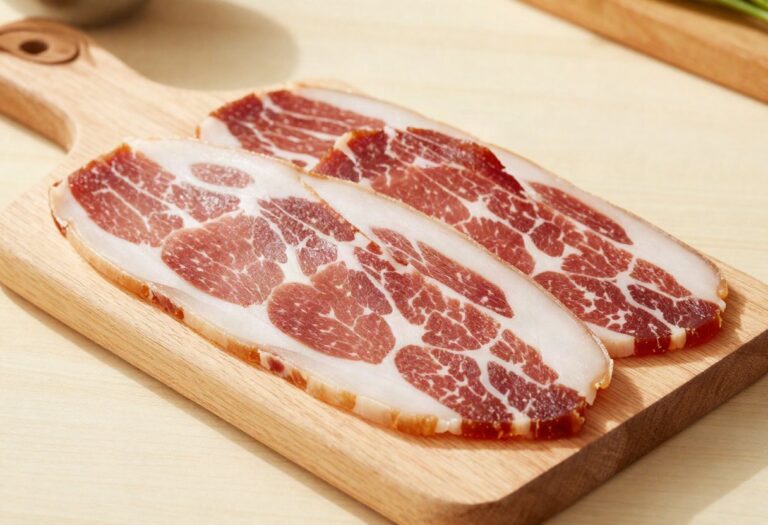
Coppa is an Italian cold meat made from the neck of pork (the neck muscle), salted, peppered then dried for several months. Its regular marbling of fat between the fibres is natural: it comes from the cut, not from an addition.
As for nutrition facts: 284 kcal per 100 g, with 25 g of protein and 20 g of fat including 6.83 g of saturated fat. But the decisive information is the salt: 5.3 g per 100 g, one of the highest in the whole family.
Macronutrient breakdown
Nutrition table per 100 g
| Calories | 284 kcal |
| Kilojoules | 1180 kJ |
| Protein | 25 g |
| Carbohydrate | 1 g |
| Fat | 20 g |
Micronutrients per 100 g
All measured nutrients, ranked by share of the daily reference intake.
- Omega-6 LA1,61 g16 %
- Iodine12 µg8 %
- Omega-3 ALA0,06 g3 %
Anses Ciqual 2025. Source: Anses, 2025, Ciqual food composition table
Tips
5.3 g of salt: a 50 g plate provides 2.65 g. More than half the daily guideline, for a starter. This is the figure to remember with this product, well before the calories. See salt.
Sliced very thinly, it goes further. This is the rule for all dry-cured meats: a translucent slice gives as much flavour as a thick one, for a third of the weight. The charcutier’s slicer does better than a knife.
25 g of protein for 284 kcal. The ratio is decent, but bresaola does much better: more protein for around a hundred fewer kilocalories, with the neck fat accounting for the whole difference.
It counts towards the processed meat guideline. 150 g a week, all products combined. Salt and nitrites are behind this recommendation, not only the fat.
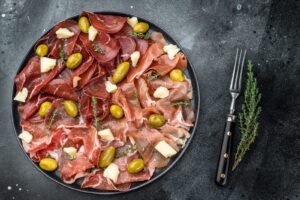
Never add salt, and lighten the rest. On a board, serve it with raw vegetables, tomatoes or melon rather than cheese and olives, which are already salty.
Pregnant? Raw cured meats and cooked meats kept chilled are not recommended during pregnancy; anything cooked and served hot is allowed. See the list in our guide to cold meats and pregnancy.