Group · Meat
Chicken gizzard
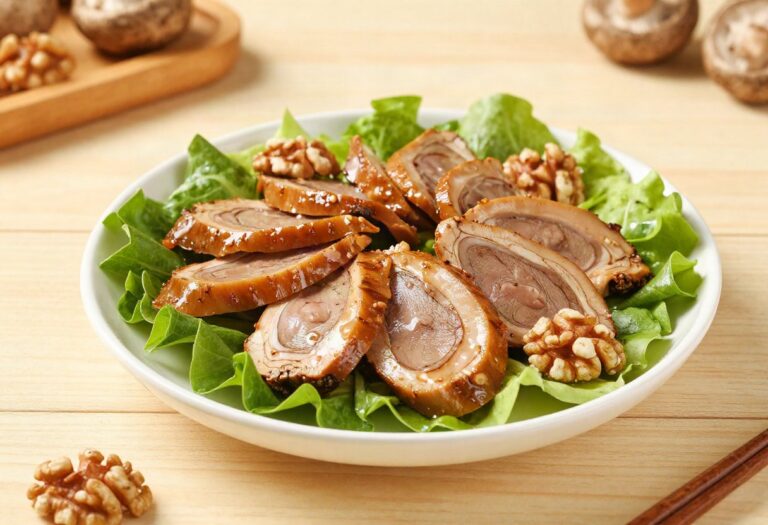
The chicken gizzard is a muscular offal found in the digestive tract of poultry. Long popular in traditional cooking, it is eaten confit, pan-fried, grilled or in a warm salad, most famously as the gésier confit of south-west France. Its firm texture and strong flavour make it a favourite of fans of rustic meats.
Nutritionally, chicken gizzard is particularly interesting: at around 99.1 kcal per 100 g, it has a high protein content (over 16.8 g) for just 3.53 g of fat and no carbohydrate. Lean and rich in complete protein, it fits naturally into a balanced diet as an affordable alternative to standard cuts of poultry.
Macronutrient breakdown
Nutrition table per 100 g
| Calories | 99 kcal |
| Kilojoules | 417 kJ |
| Protein | 16,8 g |
| Fat | 3,6 g |
Micronutrients per 100 g
All measured nutrients, ranked by share of the daily reference intake.
- Vitamin B121,21 µg48 %
- Zinc2,72 mg27 %
- Vitamin B33,68 mg23 %
- Phosphorus148 mg21 %
- Iron2,49 mg18 %
- Vitamin B20,23 mg16 %
- Copper0,12 mg12 %
- Vitamin D0,6 µg12 %
See the other 14 nutrients
- Potassium237 mg12 %
- Vitamin B50,63 mg11 %
- Vitamin B60,11 mg8 %
- Vitamin C3,7 mg5 %
- Magnesium15 mg4 %
- Manganese0,06 mg3 %
- Vitamin E0,33 mg3 %
- Omega-6 LA0,26 g3 %
- Vitamin B10,03 mg3 %
- Vitamin B95 µg3 %
- Vitamin A19 µg2 %
- Calcium11 mg1 %
- Iodine1,2 µg1 %
- Omega-3 ALA0 g0 %
Anses Ciqual 2025. Source: Anses, 2025, Ciqual food composition table
Tips
Chicken gizzard needs suitable cooking because it is a firm muscle. You can simmer it for a long time to tenderise it, confit it in duck fat, or quickly pan-fry it once pre-cooked. A reasonable portion is around 80 to 120 g. Watch the method of preparation: when confited in fat, its calorie density rises sharply compared with plain gizzard, which is the better choice if you are watching your weight.
Nutrition facts and benefits: what sets gizzard apart is its 16.8 g of protein per 100 g, a remarkable figure, close to that of chicken breast. With no carbohydrate or fibre and a glycaemic index of zero, it suits low-sugar diets. It also provides iron, zinc and B vitamins, as is typical of offal. Its low fat content (3.53 g) makes it a lean meat, ideal for anyone keeping an eye on their intake of fats.
- Pairings: serve it with a green salad, lentils or steamed vegetables for a complete, filling meal.
- Cooking: favour slow, gentle cooking to preserve tenderness and nutrients. Gentle cooking is a valuable ally here.
- Storage: fresh, eat it within 1 to 2 days; confited in a jar, it keeps for several weeks in the fridge.
- Buying: choose gizzards that are well cleaned, firm and without a strong smell.
For active people: gizzard is an excellent source of protein, ideal after exercise to support muscle recovery. Its richness in complete protein makes it a good complement to standard sources such as roast turkey. Whether you are cutting or building lean mass, its protein-to-calorie ratio is an advantage. To vary your intake, you can also take inspiration from protein snack ideas around your workouts.
Weight control: plain, gizzard stays light and suits a controlled diet. Mind above all the confit fat and any added sauces, which can double the calories. To compare this cut with other offal and meats, explore the meat family and check the food calorie table. Eaten in moderation and well prepared, chicken gizzard is a tasty, affordable asset in your diet.