Group · Meat
Leg of lamb
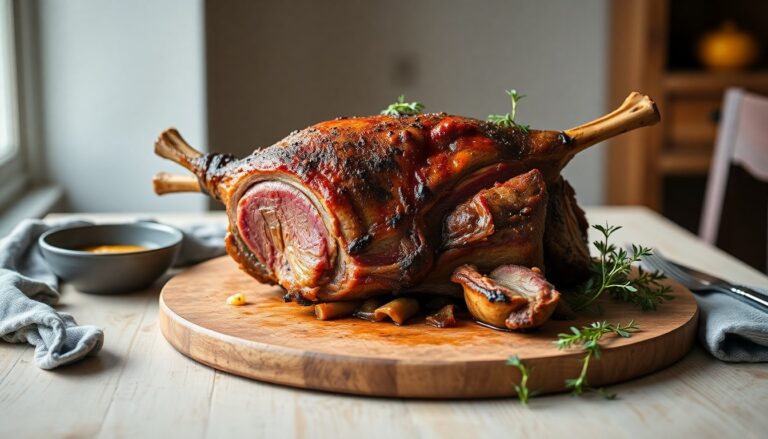
The leg of lamb is a prime cut from the haunch of lamb, prized for its tender, juicy meat and distinctive flavour. A star of festive meals and Sunday lunches alike, it can be roasted whole, boned and rolled into a shortened joint, or sliced. It is a relatively lean meat once the visible fat is removed: with around 169 kcal per 100 g, nearly 26.8 g of protein and 0 g of carbohydrate, it fits well into a balanced diet. Rich in haem iron, zinc and B vitamins, leg of lamb appeals as much to food lovers as to athletes looking for a high-quality source of protein.
Macronutrient breakdown
Nutrition table per 100 g
| Calories | 169 kcal |
| Kilojoules | 708 kJ |
| Protein | 26,8 g |
| Fat | 6,9 g |
Micronutrients per 100 g
All measured nutrients, ranked by share of the daily reference intake.
- Vitamin B121,88 µg75 %
- Vitamin B36,52 mg41 %
- Zinc4,01 mg40 %
- Phosphorus183 mg26 %
- Vitamin B20,28 mg20 %
- Selenium10,3 µg19 %
- Vitamin B60,24 mg17 %
- Potassium301 mg15 %
See the other 15 nutrients
- Vitamin B50,83 mg14 %
- Copper0,12 mg12 %
- Iron1,4 mg10 %
- Vitamin B10,1 mg9 %
- Vitamin B917 µg9 %
- Magnesium30,7 mg8 %
- DHA0,01 g4 %
- Omega-6 LA0,34 g3 %
- Iodine5 µg3 %
- EPA0,01 g3 %
- Calcium21,8 mg3 %
- Total omega-30,07 g3 %
- Omega-3 ALA0,05 g3 %
- Vitamin E0,13 mg1 %
- Manganese0,02 mg1 %
Anses Ciqual 2025. Source: Anses, 2025, Ciqual food composition table
Tips
To get the most from the nutritional value of leg of lamb, aim for controlled cooking. In the oven, allow about 12 to 15 minutes per 500 g for pink meat, basting regularly with its juices. You can prepare it as a seven-hour lamb (slow-cooked and meltingly tender), on a spit or in a casserole. To limit calories and fat, trim off the visible fat before cooking and avoid too much added fat.
For seasoning, lamb loves garlic, rosemary, thyme, cumin and a splash of lemon juice. Pair it with green vegetables, beans or a ratatouille for a balanced, filling meal. Find more side dish ideas among the vegetables or pulses, whose fibre is a perfect complement to this meat, which contains none.
- Recommended portion: 100 to 150 g of cooked meat per adult, a sensible serving to cover your protein needs.
- Storage: 2 to 3 days in the fridge once cooked, or several months in the freezer raw.
- Best time to eat it: preferably at lunch, as it is a protein-rich meat that takes some digesting.
Leg of lamb is an excellent source of complete protein, well-absorbed haem iron, zinc and vitamin B12. These nutrients make it an asset for athletes looking to maintain their muscle mass. After a weights session or intense training, a portion of lean leg contributes to recovery and the rebuilding of muscle fibres. To top up your intake, you can take inspiration from our protein snack ideas or read more in our guide to fitness nutrition.
If you are watching your weight, note that leg of lamb stays moderate in calories as long as you choose lean cuts and cook without excess fat. Avoid routinely serving it with rich sauces or potatoes roasted in fat. Vary your animal protein sources too: leg of lamb alternates very well with leaner meats such as chicken breast.
To place this food among other cuts, explore the meat family and compare their nutrition. Eaten in moderation as part of a varied diet, leg of lamb combines enjoyment with real nutritional value.