Group · Herbs & spices
Rosemary
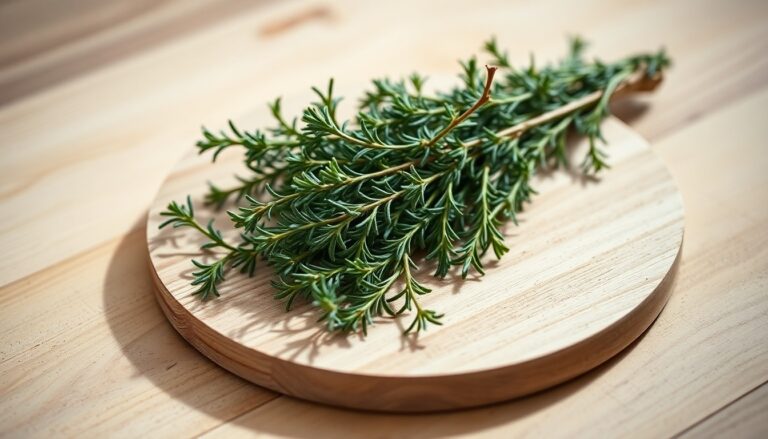
Rosemary is an emblematic Mediterranean aromatic herb, recognisable by its fine, needle-shaped leaves and its resinous, camphorous scent. In its dried form, as presented here, it concentrates aromas and nutrients: it has a remarkable fibre content (42.6 g per 100 g) as well as minerals and aromatic compounds. At around 328 kcal per 100 g, its calorie density may look high, but the amounts used in cooking are tiny, so it is negligible in energy terms day to day. As a fresh sprig, dried leaves or powder, rosemary fits naturally into a balanced diet, flavouring dishes without added salt or fat.
Macronutrient breakdown
Nutrition table per 100 g
| Calories | 328 kcal |
| Kilojoules | 1350 kJ |
| Protein | 4,9 g |
| Carbohydrate | 21,5 g |
| Fat | 15,2 g |
| Fibre | 42,6 g |
Micronutrients per 100 g
All measured nutrients, ranked by share of the daily reference intake.
- Iron29,3 mg209 %
- Calcium1280 mg160 %
- Vitamin B61,74 mg124 %
- Manganese1,87 mg94 %
- Vitamin C61,2 mg77 %
- Magnesium220 mg59 %
- Copper0,55 mg55 %
- Potassium955 mg48 %
- Vitamin B9dietary folate equivalents307 µg
See the other 5 nutrients
- Vitamin B10,51 mg46 %
- Zinc3,23 mg32 %
- Vitamin B20,43 mg31 %
- Phosphorus70 mg10 %
- Vitamin B31 mg6 %
Anses Ciqual 2025. Source: Anses, 2025, Ciqual food composition table
Tips
Rosemary is used in small pinches: a whole sprig to infuse in a casserole, or half a teaspoon of crumbled dried leaves, is enough to flavour a dish for several people. Because the leaves are tough, the sprigs are often removed before serving, or the needles are chopped finely. Its strong notes go wonderfully with roast meat, lamb, oven-baked potatoes, grilled vegetables and olive oil marinades.
- Cooking methods: it releases its aroma best during slow cooking (stews, roasts, stocks). To preserve its aromatic compounds, favour a gentle cooking approach and add it at the start of cooking for long dishes.
- Storage: when dried, keep it in an airtight jar away from light and damp. When fresh, keep the sprigs in the fridge wrapped in a damp cloth, or freeze them.
- Pairings: it goes with thyme, bay leaf and oregano in herbes de Provence, or with garlic and lemon in marinades.
Nutritionally, rosemary stands out for its very high fibre content and its aromatic compounds (essential oils based on cineole, camphor, rosmarinic acid). Being so rich in flavour, it lets you use less salt, an interesting advantage in a monitored diet such as the DASH diet. Alongside the other herbs in the Herbs & Spices family, it is one of those ingredients that lift a dish without adding to the calorie count.
For active people: rosemary provides no significant energy given the small amounts eaten, but it is a valuable ally for making meals rich in lean protein (chicken, fish) and vegetables tasty, which is useful when bulking as well as cutting. A rosemary and olive oil marinade on a chicken breast turns a bland meal into an appetising dish, which helps you stick to a balanced diet over the long term.
Weight control: although its nutrition facts show around 332 kcal and 21.5 g of carbohydrate per 100 g, remember that you only eat a few grams. Its real impact on the calories on your plate is therefore minimal. It is an excellent habit for slimming: season generously with herbs rather than with fatty or sugary sauces. Vary your herbs for pleasure and diversity, with no worries about your waistline.