Group · Meat
Calf’s tongue
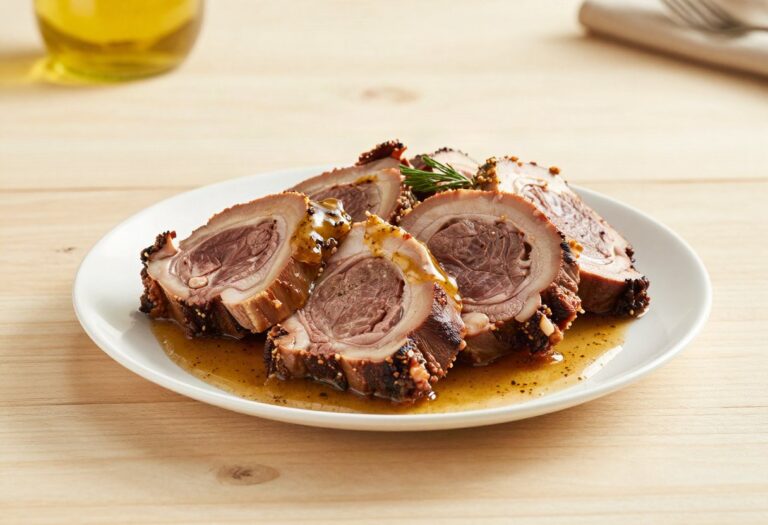
Calf’s tongue is a fine, refined offal, long prized in traditional French cooking. Tender and melting after slow cooking, it stands out for its soft texture and delicate taste, milder than ox tongue. It can be found fresh at the butcher’s, sometimes part-cooked or in brine, ready to be poached and then served with a sauce.
Nutritionally, calf’s tongue provides around 237 kcal per 100 g, with nearly 21 g of protein, 0 g of carbohydrate and 17 g of fat. It is a valuable source of good-quality protein that has a place in a varied and balanced diet, as long as you stay mindful of the amount of fat.
Macronutrient breakdown
Nutrition table per 100 g
| Calories | 237 kcal |
| Kilojoules | 986 kJ |
| Protein | 21 g |
| Fat | 17 g |
Micronutrients per 100 g
All measured nutrients, ranked by share of the daily reference intake.
- Vitamin B126,8 µg272 %
- Zinc3,8 mg38 %
- Vitamin B20,35 mg25 %
- Phosphorus166 mg24 %
- Copper0,21 mg21 %
- Iron2,6 mg19 %
- Vitamin B51,1 mg18 %
- Vitamin B32,6 mg16 %
See the other 8 nutrients
- Vitamin B60,16 mg11 %
- Vitamin B10,11 mg10 %
- Potassium162 mg8 %
- Vitamin C6 mg8 %
- Magnesium18 mg5 %
- Vitamin B99 µg5 %
- Manganese0,05 mg2 %
- Calcium9 mg1 %
Anses Ciqual 2025. Source: Anses, 2025, Ciqual food composition table
Tips
Calf’s tongue needs patient but straightforward preparation. The classic method is to blanch it, then poach it for a long time in an aromatic stock (onion, carrot, bouquet garni, cloves) until tender. The outer skin is then peeled off while still warm, before slicing. It is served with a gribiche sauce, a piquant sauce with capers and gherkins, or simply with a shallot vinaigrette.
Portions and accompaniments: a serving of 100 to 130 g is right for a meal. Pair it with green vegetables, homemade mash or wholegrain starchy foods for a more filling plate that is richer in the fibre that tongue lacks. For storage, eat cooked tongue within 2 to 3 days and keep it in the fridge in its cooking juices.
Nutritional profile: with 0 g of carbohydrate and a zero glycaemic index, calf’s tongue fits well into a low-sugar approach. Its protein (about 21 g per 100 g) makes it a useful food for maintaining muscle mass. Like many offal meats, it also provides iron and B vitamins. To compare its nutrition facts with other cuts, you can check the food calorie table.
- For variety: explore other preparations in the same family such as veal escalope, which is leaner, or ox tongue, which has a stronger taste.
- Discover more: find all the cuts and offal in the meat family.
Tip for active people: thanks to its richness in protein, calf’s tongue can complete a recovery meal after exercise, ideally paired with a source of carbohydrates (rice, potatoes) to replenish your reserves. On intense training days, have it at lunch rather than as a snack. For your everyday protein needs, also think about the practical solutions described in this article on protein snacks.
Weight control: with 17 g of fat per 100 g, calf’s tongue is moderately fatty. Limit sauces rich in butter or cream if you are watching your figure, and keep to a sensible portion size. Well cooked, without too much added fat, it remains compatible with a balanced diet while adding variety to your menus.