Group · Dairy
Neufchâtel
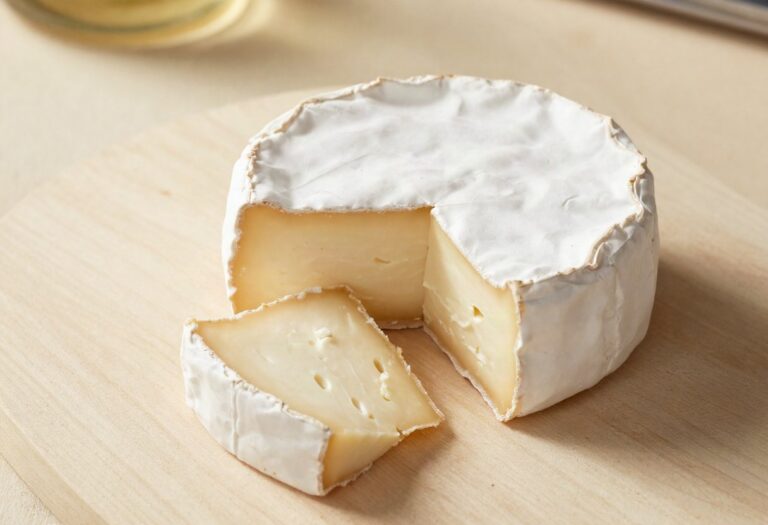
Neufchâtel is one of the oldest cheeses of Normandy, recognised by its often heart-shaped form and its velvety white bloomy rind. Made from cow’s milk, it belongs to the large family of soft, bloomy-rind cheeses, like Camembert or Brie. Its texture is creamy and melting, and its taste slightly salty with notes of mushroom at the end of maturing. In terms of nutrition facts, it provides 300 kcal per 100 g, around 17.8 g of protein, 3.59 g of carbohydrate and 25.5 g of fat. A source of calcium and protein, it has its place in a balanced diet as long as you eat sensible portions.
Macronutrient breakdown
Nutrition table per 100 g
| Calories | 300 kcal |
| Kilojoules | 1240 kJ |
| Protein | 17,8 g |
| Carbohydrate | 3,6 g |
| Fat | 25,5 g |
Micronutrients per 100 g
All measured nutrients, ranked by share of the daily reference intake.
- Vitamin B994,5 µg47 %
- Vitamin B20,5 mg36 %
- Phosphorus198 mg28 %
- Vitamin B120,65 µg26 %
- Vitamin A188 µg24 %
- Vitamin B60,32 mg23 %
- Iodine32 µg21 %
- Calcium74,5 mg9 %
See the other 13 nutrients
- Vitamin B31,36 mg9 %
- Vitamin B10,08 mg8 %
- Potassium117 mg6 %
- Zinc0,55 mg6 %
- Vitamin E0,4 mg3 %
- Vitamin B50,18 mg3 %
- Total omega-30,07 g3 %
- Vitamin K11,95 µg3 %
- Magnesium9,17 mg2 %
- Copper0,02 mg2 %
- Omega-6 LA0,14 g1 %
- Iron0,07 mg1 %
- Manganese0,01 mg1 %
Anses Ciqual 2025. Source: Anses, 2025, Ciqual food composition table
Tips
Neufchâtel is best enjoyed at the end of a meal, on a piece of country bread, or on a cheeseboard with some fresh fruit (pear, grapes) that softens its flavour. A portion of 30 to 40 g is plenty to enjoy its benefits without weighing down the day’s calorie count. You can also add it to a warm salad, a grilled open sandwich or a creamy pasta sauce.
Storage and serving:
- Keep it in the fridge, wrapped in its original paper, in the vegetable drawer.
- Take it out 30 minutes before eating to bring out all its aromas.
- Choose it well matured for a stronger taste, or young for a milder texture.
Nutritionally, Neufchâtel stands out for its richness in protein (around 17.8 g per 100 g) and calcium, two nutrients that help maintain bone and muscle mass. Its glycaemic index is very low, as its carbohydrate content is almost negligible. However, its fat content remains high (nearly 25.5 g), with a large share of saturated fatty acids. If you are trying to lose or manage your weight, it is better to stick to small portions and to pair it with vegetables rather than large amounts of bread. If you are looking for lighter alternatives, you can turn to 0% fat fromage blanc or mozzarella, which are less dense in fat.
Tip for active people: thanks to its protein and calcium, Neufchâtel can round out a recovery snack, for example on a slice of wholemeal bread after a moderate workout. However, its fat density makes it a poor choice just before intense exercise, when more digestible carbohydrates are preferable. When bulking up, it can help raise your daily calorie intake. To vary your protein sources day to day, also think of plain yoghurts and explore the whole dairy products family.
Want to compare the calories of several cheeses before putting together your cheeseboard? See our food calorie table. In short, Neufchâtel is a tasty, nourishing cheese to include in moderation in a varied, balanced diet.